Warehouse member carryout planning
Keep the purchase easy to verify and the handling arrangement specific. Counting bags cannot replace checking the purchase, and weighing contents cannot certify a carrier.
Plan warehouse carryout as three separate checks: the purchase record, the carrier’s suitability and the actual transfer to the destination. Keep the receipt available for the required warehouse process. Choose a packing arrangement that can accommodate that process and the person using it.
One large bag may look tidy, yet conceal an unresolved question about contents, opening, load evidence or unloading. Several smaller pieces can create a different coordination task. Neither is automatically right because it reduces the number of bags.
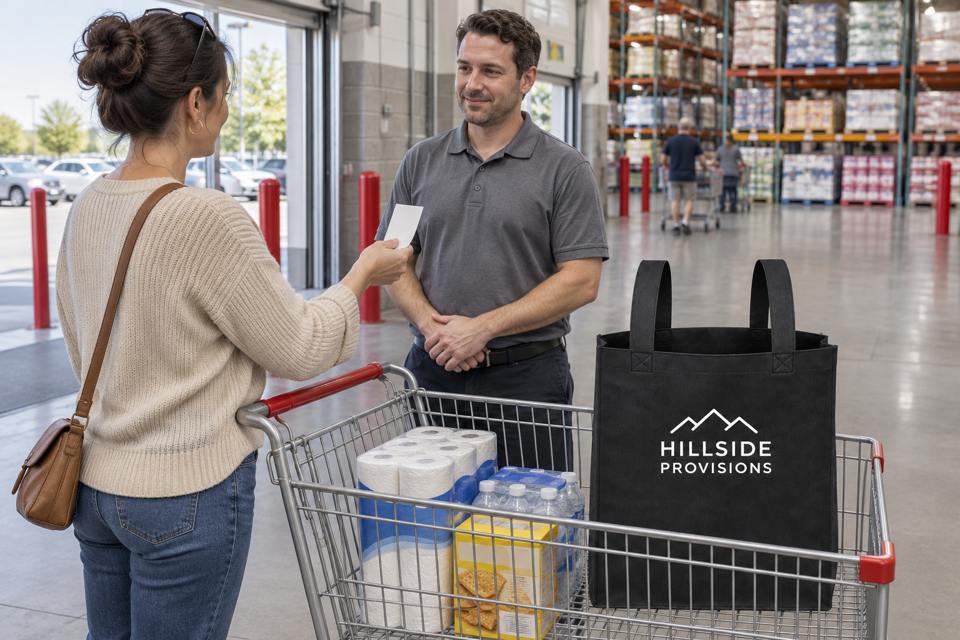
The receipt check is about the purchase, rather than your bag count
Costco’s U.S. receipt-check explanation, reviewed November 5, 2026, says purchase receipts are verified on exit to check that items were processed correctly. The answer, published August 28, 2023, also connects the practice with inventory accuracy and correct charging.
That explanation does not set a universal bagging location, say that every item is counted the same way at every exit, or approve a particular carrier. Follow the staff’s actual directions. A forum comment that tightly packed bags made a check awkward does not create a rule that everyone must pack at the vehicle.
The original warehouse-shopping discussion includes different packing preferences and experiences with visibility. Use those accounts to notice a question: can the receipt and relevant items be presented as requested? Do not turn them into an instruction to bypass a check or open packages without direction.
This guide concerns a member’s own purchase. Delivery-platform assignments have their own rules and records; a personal carryout arrangement does not override those requirements.
Receipt lines, selling units and carrying pieces are different counts
Fictional example: a member has two identical closed pantry cartons and one other closed package. The receipt is represented as two lines. These invented entries are not an actual receipt or the contents of the AI scene.
Purchase record
2 receipt lines
Line A: pantry carton, quantity 2.
Line B: another closed package, quantity 1.
The two lines describe 3 selling units: 2 + 1. A line count is not the same as a quantity total.
Proposed handling plan
2 carrying pieces
The member proposes distributing the three selling units between two existing carriers.
That is a proposed transport arrangement. It does not establish that the receipt is correct or that either carrier has passed its suitability checks.
Here, “two receipt lines” and “two carrying pieces” happen to share a number. That coincidence does not prove a match. The purchase is still three selling units, and staff determine how the receipt check is carried out.
Keep factory-sealed multipacks in their actual selling-unit context. Do not count inner items as separately purchased units merely because a package contains several of them. If a receipt quantity or package needs clarification, ask staff rather than rewriting the purchase to make a bag count agree.
A contents-weight calculation answers only one question
Continue the fictional example with assumed closed-package weights:
Carton A: 4 lb
Carton B: 4 lb
Other package: 5 lb
Contents mass = 4 + 4 + 5 = 13 lb
All figures are hypothetical. The total excludes the carrier’s own mass and does not establish a carrying limit, an appropriate personal load or a safe transport arrangement.
The arithmetic does not say that one bag may carry 13 pounds. Nor does dividing the purchase automatically prove that the resulting loads suit the carriers or the person. You still need appropriate product evidence, the complete packed fit and an actual handling arrangement the user can use.
Record what a figure describes before comparing it with another figure. Fabric weight, a shipping or package weight and a tested individual carrier capacity are different specifications. A photograph of a bag with groceries is not a substitute for any of them.
Plan the check and the transfer without guessing a local packing rule
- Before reaching the exit: keep the receipt available and follow the warehouse’s actual instructions for presenting the purchase. If an item or quantity is unresolved, ask staff; a packed bag does not settle it.
- Before packing or rearranging: confirm where that action is permitted. Keep the next step consistent with staff directions and leave required routes clear. The illustrated empty tote does not show where a real store authorizes packing.
- At the agreed packing point: compare the complete wrapped items with the carrier, including access to the opening and the intended way of holding or moving it. Keep the carrier decision pending if necessary evidence or fit information is missing.
- Through unloading: confirm how the purchase reaches its final destination, whether contents remain in a carrier or are removed in smaller groups, and what available help is needed. Ask the user; do not infer ability or transport method from appearance.
A practical question is: “Which part of this transfer does not work for you, and what help can we actually arrange?” It identifies a specific unresolved step without assigning a universal weight limit or promising assistance that has not been confirmed.
These are planning checks, not a warehouse operating manual, medical lifting advice or proof that one method is faster. A missing answer is a reason to resolve that step, rather than to choose a larger printed bag.
Check a candidate tote without turning its specifications into a load claim
Compare custom grocery bags only when the actual carrier need and permitted process are clear. An existing suitable carrier can remain the better decision.
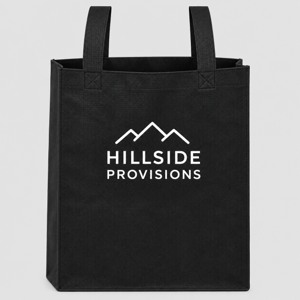
non-woven grocery tote
Current SKU decentcustom-to-000131: 80 GSM non-woven polypropylene, an open main compartment and an inner bottom board. Listed dimensions are 13 W × 15 H × 10 inches; the third dimension is unnamed, so confirm the opened shape.
The minimum is 12 bags; the listed case pack is 100. The page’s approximately 22-pound weight entry is not treated here as an individual bag capacity or compared with the example’s 13-pound contents total. No load, food-contact or temperature-control performance is established in this guide.
AI artwork concept with fictional Hillside Provisions branding matching the scene. Click the small image for the actual product. The artwork and proportions do not establish a manufactured sample, a tested load or retailer endorsement.
Keep three decisions in the handoff record
For the fictional example, the useful record is:
- Purchase verification
- Two receipt lines represent three selling units. Complete the actual warehouse check; two carrying pieces are not evidence that it has passed.
- Carrier review
- The contents total is 13 lb under the stated assumptions. Carrier suitability remains pending the relevant evidence and fit check. Do not invent a capacity from a catalog weight entry.
- Handling arrangement
- Confirm the permitted packing point, complete transfer and available help. Retain an existing suitable arrangement when it meets the task; no new bag order follows from these counts alone.
Use grocery bag sizes, packing and reorders for the separate fit and replenishment work. If a custom item from DecentCustom remains justified, carry the verified requirements into its configuration and artwork review. The useful outcome is a clear next step with the remaining questions visible.