HOUSEHOLD REFILL OPERATIONS · CONTAINER HANDOFFS
Say who keeps the bottle, what the shop accepts and what happens next. A clear return policy starts with the kind of handoff being offered.
Separate three different reasons to bring a bottle
A customer bringing a personal bottle for a refill is asking to keep using that bottle. Someone donating a spare container is offering to leave it with the shop. A bottle-swap customer is asking to exchange an eligible program bottle under that program’s terms. These actions need different instructions.
Before printing “bring back your bottles,” decide which action you mean. Explain acceptance, the staff checkpoint, availability and any charge or credit separately. An attractive return notice cannot settle an undefined handoff.
Define ownership and the next action
- Personal container refill
- The customer intends to keep the vessel. Staff still need to confirm its acceptance for the intended product and follow the shop’s actual refill process. See container preparation before a first refill.
- Container donation
- The customer offers a vessel for someone else’s later use. State which materials, condition and closures you accept, whether there is room today and where an employee receives it. Receiving a donation is not the same as clearing it for reuse.
- Bottle-swap return
- The customer presents a bottle from a defined program. Identify eligible bottles, return condition, available replacement products and how the operator handles the first container charge, later exchange and any credit. Do not promise a refund simply because the customer brought a bottle.
A store can offer one route without offering the others. A suitable personal refill vessel does not automatically qualify as a donation or swap return.
Actual shops draw different boundaries
Refillery on the Rogue’s FAQ conditions container donations on available space and asks for washed, dry, label-free donations. That capacity condition matters: a customer should check before making a special trip with a box of containers.
Off the Bottle’s FAQ distinguishes personal use from donation. It allows customers’ own plastic containers but excludes plastic donations; its donation guidance specifies glass containers and condition requirements. It also lists a charge for offered secondhand containers. A donation program therefore does not necessarily mean free containers for the next shopper.
These are two named operators’ published examples, not a common rule for every refill shop. They illustrate which questions your own wording must answer. Do not copy another shop’s material permissions, charges or cleaning procedure into your policy.
Earlier Mission Refill research described both bottle swaps and community containers. Its archived descriptions used different first-charge and deposit wording, while the FAQ now redirects to a password page. Neither the historical wording nor an old search result establishes a current refund offer.
A public notice for operator review
The following is a complete fictional Harbor Refill draft. It describes a store that handles personal refills and approved donations but has no bottle-swap program. Use it only after the actual operator approves the stated services and requirements.
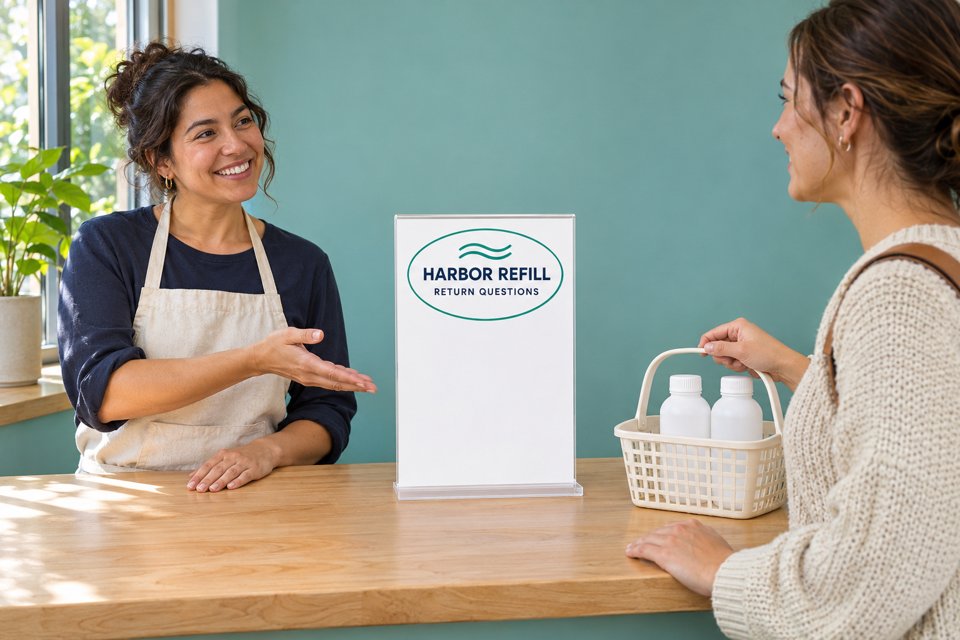
Bringing a container? Please speak with our refill team first.
For your own refill: Tell us which product you want and which container you intend to keep using. We will confirm acceptance and explain where to start before you fill.
To donate a spare container: Contact us before bringing donations. We accept empty, clean, dry, intact glass jars with their matching lids only when our team confirms space. Bring approved donations to the staffed counter; please do not leave them outside or add them to customer-ready stock.
For a bottle exchange: We do not operate a bottle-swap program. A bottle from another store does not receive an exchange or deposit credit here. Ask about an ordinary personal refill instead; acceptance is a separate decision.
Need a container today? Ask staff what is currently available and what it costs before choosing. Donation stock is not guaranteed.
The fictional glass-only requirement is a chosen example, not a material recommendation. Before adopting any version, the operator must settle its accepted items, receiving capacity, inspection and preparation responsibilities, available alternatives and financial terms. Leave no instruction that invites unattended drop-offs.
Work through the awkward handoffs before they occur
Case 1: a clean donation, but no space
In a fictional training scenario, a customer brings two empty lidded glass jars without checking ahead. The responsible employee confirms that the shop cannot receive more donations today. The customer keeps both jars; no donation is accepted and nothing enters the reuse stock.
A useful response is: “Thank you for checking with us. We cannot take donations today. Please keep these with you and contact us before bringing them another time.” It acknowledges the offer without promising a future receiving date, disposal service or storage space.
Case 2: a bottle from another swap program
A second fictional customer presents another retailer’s program bottle and expects a full replacement. Harbor has no exchange program. The employee explains that there is no exchange or deposit credit here, then asks whether the customer wants to discuss an ordinary refill. The bottle’s suitability and the desired product remain unconfirmed. A different route is an offer to investigate, not automatic approval.
Record an accepted donation separately from ready stock
For a later fictional handoff when the shop does have space, a completed intake note could read:
- Offer and decision
- Two empty glass jars with matching lids offered; designated employee agrees to receive them under the shop’s donation rules.
- Handoff
- Customer leaves the agreed containers at the staffed counter; employee moves them to the designated received-items area.
- Current status
- Received for the operator’s review and preparation process. Not released to customer-ready stock.
- Next responsibility
- Assigned employee follows the actual inspection and preparation procedure and records the release decision. Suitability for any particular refill is not established by this note.
This is a fictional record structure, not a cleaning protocol or evidence that any containers passed inspection. Keep donation intake and final release distinct in both staff instructions and storage arrangements.
Print a stable identifier; keep changing rules editable
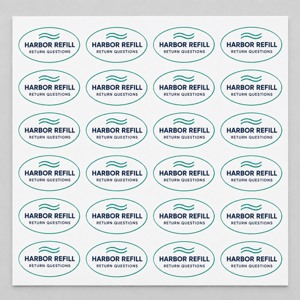
An existing card or website notice may be enough. If a dry indoor information holder needs a consistent shop identifier, compare custom labels and stickers for that limited role. Keep donation availability, eligible items and charges in text that the responsible person can update.
Return-questions header concept
The custom product labels page offers material, shape and finish choices, including white paper described for dry indoor use. The Harbor oval artwork is an optional identity label for the notice, separate from its policy text.
The image does not prove water or chemical resistance, removability, bottle suitability or any cleaning result. It is not a safety label, system tag or acceptance seal. Confirm the selected configuration and finished-label quantity before ordering.
Approve the handoff before approving the artwork
Have the people receiving containers review the notice against a personal refill, a donation with no space and an ineligible swap return. Resolve who keeps the bottle and what happens next in each case. Once a genuine print need remains, compare relevant options at DecentCustom.
A useful policy can politely decline a handoff, retain a working personal container or direct someone to the correct program. It does not need to turn every return question into a new purchase.
Prepared by DecentCustom from the named operators’ published FAQs and current catalog, reviewed November 6, 2026. Mission’s November 2 research capture is historical; its current password redirect supplies no present swap terms. Harbor Refill, its chosen policy, cases, intake record and AI artwork are fictional. No outreach, cleaning, suitability testing or payment transaction was performed.