HOUSEHOLD AND PERSONAL-CARE REFILLS · FIRST VISIT
Check the intended product and the shop’s container rules before the visit. A clean-looking bottle and a familiar category name leave important questions unanswered.
Prepare the container information as well as the container
For a first household-refill visit, start with the product you want and what the container previously held. Then check the operator’s preparation and acceptance rules. A bottle used for one hand soap is not automatically approved for a different formulation simply because both are called soap.
A useful instruction tells customers what to confirm before travelling, what condition the container must be in and where to start on arrival. It also gives a next step when the answer is uncertain, without requiring everyone to buy another bottle.
Read the preparation page together with the acceptance policy
BLOOM’s refill guide, from Louisville, Kentucky, asks customers to bring a clean, dry container without water or residue. It describes recording the empty-container weight, filling and weighing again. That is a specific operator’s process, not a general instruction for every refill shop.
Its separate refill hygiene policy adds a same-product reuse condition and says a container may be declined. It also discusses sanitizing containers previously used for another product. A customer should ask the shop how those conditions apply to the proposed bottle; the second statement should not be read as automatic permission to change products.
Keep the question specific: the intended refill, previous contents, container and closure. “It looks clean” does not answer whether the operator accepts that combination. Follow the relevant product and container instructions and obtain the store’s clarification rather than improvising a cleaning method.
Check that the current service and instructions are accessible before relying on an old saved FAQ. A surviving product menu, old opening hours or social-media link alone does not confirm that a refill service is available today.
Send enough information for a useful answer before the visit
A broad “Can I bring any bottle?” question often leaves the intended use unclear. Describe the product and container history instead. The following is a filled editorial example a customer can adapt; it has not been sent to a retailer.
This message gives the employee a real decision to address. It does not assert that a different-brand bottle is compatible, that preparation is already complete or that a shop-provided alternative is free. Use the actual product name and available container details in your own inquiry.
If the previous contents are unknown, say that clearly. Do not replace missing history with a guess or remove existing information to make a bottle appear ready. Let the operator explain whether an accepted alternative is needed.
Work through a bottle described only as “used for soap”
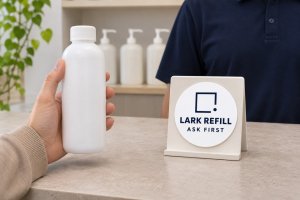
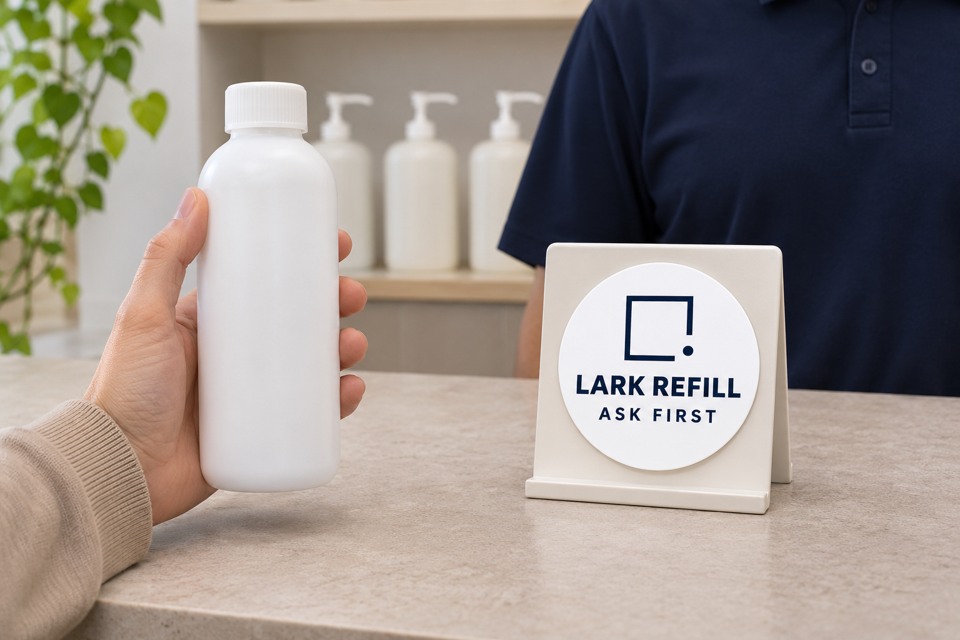
Fictional Lark Refill example: A visitor has a bottle that previously held hand wash and wants a different hand-wash refill. For this teaching example, the operator’s policy requires same-product container reuse unless its responsible staff confirm a permitted alternative. The visitor knows the category but has not established that the products are the same.
- What is known?
- The intended refill and the previous brand differ. The customer has retained the old product information and closure.
- What remains open?
- Whether that specific bottle and prior use are accepted for the intended refill under the operator’s policy.
- What happens next?
- Pause before filling. Show the actual information to the responsible employee and ask for the accepted route. If the bottle is declined, discuss an appropriate available alternative before choosing or paying for one.
- What is the decision?
- The bottle is not treated as approved merely because it is empty or labelled “soap.” The refill waits for the operator’s answer.
This is an unresolved acceptance decision, not an account of a real customer rejection or a finding that all cross-brand reuse is prohibited. Another shop may use different rules. Its actual policy still needs to be checked.
Make the first-arrival instruction match what staff actually do
After the operator has settled its own rules, use a short instruction at the relevant page and arrival point. A full draft for review is more useful than a decorative “refill here” slogan:
First refill visit?
- Tell us the exact product you want and what your container previously held.
- Follow our current preparation guidance and keep the product and container information available.
- Start at our designated refill point before adding product. Ask staff if acceptance or the next step is unclear.
- Let us confirm the required empty-weight record and any system label before filling.
- Keep the required identification and use information with the container through checkout and afterward.
This is an operator-review draft, not an approved Lark policy. Replace the general arrival point with the real one and specify who records the empty weight. If staff control a system tag, customers should not attach a substitute or transfer it to another bottle.
For mixed purchases, distinguish refill vessels from outer carriers. A bag around a closed bottle performs a different job from the accepted vessel holding the refill. A paper carrier cannot replace a liquid container.
Give ordinary printed labels a narrow, useful job
A plain card, updated webpage or existing sign may already explain the first step. If a dry information holder needs a consistent store identifier, compare custom labels and stickers for that separate role.
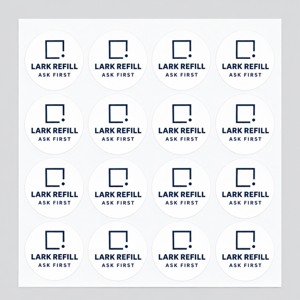
Optional information-holder badge
These custom product labels offer stock, shape and finish choices. The white-paper option is described for dry indoor use. The round Lark design is an AI artwork concept for a stationary holder.
It is not an RFID tag or a substitute for required product identification or safety information. No water, cleaning-agent, adhesive or chemical-resistance performance is verified here. Confirm the actual configuration, surface and finished-label quantity; the default order quantity is not a count of individual labels.
Review the instruction before ordering the artwork
Ask the person responsible for the refill service to check the product scope, container conditions, staff role and fallback together. Keep the detailed policy and short arrival message consistent. Update changing information where it can be maintained rather than permanently printing an uncertain promise.
When a genuine printed-information need remains, carry that checked brief to DecentCustom. A clearer first step may solve the problem while accepted existing containers remain in use.
Prepared by DecentCustom from the linked BLOOM pages and current catalog, reviewed November 5, 2026. Named operator rules are examples and do not endorse these products. Lark Refill, the inquiry, decision example and AI images are fictional. No container was assessed, retailer contacted, cleaning procedure tested or customer outcome measured for this guide.