Warehouse-shopping information review
The same warehouse can serve different shopping channels. A useful instruction names the channel before it names a bag, box or label.
Keep member-shopping advice separate from delivery-platform instructions. Before publishing a warehouse packing guide, identify who is shopping, whose order is being handled and which current rules govern it. Then keep that identity attached through checkout, packing and the receipt record.
A helpful tip in one context can become a wrong instruction in another. A member’s preferred reusable bag does not establish what a platform shopper may use. A neat label does not establish that the correct customer’s receipt is attached.
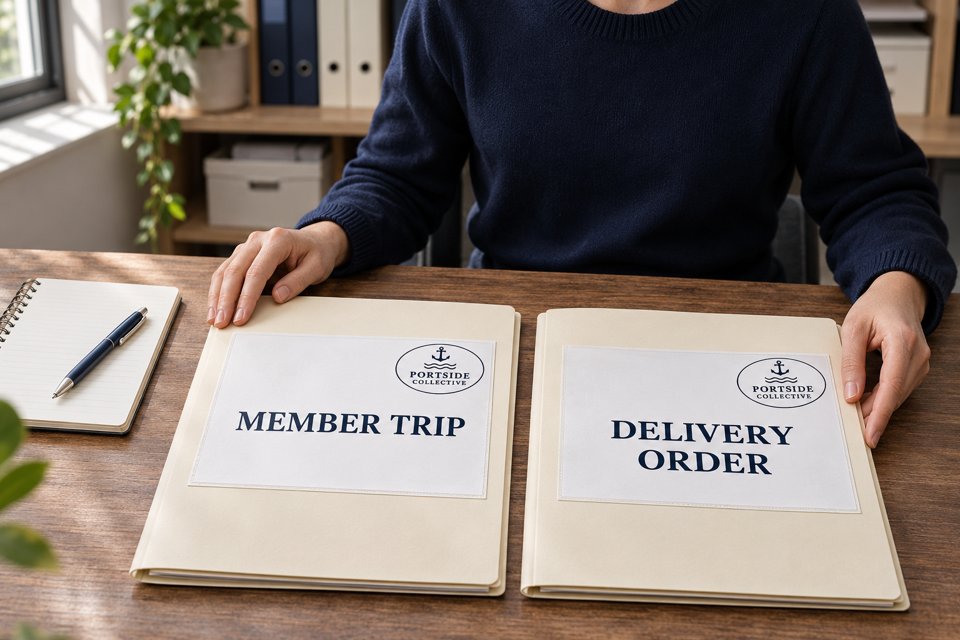
A warehouse name does not identify the shopping channel
Costco’s U.S. checkout-bag answer explains why conventional bags are not provided at checkout. It does not specify every delivery service’s packing procedure or authorize a local custom-print purchase.
The DoorDash Costco FAQ, reviewed November 5, 2026, specifies appropriate available cardboard boxes and excludes buying bags or using personal reusable bags for that channel. Its checkout and receipt instructions also connect each customer’s order with the correct membership barcode and receipt.
That is a named platform’s current workflow. Do not copy it into a rule for all ordinary members, or apply a member’s bag preference to the platform route. Other delivery channels require their own current sources. A page headed only “Costco shopping tips” does not give the reader enough context to choose correctly.
The original industry research included anonymous member discussions about bags, boxes and crates. Those preferences are useful for a personal-shopping comparison, subject to actual warehouse rules. They are not permission to override a platform instruction.
Repair the audience before polishing the packing sentence
Fictional editorial example: Portside Collective maintains information for its own purchasing trips and a separate reference about platform deliveries. An early draft combines them:
“For warehouse orders, bring your own reusable bags and use them for every delivery.”
The sentence has two problems. “Warehouse orders” does not say which channel it covers, and “every delivery” extends personal-trip advice beyond its evidence. Adding a logo or a clearer heading would not repair that scope.
Reference A · our own member trip
Personal purchasing arrangement
Audience: the group’s own member-shopper, following the warehouse’s applicable instructions.
Replacement direction: “Check which carriers are permitted for this trip. Compare the existing box, crate or suitable reusable carrier against the purchase and the full return journey.”
Limit: this does not describe a delivery-platform assignment or establish that a new bag is needed.
Reference B · named platform order
Current source takes precedence
Audience: a person completing the specific platform assignment.
Replacement direction: “Open the current platform instructions for this retailer and order. Use the permitted packaging and follow its checkout, receipt and exception steps.”
Limit: the member-trip carrier suggestion is excluded. The reference folder cannot grant an exception to the actual platform process.
Reference B deliberately points to the maintained source rather than printing a permanent substitute manual. A short summary can explain the distinction, but a worker still needs access to the current app and support process. Do not mark the whole draft “approved” while its audience remains mixed.
A correct box cannot fix the wrong receipt association
Once a channel is identified, keep the order identity intact. If you first need to define preparation, matching and completion, map the complete grocery handoff. The issue below is different from counting two packages belonging to one pickup.
Fictional review exercise: two separate delivery orders are called Alpha and Beta. These are invented names for the example, not customer details, membership numbers or valid app identifiers.
- Expected association: Alpha’s item record and receipt belong to Alpha; Beta’s item record and receipt belong to Beta. Two distinct orders do not become one because their containers look alike.
- Observed error in the exercise: the record for Alpha has Beta’s receipt attached. The outer box label still says Alpha.
- Decision: keep the association unresolved. Relabelling the box or changing a folder heading does not correct the receipt attachment.
- Applicable next step: the current DoorDash FAQ directs the shopper to confirm the receipt’s customer and contact Dasher Support after a wrong receipt upload. If the wrong membership barcode was used, it describes a separate transaction-correction and support route. Consult that current process; do not invent a relabelling workaround.
For this editorial exercise, the result is a precise exception: “Receipt association unresolved,” with the responsible person and next action. It is not “packing complete.” The example does not demonstrate a successful correction, a completed delivery or permission to edit an app record outside its process.
Keep actual customer names, addresses, membership barcodes and receipt images in the appropriate authorized records. A public training illustration does not need real examples of those details. Do not reproduce them on permanent branded bags or general reference folders.
Keep a reference record that can be checked again
For Portside’s replacement draft, the editor’s record would contain:
- Scope
- Own member-trip advice and named-platform instructions are separate. Neither claims to cover all delivery services.
- Authority
- Link the operator or platform source for the rule being summarized. A member discussion supports a question about preferences, rather than a mandatory packing rule.
- Review date and owner
- Record when the source was actually checked and who maintains the summary. A review date is not a promise that the source will remain unchanged.
- Current version
- Identify the replacement draft and retain the mixed version as superseded. Changing the channel, process or source requires another review of affected wording.
- Unresolved item
- Keep the Alpha/Beta receipt mismatch pending the appropriate correction process. Do not infer a completed outcome from matching folder artwork.
Have a colleague read the revised draft without its author explaining it. Ask them which part applies to an ordinary member and where a platform shopper must get current instructions. Record a remaining ambiguity as an editing task. This is an internal review, not evidence of fewer fulfilment errors or faster deliveries.
Use permanent print for a stable job
Existing folders and replaceable paper inserts may be enough. Consider custom labels and stickers only for a justified stable identity task, such as identifying the group’s own reference folder on an appropriate indoor surface. Keep changing rules and private order data separate.
custom product labels
The current SKU decentcustom-st-000009 lists oval shapes and configurable materials and finishes. Its white-paper description is for indoor, dry use. Check the actual configuration, surface and dimensions for a folder badge.
Quantity begins at 1 ordering unit; the package description refers to sheets without establishing labels per sheet. Confirm the finished count. No writable, removable, waterproof, food-contact or order-verification capability is established here.
AI artwork concept with fictional Portside Collective identity, matching the folders. The pictured label count is illustrative. Click the small image for the exact product; the badge is not a platform barcode or approval.
At DecentCustom, review the configuration and artwork only after the material has a clear role. Accurate scope and a maintained source remain necessary whether you keep existing folders or choose new print.