FOOD CO-OP OPERATIONS · STAFF & DELIVERY
A recognizable shirt helps people find the team. A delivery still needs its own current record and receiving contact, especially when layers or staffing change.
Plan recognition around the work and the handoff
A co-op employee may help a shopper, move stock and support a delivery during the same shift. Clothing can give those encounters a consistent team identity. It cannot tell the receiver which order has arrived, what belongs in it or who is responsible for resolving a discrepancy.
Plan the garment and the delivery information together, while giving each a clear job. The arrangement should still work when a jacket covers the chest mark or a substitute driver arrives in ordinary clothes.

A public job description shows why one role can cross several settings
Weaver Street Market’s published warehouse and truck-driver support role includes receiving, preparing outgoing orders, keeping storage identifiable, communicating order issues and deliveries between stores or to wholesale customers. It also describes cleaning and production support. This is a named employer’s role description, not a count of its workers or evidence of its uniform policy.
Those activities raise different clothing and information questions. Keep the actual route through the shift visible in the brief:
Customer-facing help
Can someone recognize where to ask for help? Confirm which identification remains visible with the normal layer combination.
Receiving and stock work
Does the clothing allow the actual movements and work arrangements? Keep required task-specific clothing separate from an ordinary identity shirt.
Delivery handoff
Which current delivery record and receiving person establish the handoff? Keep this information usable even when a logo is absent.
Use your own service and site requirements to select garments and layers. A polo’s fabric weight or bright color does not establish cold protection, high-visibility performance or suitability as protective equipment.
A worked handoff: the familiar driver has changed
Fictional example: Fieldstone Co-op expects an inter-store delivery. The usual driver is absent; a replacement arrives in a plain jacket. The receiving employee’s co-op polo is under a warmer layer. The proposed clothing plan had assumed everyone would recognize the printed chest mark.
Printing more shirts does not resolve the immediate question: how does the delivery connect to the current receiving arrangement? Keep the check grounded in the co-op’s established procedure.
Revised arrangement for the example
Before arrival: the delivery coordinator keeps the current delivery assignment and the working receiving contact available through the organization’s existing approved channel.
At arrival: the receiver follows the normal delivery-matching process using the current record. A familiar logo or a familiar face is not the completion condition.
If the change is not recorded: use the known internal contact or exception route to resolve the mismatch before marking the handoff complete. Do not improvise a new confirmation method from the driver’s clothing.
For team recognition: review the normal approved identification arrangement while the warmer layer is worn. Keep changing delivery assignments in the record rather than permanently printing them on a shirt.
This is an editorial planning example, not a description of Fieldstone’s real systems or a replacement for a retailer’s procedures. It shows the information that must survive a change of clothing or staff.
Do the reverse check as well: someone wearing the expected shirt should still need the normal delivery check. Recognition can help the conversation begin; it should not be the only evidence used to close it.
Write two specific clothing-use entries before choosing one style
For the fictional Fieldstone plan, the receiving employee’s entry can read: Team identification at the indoor receiving desk; trial the candidate with the usual permitted layer and check whether staff identification remains usable.
The driver’s entry is different: Team identification during ordinary customer-facing handoffs; assess the actual route, layer combination and garment care. Delivery assignments stay in the current delivery record.
Both can use the same approved co-op name and artwork while leaving room for different suitable layers. Neither entry claims that the shirt meets all warehouse, driving, food-handling or outdoor requirements. The responsible team must establish those needs for the actual work.
Keep the organization identity stable. Be cautious about printing a permanent department or job title when staff regularly cover another task. A shirt reading “Receiving” may be unhelpful when that person is assigned elsewhere; the shift’s real responsibility still needs to be communicated.
Review the shirt with the layer people actually wear
Have the intended wearer compare the candidate with the present arrangement. Check ordinary reaching, bending and desk movements within the store’s established work practices. Then add the usual layer and inspect what remains visible. A flat garment proof cannot show this.
Record the specific result: for example, the jacket covers the co-op mark; the identification arrangement needs review. Do not turn that observation into an untested claim that a bigger logo will fix recognition. The solution may involve the existing approved identification method or a different suitable layer.
Care is another acceptance condition. The garment instructions and the organization’s required cleaning arrangements need to be compatible before printing. If they conflict, choose an appropriate garment or service arrangement; do not promise that a cotton shirt will withstand a process that has not been checked.
For the separate sizing, wash-turnaround and allocation work, plan staff fit, care and replacement quantities. Use actual wearers and shift coverage rather than converting a supplier’s case pack into the team’s order quantity.
A collared identity option to compare with the role brief
Explore custom polo shirts if a short-sleeve collared garment suits the task and care plan. Keep the chosen color, artwork position and wearer feedback with the final brief.
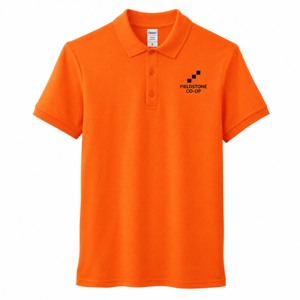
Regular-fit short-sleeve polo
The linked regular-fit cotton polo lists 220 GSM fabric and unisex XS–3XL sizes. Gray has a listed polyester exception, so confirm the selected color. Its minimum is two shirts; case pack 36 is separate. Measurements may vary by up to two inches.
The care notes specify water below 30°C and restrictions on bleach, long soaking, hot ironing and dry cleaning. Check the full current instructions and final decorated configuration. No shrinkage, wash-life, cooling or protective performance is established.
AI orange-polo artwork concept, not a manufactured order. Click the small image for the actual product.
Keep the final garment brief and handoff responsibility clear
Approve the identity artwork only after fit, layers, care and the real role requirements have been checked. Maintain the receiving contact and delivery assignment through the operational process. If a new garment is justified, compare the confirmed configuration at DecentCustom with that brief.