FOOD CO-OP OPERATIONS · REUSE & PURCHASING
A missing tare record is an information problem; a missing outer carrier is a different need. Separate the two before asking a co-op to approve new printed supplies.
Give each item a job before replacing it
A bulk-food jar holds the product. A temporary record connects that purchase to its item information and empty-container weight. An outer bag groups the packed purchases for carrying. One co-op shopping trip can need all three, but one object does not replace the others.
That distinction matters when a department requests new supplies. “We need branded bags for the bulk area” may describe a real carrier need, or it may be a proposed answer to a completely different problem. Review the actual task before approving the item.
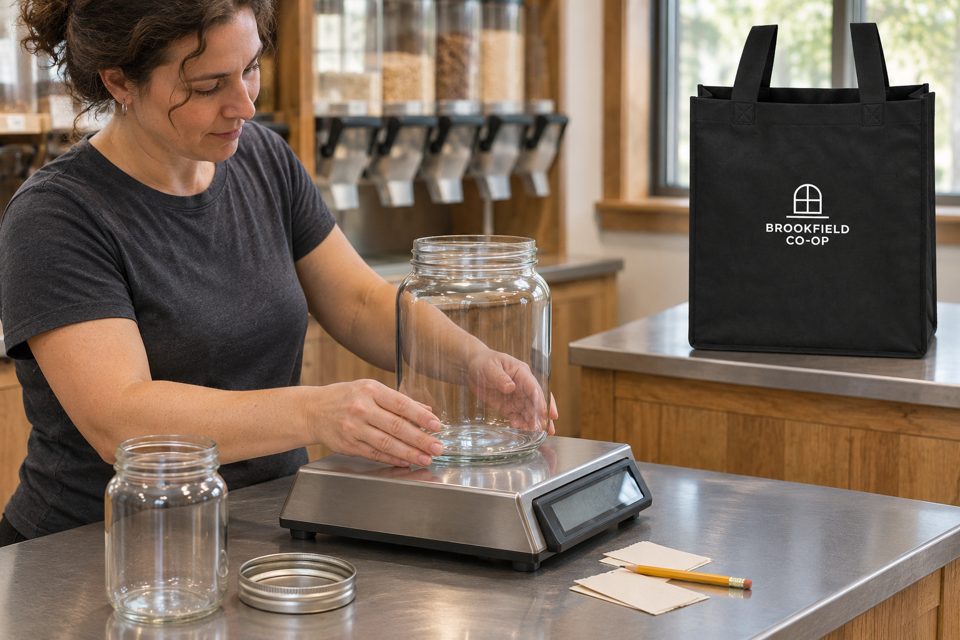
Reuse a working container without losing required information
GreenStar in Ithaca, New York describes a bulk-shopping sequence on its bulk department page: customers bring a clean container, establish its empty weight, record that weight and the item number, then fill and check out. Its described alternatives also include store-provided containers and prepacked products. Confirm current requirements with the operator rather than applying this sequence to every department or co-op.
Product container
Is the vessel accepted for this particular product and service? Keep an accepted existing container when it remains suitable.
Transaction information
Can staff find the correct item and the required container-weight record? A decorative logo does not supply either value.
Outer carrier
Does the shopper need something to carry the already packed purchase? Check existing bags or baskets before adding another.
A new tote cannot make an unidentified jar ready for checkout. Equally, a correct item record does not establish that the whole purchase will fit safely into a particular carrier. Resolve each task on its own evidence.
A worked request: the proposed item does not solve the reported problem
Fictional department example: Brookfield Co-op’s bulk team reports that shoppers sometimes arrive at checkout without usable empty-weight and item information. The draft request says, “Order printed grocery totes to make bulk shopping easier.” No actual store incidents or staff interviews are represented by this example.
The reviewer asks what the tote would change. The answer is that it would identify the co-op and carry closed purchases. Neither function supplies the missing record. The request therefore needs a different immediate action.
Revised action for this example
Keep: containers already accepted under the bulk service’s rules, and existing suitable outer carriers.
Fix first: the point where shoppers obtain and record the required information. Restore the service’s existing temporary recording materials, make the pre-fill instruction visible and confirm that checkout staff can interpret the record.
Hold: the printed-tote request until the team identifies a separate carrying need that existing options do not cover.
Verify afterward: review whether the next internally observed example contains the required information. Log a remaining gap without claiming that the change has reduced errors or waiting time.
This is a purchasing decision, not an argument against customization. If the remaining task really is carrying sealed purchases, the team can open a separate carrier request with the goods, expected use and configuration to assess. Keeping the requests separate gives each proposed item a reason to exist.
Do not place permanent tare values or item numbers in generic bag artwork. Those details belong to the appropriate current record. Branding should not cover product information or substitute for the store’s weighing and identification method.
A returnable-container program needs a working return route
GreenStar’s April 2023 rental-container pilot report describes a different system: specified containers, a return point, recorded returns and third-party cleaning before recirculation. It is historical evidence of an alternative, not confirmation that the service remains available today.
Before comparing a return program with purchased packaging, establish the actual accepted container, receiving location, record and next handling step. A box marked “returns” does not create a functioning service. Do not promote a historical program’s fees, app or acceptance rules as current instructions without confirming them.
For the separate shopper-facing decisions, check container acceptance and return arrangements. A bulk-container policy should not be extended to hot food, chilled goods or every other product merely because the same customer owns the container.
Reuse also does not establish a measured cost or environmental saving by itself. Purchase price, repeated use, loss, cleaning, transport and the alternatives affect a real comparison. Without those inputs, leave the result unclaimed rather than inventing a break-even number.
Consider a new tote only for an identified carrying task
If a separate carrier need remains, compare custom grocery bags with the packed purchase and existing options. Confirm the opened shape, closure needs, handling and storage. A jar that fits does not establish protection against breakage or a safe load for a person.
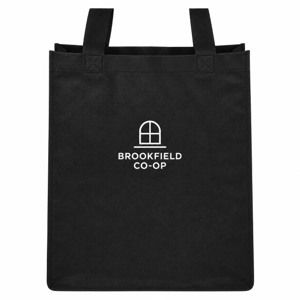
Non-woven outer carrier, not a refill vessel
This non-woven grocery tote lists 80 GSM polypropylene, an open compartment with an inner bottom board, 13 W × 15 H × 10 inches and a 5 W × 8 H-inch imprint area. The third dimension is unnamed; confirm the opened shape. The current minimum is 12 bags; case pack 100 is a separate term.
AI artwork concept, not a manufactured order or performance test. No carrying capacity, direct-food-contact, insulation, washing or lifecycle result is established here. Click the small image for the actual product.
Approve the solution to the actual task
In the Brookfield example, the immediate decision is to repair the missing information step and retain working containers and carriers. A later, justified purchase can be evaluated separately. Use DecentCustom for the configuration that the confirmed task requires, rather than treating a new logo as the solution to every operational gap.