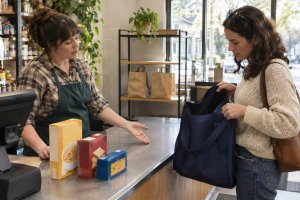
Grocery store operating guide
Choose reuse around the service you actually offer, then decide where a new carrier or a different container still has a job to do.
A new grocery bag is useful when it performs a needed carrying job. Sometimes an accepted customer bag, a returned farm box or an existing container already covers part of that job. The decision starts by separating the outer carrier from the container that actually holds the product.
A shopping tote can carry a sealed jar. It does not replace that jar. A returned produce box may belong to a store’s established return arrangement. That does not make every used box acceptable for every service.
Use the routes below to identify what can be reused, what needs confirmation and where a new bag still makes sense.
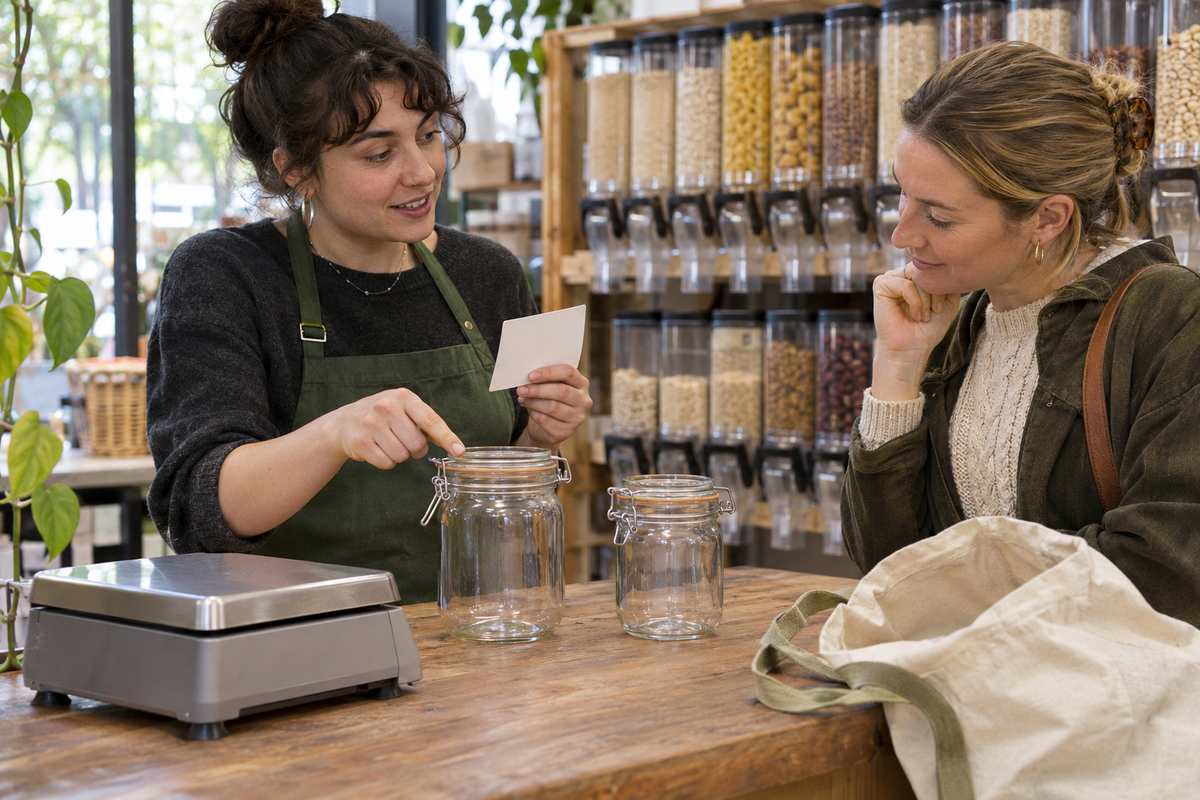
Separate three different reuse decisions
| Route | What is being reused? | What must be settled first? |
|---|---|---|
| Customer carrier | A bag, basket or box carries already packed purchases home. | The shop’s acceptance policy, the actual packed shape and a manageable carrying arrangement. |
| Refill container | A jar or bottle receives a particular refill product. | Product suitability, container acceptance and the shop’s weighing and information process before filling. |
| Store return arrangement | A specified box, bottle or container returns through an agreed route. | Which items are accepted, where returns go and who handles the next step. |
There are real examples of each kind of choice. Granor Farm’s store FAQ says customers may bring back its boxes, use their own bags and return glass milk bottles. These are named return options at that farm store, rather than a general rule for all containers.
For refill shopping, compare two different systems. re_ grocery in Los Angeles describes customers weighing containers at a tare station and recording a product code. Mission Refill describes a staff-assisted tare and RFID process for household and personal-care refills; it states that it does not sell bulk food. A generic label or an imagined weighing routine should not be substituted for either store’s actual system.
Check acceptance before choosing the printed carrier
Start with the product and service. If the customer is carrying factory-packed dry groceries, your question concerns the outside carrier. If the customer wants to refill a product, the container decision happens earlier and involves different conditions.
Record the answers to these questions with the person responsible for the service:
- What does the container hold? Distinguish sealed goods carried together from a product placed directly into a refill container.
- Is this container accepted for this product? Use the operator’s current policy and product requirements. The fact that a jar has a lid is not an all-purpose approval.
- What happens before filling? Identify the correct staff check, empty-weight record or other required step. Tare is the empty-container weight used by the store’s weighing process.
- What information must remain attached? Keep product identification and other required information usable. Decorative branding must not cover it.
- How will the packed purchase leave? Consider the customer’s full set of items and preferred carrying method, rather than filling the largest possible bag.
- What is the fallback? State what staff should offer when a customer forgets a carrier or brings a container the service cannot accept.
Where a shop requests clean, dry, empty containers, put that instruction before the visit as well as at the point of use. Do not invent a universal cleaning method or acceptance rule for products you have not assessed.
A return arrangement also needs a receiving location. If staff cannot distinguish a returned box from outgoing stock, a marked return point or clearer instruction may be more useful than another outgoing bag. Avoid promising that reuse will reduce total cost or environmental impact without evidence for the actual system.
A decision example for a mixed purchase
Illustrative scenario: a shopper arrives with an existing tote, a jar and a returned farm box. They want to buy sealed pantry goods and ask about a refill service. This is a planning example, not an observed customer visit.
| Item at arrival | Decision | Next action |
|---|---|---|
| Existing tote for sealed pantry goods | Potential carrier, if accepted by the shop and suitable for the packed purchase. | Check the actual arrangement with the customer. Do not add a new bag automatically. |
| Jar for a refill product | Not yet accepted simply because the shopper brought it. | Ask the refill operator about that product and complete the required pre-fill process. |
| Returned farm box | Use only the shop’s established box-return route. | Confirm it is an accepted return and put it at the designated receiving point. |
| No suitable carrier for the remaining purchase | A different carrier is needed. | Offer the ordinary or custom option that fits the goods and service; explain any applicable choice or charge. |
The useful outcome is a separate decision for each object. “The customer brought containers” is too broad to tell the next employee what has been accepted or what still needs attention.
A short record to copy
Product/service: ____
Container or outer carrier: ____
Accepted by, under which policy: ____
Pre-fill or return step: ____
Required information preserved: ____
Fallback when unsuitable: ____
If you cannot fill the acceptance line, keep that decision open. A supplier’s product photograph cannot resolve a store-specific container question.
Where a new bag can still have a useful role
Browse custom grocery bags when you have identified a carrying need that existing materials do not cover. Compare the real packed purchase, storage space, order quantity and customization before choosing.
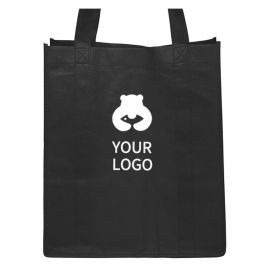
Non-woven grocery tote
The product page lists 13 W × 15 H × 10 inches, 80 GSM non-woven polypropylene and a 5 W × 8 H-inch imprint area. The third dimension is not named on the page, so confirm the opened shape against your packed items. Current minimum: 12 bags; listed case pack: 100. No tested carrying capacity is established here.

Small white paper bag
The page lists 4.75 W × 8.75 H × 3 inches and an unlined white-paper construction for dry, protected items. Current minimum: 200 bags; listed case pack: 500. Compare the fully wrapped item and closure allowance. It is not a liquid, grease-resistant or temperature-control package.
A small white paper bag and a larger non-woven tote are different formats. Neither should be described as a substitute for a product-compatible refill vessel. A paper bag may suit a small, dry, protected item; a tote may help group separately packed purchases after a fit check. Product-specific limitations and testing still matter.
Make the reusable option easy to understand
Tell customers what the service accepts, what to bring, where to start and what is available if they forget. Give staff the same information. If the process changes, update the website, arrival notice and counter instruction together.
Once that route is settled, compare custom products from DecentCustom for the part that still needs a purchased item. Keeping an accepted existing carrier is a valid outcome. The goal is a workable service and a clear choice, rather than adding a branded object to every transaction.
Questions about reuse and new bags
Can a grocery tote be used as a refill container?
Treat it as a carrier unless the exact product and use have been assessed otherwise. A tote carrying a closed jar is performing a different job from the jar that holds the refill.
Does a retailer accepting returned boxes mean we can do the same?
It shows an alternative worth examining. Your shop still needs its own accepted-item list, receiving route and handling arrangements.
What if a customer has no bag?
Provide the fallback that fits your shop’s policy and the actual purchase. It may be an ordinary bag, a suitable new carrier or another approved option; explain the choice before packing.