BULK FOOD OPERATIONS · BEFORE THE VISIT
A customer should be able to plan a visit without guessing whether a jar is required, whether prepacked stock is available or where to ask for help.
Explain the shopping routes before asking people to bring anything
Bringing a container and buying a prepacked item are different ways to shop. Neither tells a customer everything they need to know: which products are available, which containers are accepted, what preparation is required or what happens if they arrive without one.
Start with your actual service. If you offer more than one route, describe each plainly. If a route is unavailable for an item, say so before the customer travels or starts filling. A slogan about bringing a jar cannot replace that information.
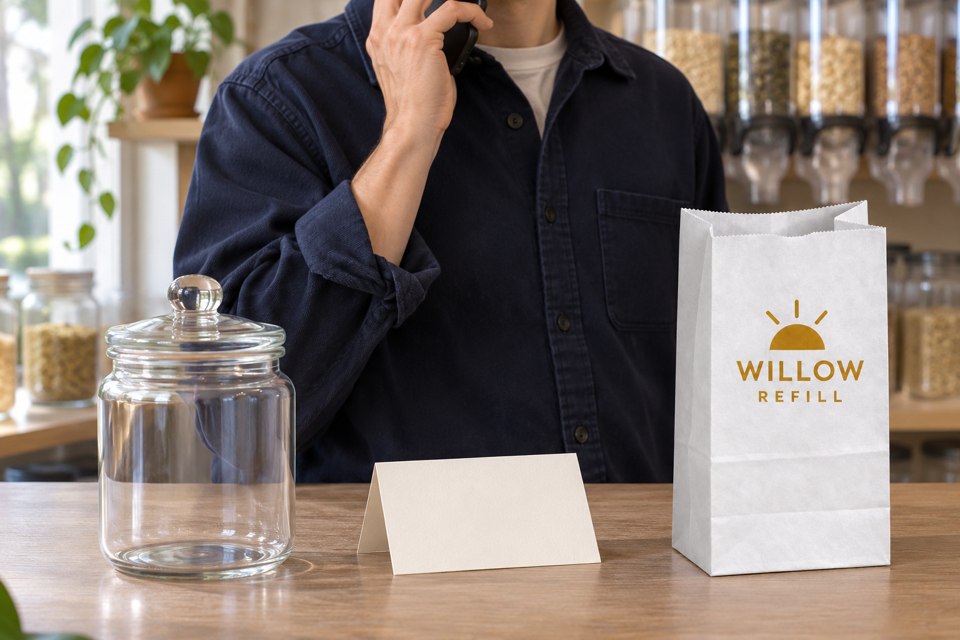
Three questions hidden inside “Do I need my own container?”
A named operator provides a useful example. GreenStar Food Co-op’s bulk department describes containers available in the department, pre-bagged and priced options, and a bring-your-own process involving an empty-container weight and item number. Its page shows that those routes can coexist. It does not establish your shop’s stock or mean every product is offered in every format.
Keep food refills separate from household-product refills and prepared-food counters. A policy for one service should not silently become permission for another.
A previsit message customers can act on
Put the same basic choices on the relevant shopping page and at the arrival point. Use ordinary text that can be read and updated, rather than placing the whole instruction inside an image.
This is a draft for operator review, not a verified Willow Refill policy. Before using it, replace the general contact instruction with your real contact route and confirm that staff can perform the promised check. Where your process starts at a self-service station, describe that actual starting point instead of inventing a compulsory staffed desk.
Link to the precise container rules and any current item information. If there is no reliable live inventory, say that staff need to confirm availability; do not label an old product list “available today.”
Work through a no-container inquiry without promising the wrong stock
Fictional example: A caller asks Willow Refill, “I forgot my jar. Can I still get oats already packed?” The employee first separates two questions: can the caller shop without a jar, and are oats currently prepacked?
For this invented example, the employee checks and finds that prepacked oats are unavailable, but a suitable shop container is available for the loose oats. These are scenario assumptions, not findings about GreenStar or any real shop.
A specific answer after checking
“We do not have prepacked oats available now. We do have a suitable shop container for the loose oats. I can explain its current charge and the filling process before you decide. If you specifically need a ready-packed purchase, we cannot confirm that option for oats today.”
This answer preserves the customer’s choice. It does not substitute a different product without asking, imply that the container is free or promise a preparation service the employee has not checked. If the shop container were also unavailable, the honest next step would be to explain that limit and any genuinely available alternative.
A same-day check is not a reservation. If stock cannot be held, tell the customer that before they rely on the answer. Do not promise how long the visit will take without evidence for the actual service.
A shopping container and an outer bag answer different questions
Once the product route is settled, separate refill containers from outer carriers. A vessel receiving the product needs the operator’s acceptance and appropriate handling process. An outside bag may group an already protected purchase for the journey home.
Printing a logo on a paper bag does not make it a suitable replacement for an accepted refill vessel. Nor does choosing prepacked stock automatically require a new outer bag. Ask whether the customer already has a suitable accepted carrier and whether the complete purchase needs another one.
Consider printed outer packaging only when it has a defined job
Compare custom paper bags after checking the fully packed item and how the purchase will be carried. An ordinary existing bag remains a valid option.
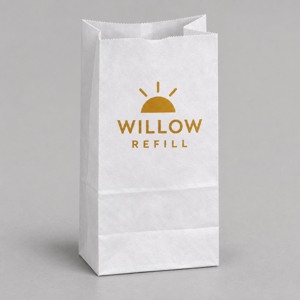
Small white paper outer-bag option
These small white paper lunch bags list 4.75 W × 8.75 H × 3 inches and unlined paper for dry contents. Keep food in suitable inner packaging and check the complete pack, including room to close.
The current minimum is 200 bags; 500 is the case pack. The pictured empty bag does not demonstrate food contact, grease resistance, liquid containment, temperature control or carrying capacity. Click the image for the actual configuration.
Keep one current answer across the service
Have the person responsible for the bulk service review the website text, arrival instruction and staff answer together. Update them when an option changes. Keep temporary stock information separate from stable container guidance so a short-lived shortage does not become a permanent printed promise.
When a genuine outer-packing need remains, review the matching options at DecentCustom. Clear choices and an accepted existing container may solve the customer’s problem without another purchased item.
Prepared by DecentCustom from the linked operator information and current catalog, reviewed November 5, 2026. GreenStar is a named co-op department example, not every independent refill shop and not a product endorsement. Willow Refill, the inquiry and AI artwork are fictional. No stock check, customer trial, food-contact test or comparative environmental result is claimed.