BULK FOOD OPERATIONS · CARRYOUT AND SUPPLIES
Check how the complete purchase will get home before adding a carrier. Then count the supplies actually used, not the weight of food sold.
Plan the journey with the containers already in the purchase
A bulk-food purchase can leave in several accepted containers inside a bag the customer already owns. Buying more food does not automatically mean using another store bag. Refilling more containers does not necessarily mean issuing the same number of new record labels.
Make two separate decisions: how this particular purchase will be carried, and which store supplies actually need replenishing. Keeping them separate avoids an unnecessary new carrier and a misleading order estimate.
Start with the accepted containers, then the route home
GreenStar’s bulk-shopping instructions describe bringing a container and recording its empty weight and item number before filling. That explains part of the shopping process at a named operator. It does not establish that a customer’s full purchase will fit a particular tote.
Ask about the intended journey: a walk, public transit, a bicycle or a short handoff to a vehicle may call for different arrangements. Individual refill shoppers in an informal refill-shopping discussion describe different container-weight and transport preferences. Those comments identify questions worth asking; they are not a representative US survey or proof that one material is always preferable.
- Preserve the product arrangement. Use the operator’s accepted containers, required closures and product information. Do not swap a refill vessel merely because another shape packs more neatly.
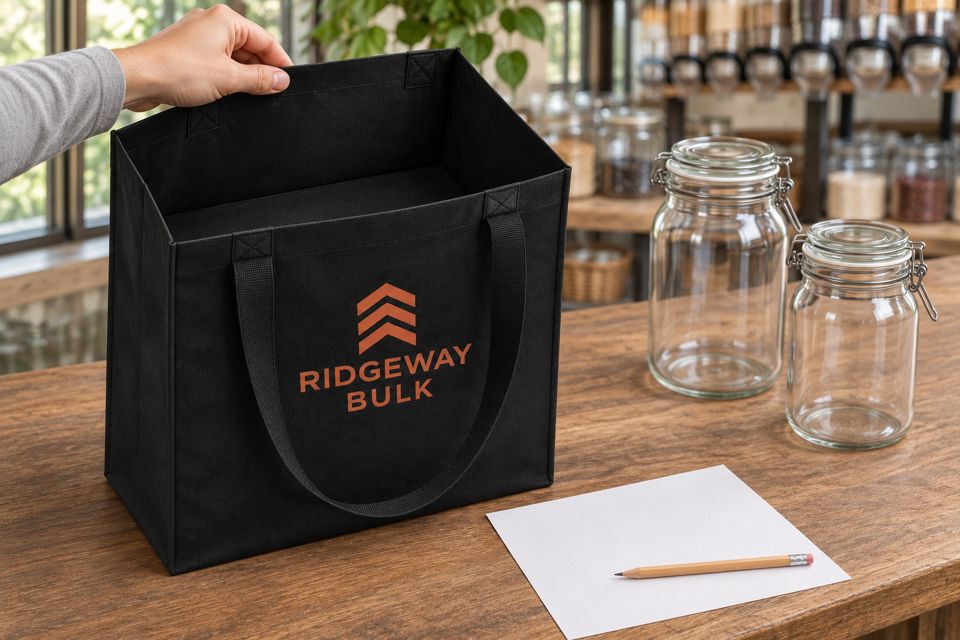
- Check the whole packed purchase. Include the actual containers, closures and any suitable protection. Empty jars and an AI picture cannot establish handling when filled.
- Review the existing carrier. Check its actual condition, usable space and the customer’s intended way of carrying it. A logo, fabric weight or large-looking base is not a tested load limit.
- Keep access workable. Avoid burying information staff still need for checkout. Complete the shop’s normal recording and payment steps before rearranging the purchase for departure.
If the arrangement does not work, discuss a suitable alternative with the customer. Do not solve a carrying problem by overfilling a bag or promising that makeshift padding will prevent breakage.
A carryout decision that can end with no new bag
Fictional planning example: A Ridgeway Bulk shopper plans to walk home with two closed, accepted refill containers and one separately protected dry packet. They have an existing carrier. The planning question is whether that carrier works with the complete purchase, not whether the shop should automatically add a branded tote.
For the example, assume an actual check with the filled purchase finds enough usable room and an arrangement the customer can manage. Required records remain readable through checkout. The decision is to keep the existing carrier and issue no new bag. This is an assumed outcome for teaching the decision, not a trial conducted for this article.
If the check instead shows an awkward or unsuitable arrangement, the outcome stays open. Consider another suitable carrier or a different plan with the customer; do not replace the accepted product containers with unassessed packaging. A different outer bag also needs its own fit and handling check.
Record the reason when a new carrier is used: no existing carrier, unsuitable existing arrangement or another specific need. That explains future purchases better than recording only “bulk customer.” It also leaves room for the valid outcome of using what the customer already has.
Food sold, labels consumed and new bags issued are different counts
A refill transaction can involve several containers, existing usable records, a replacement label and no new outer bag. Keep the unit beside every number. Kilograms of food describe a sale; individual labels and individual carriers describe supplies.
Hypothetical single-shift record: Assume 20 bulk checkouts, 31 filled containers and 47 kg of net food sold. These figures are invented and are not evidence of demand or typical shopping behavior. Count the two supply items separately:
Record labels
Opening usable stock: 90 labels
Received during shift: 0 labels
Closing usable stock: 64 labels
90 + 0 − 64 = 26 labels consumed.
The issue record accounts for 24 labels handed out and 2 spoiled labels: 24 + 2 = 26. Issued and spoiled are separate reasons for the same stock reduction.
New outer bags
Opening usable stock: 18 bags
Received during shift: 0 bags
Closing usable stock: 15 bags
18 + 0 − 15 = 3 bags consumed.
All 3 were issued, with no spoilage in this example. The record does not say that 20 checkouts require 20 new bags.
The arithmetic assumes no transfers, returns or other stock adjustments. Include those movements when they occur in real records. Investigate an unexplained difference instead of assigning it automatically to customers.
The 31 filled containers do not establish a fixed one-label-per-container requirement, and 47 kg does not convert into labels or bags. Use the store’s actual information process and observed supply use. One invented shift is not a basis for extrapolating a weekly order.
Ask the replenishment question in the correct unit
For labels, track each format’s usable stock, issues, spoilage and replenishment interval. Confirm how many finished labels are supplied in the selected ordering unit; a sheet picture does not establish the yield. Preserve a suitable existing recording method while a new label is being evaluated.
For carriers, track the particular bag format issued, remaining usable stock, confirmed incoming orders and where the next delivery will fit. Separate the person using the item from the person approving artwork, ordering, paying and replenishing it.
Use representative periods from your own operation and note changes in services or container acceptance. Do not copy the example’s consumption into an order. The useful record explains what ran down and why; the order also needs current lead time, minimum quantity, storage and the final configured cost.
Consider a new tote after identifying the remaining carrying need
Use our guide to check bag fit and reorder inputs, then compare custom grocery bags only for a job existing materials do not cover.
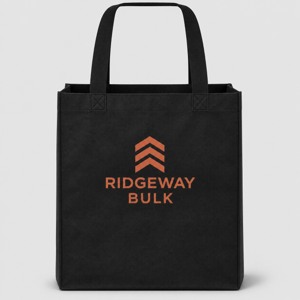
Open non-woven carrier to evaluate
This non-woven grocery tote lists 80 GSM polypropylene, an open main compartment, an inner bottom board and 13 W × 15 H × 10 inches. Confirm the unnamed third dimension and opened shape against the actual packed purchase.
The minimum is 12 bags; the case pack is 100. Those are order and packing quantities, not carrying capacity. No tested load, food-contact, washing or temperature-control performance is established here. Click the image for the actual product.
Keep the purchase decision and supply record connected
A useful end-of-day review asks which purchases genuinely needed another carrier, which arrangements already worked and which supplies actually ran down. Carry those findings into the next brief at DecentCustom. Keep a suitable existing bag when it covers the job; order a new format only when its purpose and conditions are clear.
Prepared by DecentCustom from the linked operator instructions, limited individual shopper discussion and current catalog, reviewed November 5, 2026. Anonymous forum contributors’ locations are not established. Ridgeway Bulk, the purchase and all stock figures are fictional. No packing trial, physical performance test, sales forecast or comparative environmental result was produced.