Before promoting a spring garden workshop, tell participants what they will use, who supplies it and what they can take home. Keep optional shopping separate from the class requirements.
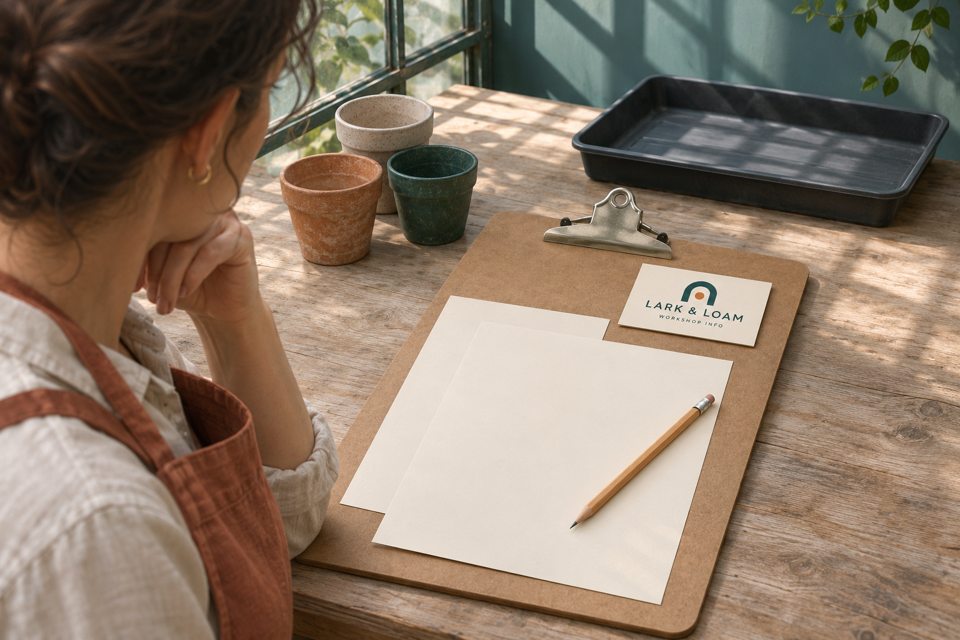
Start with what participants will actually do
A demonstration, a hands-on session and a take-home project need different preparation messages. Describe the activity before listing promotional items. A person watching an instructor use one tray should not infer that every attendee receives a tray to keep.
Chicago Botanic Garden’s Smart Learning guidance asks readers to consider class level and prerequisites, read the description carefully and bring required materials and tools listed for a making or planting class. The preparation list belongs to the particular class; a gardening topic alone does not establish its contents.
A contrasting operator example comes from Portland Nursery’s current wreath workshop descriptions, which explicitly include wreath-making materials and separately advise participants about dressing for the greenhouse setting. These are seasonal wreath examples, not announced spring classes or policies for another garden center. Their useful lesson for an editor is to state inclusion and preparation separately.
Give every item an owner and a destination
| Item type | Question to resolve | Message to approve |
|---|---|---|
| Instructor demonstration equipment | Who provides it, and is it shared? | Used by the instructor or group; take-home status stated explicitly |
| Included participant materials | What does each confirmed place receive? | Name the actual included materials and any relevant limits |
| Participant bring list | Is the item required, and may an existing item be used? | Clear item description and a route for questions before buying |
| Optional retail items | Can someone fully participate without buying them? | Optional purchase, separate from the required preparation list |
Do not quietly move an unresolved item into “bring your own.” Ask the class organizer to settle who supplies it first. If participants may bring a suitable item they already own, say so in the approved instructions. If suitability is unclear, give the organizer’s existing question route rather than recommending a speculative purchase.
Count places and shared equipment separately
Fictional planning example: an organizer confirms 12 participant places, one small pot per participant and two shared demonstration trays. The participant-pot requirement is 12 × 1 = 12 pots; the shared-tray requirement remains two. Neither number establishes spare stock, tool suitability, staffing or room capacity.
The draft reminder says “materials included,” but the internal list leaves writing materials unassigned. The coordinator asks the instructor and receives a fictional decision: participants may bring an existing notebook and pencil; the pots are included and go home with them; the two trays stay with the instructor. The coordinator replaces the vague line with those separate statements. An optional retail seed collection is removed from the bring list and labelled as optional shopping.
The resolved example has four distinct outcomes: 12 included take-home pots, two retained shared trays, a participant notebook-and-pencil instruction and a separate optional offer. It does not turn two demonstration trays into 12 personal kits. Actual workshops need their own confirmed decisions, including any spare-material plan, before using this method.
Read the reminder against the approved class description
Check the class title, level, location, date and registration route against the current organizer record. Then read each supply line: can a participant identify what is provided, what to bring, what stays on site and what is optional? Confirm that the registration page, reminder and on-site welcome information agree. A printed card does not confirm a place or override the booking record.
If a material or preparation requirement changes, update the existing participant communication route and explain the actual change. Keep the current full list available there. A short card can point to that information, but it cannot carry an entire lesson plan or update itself after printing.
Print a small information route only if one is useful
A dry welcome-desk card
These custom business cards for workshop information are listed at 3.5 × 2 inches, with 14pt standard paper as the default thickness. The current minimum quantity is 50, and the listing specifies increments of 50. The picture is an AI artwork concept.
Compare custom business cards for a stable garden-center identity and information route, then prepare the actual approved artwork with DecentCustom. Ordinary paper is for a dry desk or handoff; this is not a waterproof planting label, tool, admission credential or included pot.
If the existing registration confirmation already provides a clear current supply list, use it. Order a separate card only when it closes a real information gap; keep changing class details in the organizer’s current communication.
Checked November 13, 2026: the two linked operator sources and current product listing. The responsibility matrix and worked example are editorial planning aids. No real workshop booking, participant survey, procurement saving or business result was measured.