Label the family’s current stage before sending a welcome message. A school visit, trial reservation or waitlist notification can require another step before a place is confirmed.
Keep interest, experience and confirmation separate
“Welcome” can mean an invitation to learn about a program or a message to a confirmed student. Before approving a printed card or family email, decide which meaning applies. Match the wording to the provider’s current record rather than assuming that a submitted form or scheduled visit establishes attendance.
| Current stage | What to check | Do not infer |
|---|---|---|
| Enquiry or school tour | The actual visit arrangements and information route | Acceptance or a reserved class place |
| Trial class | Provider confirmation, availability and the trial’s conditions | Guaranteed ongoing enrolment or unconditional free attendance |
| Application | The application status and the provider’s next step | That submission is acceptance |
| Waitlist or opening notification | The current offer and required response method | A confirmed place or a predictable waiting time |
| Confirmed enrolment | The provider’s actual confirmation and current starting instructions | Permission to change its arrival or participation procedures |
This is an editing checklist, not a universal admissions sequence. Some programs use different stages or names. Keep their actual process and terminology attached to the message.
Preserve the condition that separates one stage from the next
Northwest Montessori School’s admissions process separates getting to know the school, reviewing materials, applying and completing registration after acceptance. Its page therefore provides a concrete reason to distinguish an application from a completed enrolment. A general information card does not replace any of those steps.
Seattle Gymnastics Academy’s trial-class page says trials require confirmation with Member Services in classes with openings, and a trial reservation does not guarantee enrolment. It also states that a trial becomes the paid first class if the student enrols; there is no obligation to continue, and no charge if they do not. Retain that condition rather than shortening the offer to “free class.”
The same operator’s new-family waitlist guidance distinguishes notifications from claiming a place and specifies a phone response rather than an email reply. This is that operator’s method, not a rule to copy to every school. Check the current instructions for the selected program before telling a family how to respond.
Correct the stage before sending a student welcome pack
Fictional editing example: a coordinator drafts “Your class place is confirmed” after a family receives a waitlist-opening notification. The program record still shows that the family must respond through the stated channel and receive confirmation. No completed enrolment is recorded yet.
The coordinator removes the confirmed-place wording and changes the message to identify the actual stage: an opening notification with a response still required. They direct the family to the provider’s current instructions and keep the enrolment field pending. The general program information remains available, but the student-specific start message is held until the provider confirms the place.
The completed correction resolves the misleading message without inventing an admission result. If confirmation subsequently arrives, the coordinator checks the selected class, site and approved start instructions before issuing that next message. If it does not, the enquiry or waitlist record remains at its actual stage.
Make the next action visible without replacing the original process
Read the message as a family would: what has happened, what remains to be done and where is the current instruction? A visitor should not have to guess whether an email acknowledges interest, reserves a trial or confirms attendance. Use the provider’s existing portal or communication route for individual status details.
For changing availability, avoid printing an unverified place guarantee or waiting-time promise. Check any trial condition, current offer and response method before repeating them. Printed material can point to the information; it cannot update the enrolment record or establish permission to attend.
Keep a general card in its information role

A dry-desk program information card
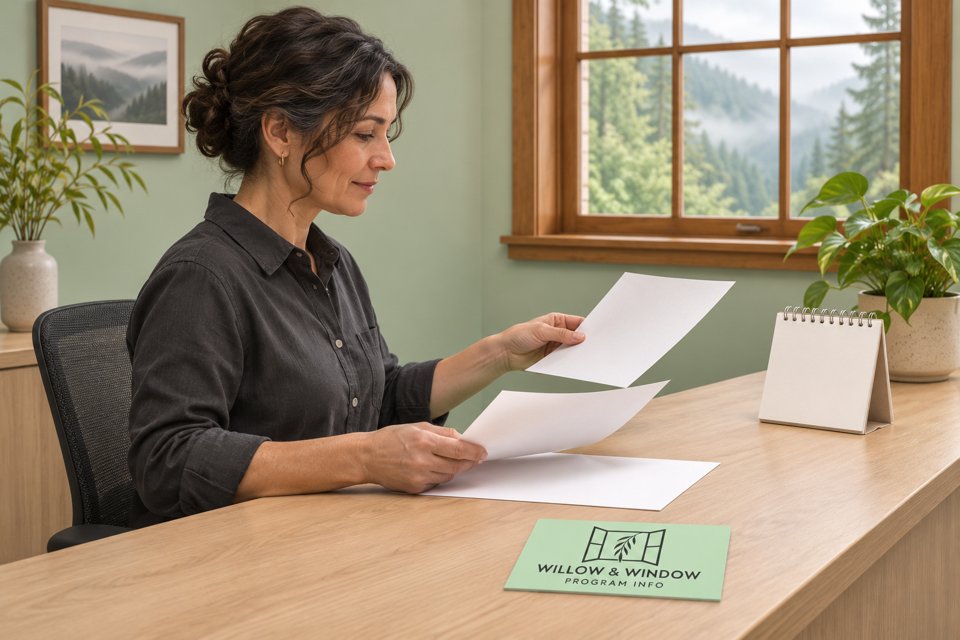
These custom business cards for program information are listed at 3.5 × 2 inches, with 14pt standard paper as the default thickness. The current minimum quantity is 50, in increments of 50. The image shows an AI artwork concept.
Compare custom business cards if a stable program identity and information route would help at an approved dry desk. Prepare actual approved artwork with DecentCustom. The paper card is not a trial reservation, a confirmed class place or an admission credential.
Use existing status-specific messages when they already guide families clearly. Order an additional general card only when it serves a separate information need, with current individual arrangements kept in the provider’s original process.
Checked November 13, 2026: the linked provider pages and current product listing. These selected Seattle-area processes are examples, not national admission rules or live vacancy records. The correction is fictional; no form, booking, payment or enrolment was submitted, and no learning or business outcome was measured.