Grain weight, packaging consumption and storage space are different measurements. Count the supplies you actually use, then check whether a proposed order can arrive and fit when needed.
Use the consumption of the specific suitable supply, its usable stock, existing commitments and confirmed replenishment timing. A mill’s output or a food order’s shipping volume does not tell you how many shopping bags to buy.
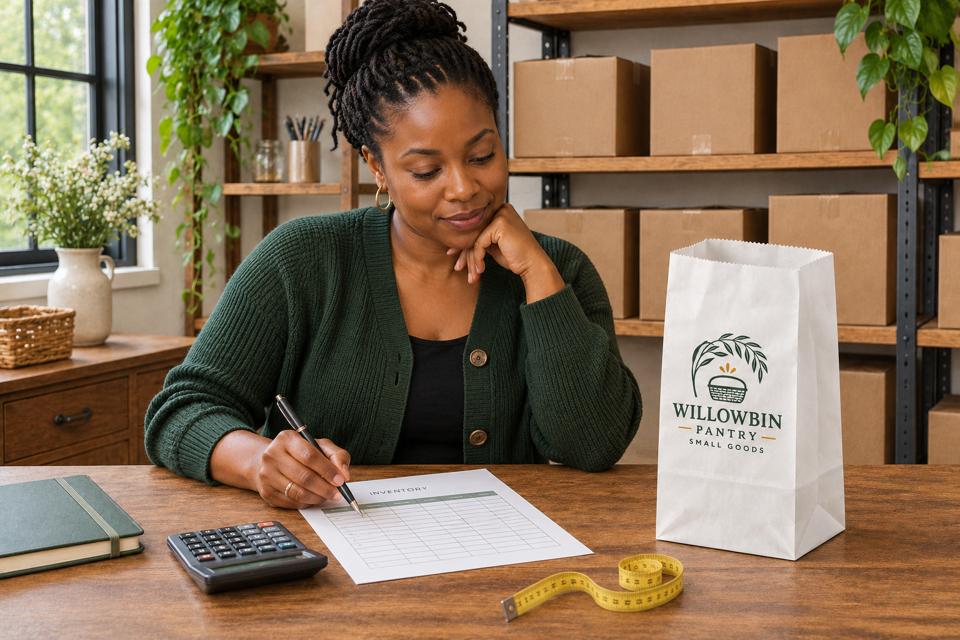
Count bag use, not pounds of grain
A large original grain sack and a small purchase in suitable inner packaging are different handoffs. Keep original grain packs and retail carryout separate in your records. Count a supplementary bag only where it is actually appropriate; do not assign one automatically to every food pack or order.
The operator in our grain-store research, Maine Grains, explains in its shipping FAQ that order volume affects its shipping calculation and bulk bags can cost more to ship because of size and weight. Those are its food-fulfillment terms. They do not establish the carton dimensions or freight charge for a separate printed-supply order.
For the supply you are considering, record usable stock, units issued and the dates covered. Exclude damaged or obsolete stock from usable quantity, and record stock already committed to an event or order separately. Keep different bag sizes separate. Five hundred unsuitable bags cannot fill a shortage of the required format.
If no reliable usage history exists, start a dated count and a specific upcoming-use plan. Leave the forecast uncertain rather than turning missing data into zero or borrowing another store’s rate.
A worked example that catches a timing problem
The following is a fictional arithmetic exercise, W1212. Every stock and timing input is invented for explanation, not a forecast or supplier delivery promise. It assumes one already-qualified bag format and steady use, with no incoming order.
| Illustrative input | Value |
|---|---|
| Expected use | 35 bags per week |
| Assumed replenishment interval | 2 weeks until usable arrival |
| Planning reserve | 20 bags |
| Usable stock on hand | 70 bags |
| Already allocated elsewhere | 15 bags |
| Confirmed incoming stock | 0 bags in this fictional example |
Work the units through
Free stock: 70 − 15 = 55 bags.
Use before assumed arrival: 35 bags/week × 2 weeks = 70 bags.
Reorder reference point: 70 + 20 reserve = 90 bags.
Gap to that reference point: 90 − 55 = 35 bags.
The 35-bag gap is a planning signal, not automatically the order quantity. It includes the reserve. More urgently, the shop would run short by 15 bags before the assumed arrival: 55 − 70 = −15. An order arriving in two weeks cannot supply bags needed earlier.
First resolve that timing gap with an appropriate available alternative, a confirmed earlier arrangement or a change to the handoff. Check suitability before using a different bag. Then recalculate the later order using the replacement stock and timing actually agreed. Buying more of a late item does not solve an earlier shortage.
For real planning, use a confirmed date that includes artwork approval, production, delivery, receiving and any preparation needed before use. Review changes in demand and existing commitments. The simple steady-use example does not predict peaks or interruptions.
Measure the supply cartons, not the opened bag
The bag’s displayed width, height and gusset describe the individual product. They do not give the dimensions of the shipping carton. A carton weight does not supply those dimensions either. Ask how the actual purchased quantity will be packed before deciding whether it fits your storage area.
Here is a separate, purely hypothetical space check: suppose a supplier confirms two cartons, each 12 × 10 × 6 inches. Each occupies 720 cubic inches; together they total 1,440 cubic inches, about 0.83 cubic feet. These numbers are not dimensions or packing quantities for the product below.
A clear internal bay measuring 14 × 12 × 14 inches could nominally contain those two cartons stacked 12 inches high in that orientation. That dimensional comparison still does not establish shelf capacity, permitted stacking, access or a safe storage arrangement. Check the actual location and handling requirements. Similar total volume alone does not prove a different carton shape will fit.
Compare the minimum with the need you calculated
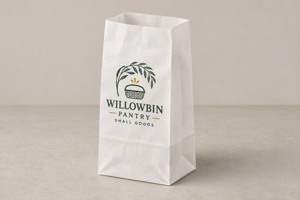
An option for a suitable small, dry handoff
The current custom white paper lunch bags listing specifies a 200-bag minimum and a 500-bag case pack. Those are different figures. Compare custom paper bag sizes if the actual packed item requires another format.
This handle-free, unlined white paper bag is listed at 4.75 inches wide × 8.75 inches high × 3 inches, for dry contents. Keep food in suitable inner packaging, measure the complete pack and allow for closing the top. It is not a replacement for a heavy grain sack or a protective shipping carton. The Willowbin image is an AI artwork concept, not a fit or load test.
A minimum of 200 would exceed the 35-bag reference gap in W1212. That does not make either number wrong: one is a selling condition; the other comes from fictional stock assumptions. Check expected use, space, total cost and timing before committing. Existing suitable blank bags or another compatible option may better match a short requirement.
Ask for a usable quote
Bring the supply brief to DecentCustom or your existing supplier. State the format, selected artwork and options, required quantity, destination and the date the supplies must be ready for use. Ask:
“Please confirm the purchased quantity, how it will be packed, carton count and outside dimensions, the full delivered total, and the expected usable-arrival timing after artwork approval. We will compare those details with our stock and storage plan before ordering.”
Record who can approve the purchase, who receives it and who updates the stock record. Check the actual received quantity and condition against the order. Keep the next reorder calculation tied to observed use and commitments, rather than repeating the initial assumptions indefinitely.
Should a lower unit price justify a larger order?
Compare the delivered total and whether the extra quantity has a useful place and likely use. A price tier alone does not answer those questions.
Can grain sales predict bag consumption?
Only through an established relationship to the actual handoffs that use that exact bag. Grain weight or order count alone is insufficient.
What if the arrival date is unknown?
Keep it unknown, request confirmation and make any urgent supply decision separately. Do not present the two-week example as the supplier’s schedule.
Source and example boundaries
Reviewed November 8, 2026. The linked Maine Grains FAQ supplies limited food-shipping context. The product page supplies the bag specifications and order minimum. W1212, the carton dimensions and Willowbin branding are fictional. No actual inventory, purchase, delivery, storage test or business outcome was verified.