Warehouse-shopping carrier comparison
A carrier has to suit the shopping channel and the return trip. Extra volume alone does not make it the right choice.
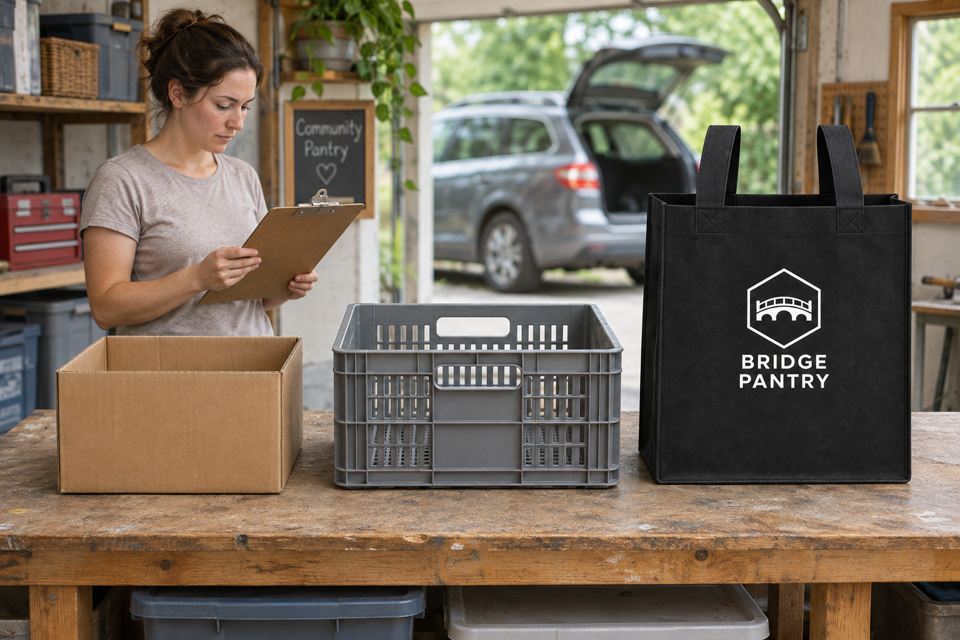
Compare boxes, crates and reusable bags by the task they must complete: the permitted shopping process, the packed shape, vehicle space and the final transfer at the destination. Keep an existing suitable carrier in the comparison. A custom logo can identify a group’s supplies; it cannot establish fit or a carrying limit.
First decide whose purchase this is. A member shopping for their own household or organization and a delivery-platform shopper may be operating under different rules. A useful comparison starts by removing options that do not apply.
Check which shopping rules apply before choosing a carrier
Costco’s U.S. checkout-bag answer explains its decision not to provide conventional shopping bags in terms of operating costs and waste. That does not mean it has never sold a reusable bag as a retail product, or that a local warehouse wants to purchase custom bags from another supplier.
The current DoorDash Costco FAQ, checked November 5, 2026, gives a narrower instruction for that delivery channel: use available large cardboard boxes when appropriate; do not buy bags or use personal reusable bags. It also addresses orders too large for the vehicle. Follow the current platform process rather than substituting advice intended for a member’s personal trip.
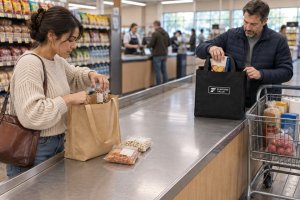
The format comparison below concerns an ordinary member’s own purchasing arrangement, subject to the warehouse’s actual rules. It is not advice for Dashers to use the illustrated tote or a personal crate for Costco deliveries.
Compare the complete handling task, not just storage volume
An archived warehouse-shopping discussion includes preferences for bags, boxes and crates. Some commenters pack at the vehicle; others discuss visibility during receipt checks. Those accounts conflict in places and come from a self-selected group. They suggest questions to investigate, rather than a winning format, a tested load limit or a current price.
Existing cardboard box
Question: is this particular box in suitable condition and the right shape for the closed packages?
Check its actual base, opening, condition and intended use. A box obtained on one visit is not a promise that the same size will be available next time. Keep another permitted arrangement ready if availability matters.
Existing crate
Question: does the rigid footprint fit the space and the route after unloading?
Check the outside dimensions, handles, storage when empty and how contents will be removed. Do not assume a rigid container can compress into a smaller space or that every crate is collapsible.
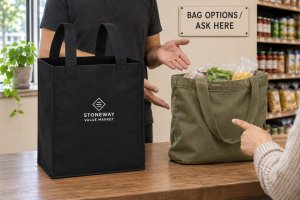
Reusable bag
Question: does its opened base and access suit the actual wrapped purchase?
Check opening, height, handles and any bottom board. An empty bag folding flat does not mean the loaded bag will fit a narrow space or that one full bag is manageable for its user.
For each option, follow the whole sequence: purchase, required warehouse checks, permitted packing location, vehicle placement, unloading and storage afterward. Follow staff directions for receipt checks; forum comments do not establish where packing is authorized. Keep temperature-sensitive handling separate from this outside-carrier comparison.
A worked space check that does not end in a forced bag purchase
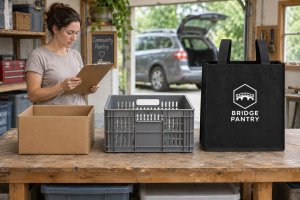
Fictional planning example: Bridge Pantry’s coordinator is arranging the group’s own member shopping, not a platform delivery. Assume a clear, level vehicle space of 18 inches wide × 14 inches deep. The plan requires the carrier to remain upright with its base aligned to that space. These are invented inputs, not measurements of the pictured vehicle.
Existing crate: 20 × 16-inch outside base
In its normal orientation, both 20 > 18 and 16 > 14. Turning it through 90 degrees gives a 16-inch width but a 20-inch depth, which still exceeds 14 inches. Reject it for this specified space and upright arrangement. Do not solve the mismatch by assuming it may lean into another load or block a required area.
Existing box: 16 × 12-inch outside base
The base is smaller than the assumed space: 16 ≤ 18 and 12 ≤ 14. Retain it as a footprint candidate. Height, access through the opening, condition, contents, secure placement and the final handling method remain unchecked. Passing this rectangle comparison is not a complete transport approval.
Candidate bag: opened base not yet confirmed
A listing showing width and height plus an unnamed third dimension does not establish the usable base for this comparison. Keep the bag pending clarification and a suitable physical check. Do not treat an unknown footprint as zero, or as automatically more flexible than the box.
The provisional result is useful without ordering anything: the existing crate fails this specific placement; the existing box merits the next check; the bag has an unresolved dimension question. Another vehicle space or different permitted arrangement would require a new comparison.
Then examine the destination. If the contents are removed in smaller groups rather than moved in a full carrier, record that actual method. Do not prescribe a maximum weight from container size or assume what a volunteer can lift.
Read the actual bag listing as a candidate specification
Browse custom grocery bags when a permitted carrier need is clear. The example below is a format to examine, not a recommendation that every warehouse purchase needs a printed tote.
non-woven grocery tote
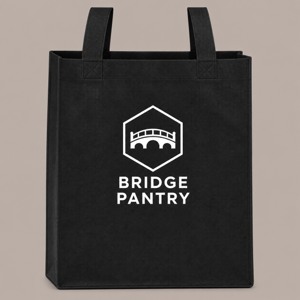
The current SKU decentcustom-to-000131 lists 80 GSM non-woven polypropylene, an open main compartment and an inner bottom board. Dimensions are 13 W × 15 H × 10 inches; the third dimension is not named. Confirm the opened shape and usable base rather than converting the three numbers into an assumed fit.
The minimum is 12 bags; the listed case pack is 100. The page’s approximately 22-pound weight figure is not used here as an individual bag capacity. No tested load, food-contact or temperature-control performance is established by this guide.
AI artwork concept with fictional Bridge Pantry branding matching the comparison scene. Click the small image for the exact product. Artwork size and the pictured proportions are illustrative; they do not establish a manufactured sample or permission to use another organization’s identity.
Keep the buying decision separate from the useful comparison
For the Bridge Pantry exercise, a short record would read:
Purpose: our own member-shopping arrangement, subject to current warehouse rules.
Current decision: retain the existing box for the remaining physical checks. Do not order bags from the incomplete footprint comparison.
Open items: verify the complete packed fit, vehicle access and placement, destination handling, and any carrier dimension still needed. If a new item remains justified, confirm the authorized buyer, quantity, artwork and final configuration total.
Our guide to grocery bag sizes, packing and reorders covers the separate fit and stock-planning task. If that review supports a custom item from DecentCustom, carry the verified requirements into the design preview. A member choosing a personal carrier is not evidence of a warehouse club’s corporate purchasing intent.