Supermarket service guide
Choose supermarket clothing around the movements and environments of each role, then review fit and care with the people who do the work.

Bagging and carryout are different clothing checks
A shirt that looks suitable behind a register may feel different when someone bends toward a cart, turns to pack groceries or steps outside for carryout. The useful starting point is a task list, not a larger logo.
Publix’s front service clerk description includes bagging, cart handling and carryout, with repeated movement and exposure to outside temperature changes. It illustrates why one front-end role can involve several conditions. It does not establish a universal supermarket uniform, protective specification or purchasing authority.
Review movement before counting sizes
Ask employees which tasks they actually perform and which existing clothing causes difficulty. Keep ordinary uniform appearance separate from any employer-required protective equipment or specialist food-service rules. A custom polo is not evidence of visibility protection, heat resistance or suitability for every department.
| Task | Review with the wearer | Decision to record |
|---|---|---|
| Pack at the counter | Reach forward and turn as during normal packing, using an empty mockup. | Does the selected fit allow the usual movement without pulling? |
| Retrieve a cart | Consider normal layers and weather exposure under the employer’s work arrangements. | Which approved layer is needed, and does the uniform fit over or under it? |
| Carryout | Review the approved task and how a badge, hem or pocket interacts with it. | Which uniform details should be changed or kept clear? |
| Change department | Check the department’s own clothing and care requirements. | Is the same garment appropriate, or is a separate choice required? |
Record what the employee says alongside the selected size. Do not infer everyone’s preference from one person’s try-on or ask staff to perform a risky lifting exercise to evaluate a shirt.
A role-based order record
Illustrative record: employee A works indoor checkout and sometimes helps carry orders outside. Their preferred polo size is recorded from the actual garment chart; their approved outer layer remains separate. The artwork reviewer checks the logo at the chosen print size. The operations reviewer confirms care instructions and replacement arrangements.
That record prevents “medium for everyone” from becoming the purchase specification. It also exposes a missing decision: a back-office buyer cannot approve outdoor task requirements from a product photograph.
Before releasing a team order, reconcile each person’s approved garment, size and quantity. If the size chart, existing clothing measurements and wearer feedback disagree, resolve the fit first. Keep individual sizing information in the appropriate internal record rather than on public artwork.
Where printed supplies fit this decision
The polo below is a catalog option to review for an ordinary uniform. The page currently starts at two shirts. Confirm the selected size, care and decoration options; the listing does not certify it as protective clothing.
Compare custom polo shirts only when the format and information task are clear.
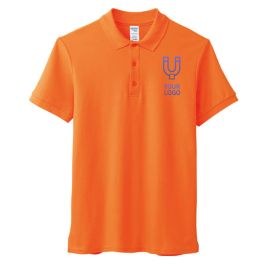
Cotton unisex polo shirt
The current cotton unisex short-sleeve polo page starts at two shirts. Check the selected size chart, care information, decoration and configuration total before ordering. Ordinary uniform appearance does not establish protective performance.
Catalog sample artwork is shown. Click the small image for the exact product. Product information reviewed November 3, 2026; confirm current options before purchase.
Turn the answer into your next decision
Approve the garment and artwork separately. Retain the size chart version, wearer confirmations, care instructions, intended roles and the person responsible for replacements. Use an existing suitable uniform while unresolved fit or task requirements are checked.
If that decision calls for an approved custom item, compare the configuration and design preview among custom products from DecentCustom. Keep existing suitable materials when they already do the job.
A related question
Does matching clothing prove staff can perform every role?
No. Clothing can help present an agreed identity, but training, authorization, task requirements and suitable equipment are separate decisions.