Neighborhood grocery guide
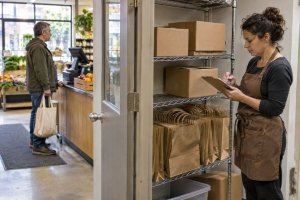
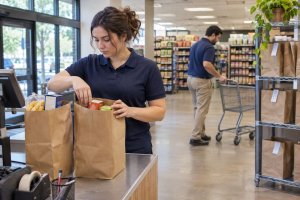
Choose grocery carryout around the packed purchase and the customer’s route. More bag volume is not always a more useful carrying arrangement.
Ask about the trip, not just the basket size
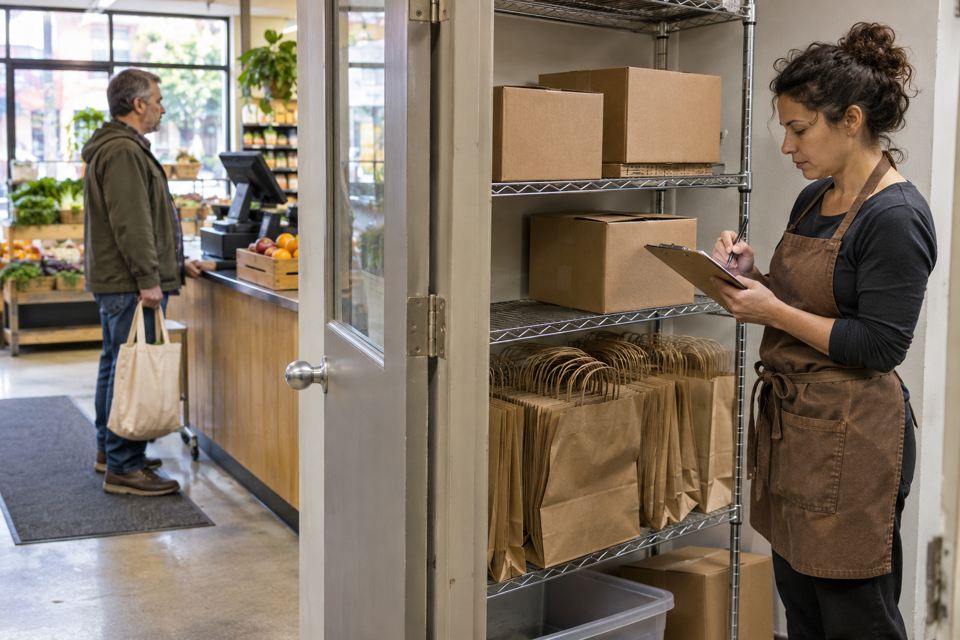
A customer walking a short distance, carrying groceries onto a bus or loading a nearby car may need different arrangements. Ask what help they prefer rather than making assumptions about age, appearance or ability.
Archived warehouse-shopping discussion includes varied preferences for bags, boxes and splitting heavier purchases. These anonymous comments are prompts for questions, not representative evidence about neighborhood customers or tested weight limits.
Compare the complete purchase in manageable parts
| Purchase pattern | Question to ask | Option to examine |
|---|---|---|
| A few sealed items | Does the customer already have an accepted carrier? | Use that carrier or another suitable small format rather than adding a bag automatically. |
| A wide or rigid package | Can it pass through the opening without being forced? | Compare the complete packed shape, not only the nominal bag volume. |
| Several dense items | Would the customer prefer the order divided? | Separate manageable pieces using an appropriate approved arrangement; do not assign a guessed safe weight. |
| Several bags for one order | How will everyone know the set is complete? | Keep a temporary piece count in the store’s existing handoff record. |
Keep food handling and temperature requirements separate from this outside-carrier comparison. A tote holding closed containers does not become a verified food-contact or temperature-control package.
A mixed purchase that should not become one large load
Illustrative scenario: a shopper has a sealed jar, boxed pantry goods and a bulky wrapped item. They already have a modest reusable carrier and will walk home.
- Ask whether they want to use that carrier and how they prefer the purchase divided.
- Check its accepted use and packed opening. Keep the bulky item separate if the combined arrangement is unsuitable.
- Confirm the final piece count with the customer before the handoff.
- If the available carrier or arrangement is unsuitable, explain an appropriate alternative and any applicable charge before packing.
The example’s useful result is a choice about the complete trip. It does not prescribe how much anyone should lift or demonstrate that a particular bag can hold the purchase. Product suitability and the customer’s choice still need confirmation.
Write down recurring shape or handoff problems observed in your own service. That record gives the next purchasing review a better starting point than “customers need bigger bags.”
Where printed supplies fit this decision
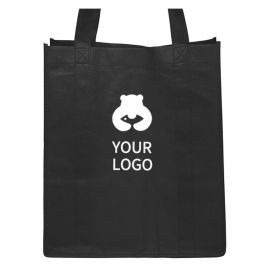
The non-woven tote is a format example, with a current minimum of12 and listed case100. Its dimensions and material do not establish a tested load limit or suitability for every customer’s journey.
Compare custom grocery bags only when the format and information task are clear.
Non-woven grocery tote
Current page: 13 W × 15 H × 10 inches; 80 GSM non-woven polypropylene. The third dimension is not named, so confirm the opened shape. Minimum: 12 bags; listed case pack: 100. No tested carrying capacity is established here.
Catalog sample artwork is shown. Click the small image for the exact product. Product information reviewed November 3, 2026; confirm current options before purchase.
Turn the answer into your next decision
Compare candidate carriers against your actual item arrangements, accepted existing bags and help arrangements. Keep a format only when its role is clear; an existing suitable carrier or a split order is a valid outcome.
If that decision calls for an approved custom item, compare the configuration and design preview among custom products from DecentCustom. Keep existing suitable materials when they already do the job.
A related question
Should we recommend a maximum carrying weight from the photo?
No. A photograph and opened dimensions cannot establish load capacity. Obtain appropriate product evidence and avoid prescribing a customer’s physical limit.