A box left from an earlier delivery is a candidate to review, not an automatic packaging solution. Check the current shipment requirements before changing labels or adding your own branding.
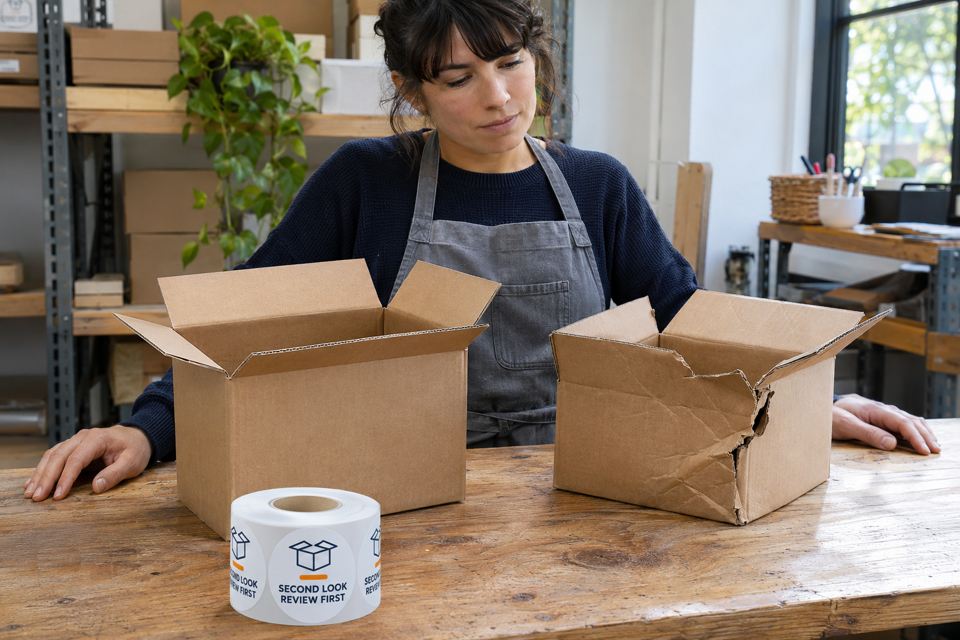
A reuse goal does not override packaging requirements
Check the current carrier and item requirements before retaining a used box. A sound-looking surface and a fresh label do not establish the box’s suitability for the next shipment. New, appropriate packaging may be the correct decision.
The UPS Packaging Guidelines checklist advises avoiding reused boxes and describes new or almost-new own packaging in its general guidance. The UPS packaging-tips page also calls for a rigid box with attached flaps, suitable packaging materials and a current approved shipping label. These are UPS examples; check the requirements for your actual carrier, service and contents.
This review concerns ordinary dry, non-regulated goods. It is not a packing method for dangerous goods, unknown-history containers or items requiring specialist packaging. Route those questions through the applicable carrier process. Do not infer a box-strength rating or permitted load from an AI picture, its dimensions or the fact that it survived an earlier delivery.
Three boxes can lead to three different next steps
The following decisions are invented examples. None represents a physical test or a carrier acceptance decision.
Box A — apparently intact, requirements still unknown
Observed: clean, dry exterior and attached flaps.
Missing: confirmed suitability for the intended contents, packed weight and carrier requirements.
Decision: hold for the remaining packaging review. Do not call it “ready to ship” from appearance alone.Box B — crushed corner
Observed: a visibly crushed corner and a torn edge.
Decision: reject it for this planned parcel and choose appropriate replacement packaging. A logo sticker or extra branding layer is not a structural repair.Box C — old routing label remains
Assumption: the responsible packer has separately established the box and packaging arrangement meet this shipment’s requirements.
Observed: an old address or routing barcode is still visible.
Decision: resolve the outdated routing information, then verify the current carrier-issued label before handoff. The label check does not replace the earlier condition and packing review.
The useful outcome is not “reuse all three.” It is a different disposition for each example, with the reason and unfinished checks kept visible. Do not move Box A into the cleared group simply because Box B was rejected.
Branding and shipping labels have different jobs
UPS instructs shippers to remove or conceal previous shipment markings that no longer apply and use an approved UPS shipping document or label. Keep the distinction between outdated routing information and information required for the current shipment.
For Box C’s ordinary outdated address label, check every face of the box for competing routing information, complete the applicable carrier’s label instructions and verify the new destination against the actual shipment record. Do not cover a current required marking with a decorative sticker. If a marking’s purpose or applicability is uncertain, stop that label change and ask the responsible shipper or carrier.
A custom brand label can identify your business or an indoor review note. It is not a replacement for a carrier-generated routing label, tracking barcode, required transport marking or an appropriate box.
Record the decision, not just the number of boxes retained
A complete note for Box A could read: “Held for packaging review: exterior and flaps checked; shipment suitability remains unconfirmed. The responsible packer must resolve the requirements before this box is assigned to dispatch.” Keep that note with the relevant internal record.
If you also report a packaging-reduction project, separate packaging stock use from waste. A box held for review has not necessarily replaced a new purchase, completed another delivery or avoided a measured amount of waste. Keep those outcomes separate from the review count.
An optional paper label can prompt an indoor review

An existing note or stock-system status may be sufficient. If a team needs repeatable custom paper labels for dry storage notes, the linked product lists white paper as uncoated matte material for indoor use and dry products. Gold- and silver-foil papers are different options; their descriptions should not be transferred to white paper.
Compare custom stickers and labels, then confirm the material, dimensions, total labels, labels per roll and winding direction with DecentCustom. The illustrated “Review First” design is an AI concept for a generic prompt. Check the actual surface and use before selecting it; it establishes no box strength, wet-use performance or shipping approval.