A recycling arrow does not tell an event guest where every cup belongs. Start with the actual items and the collection service, then put a short, specific instruction at the decision point.
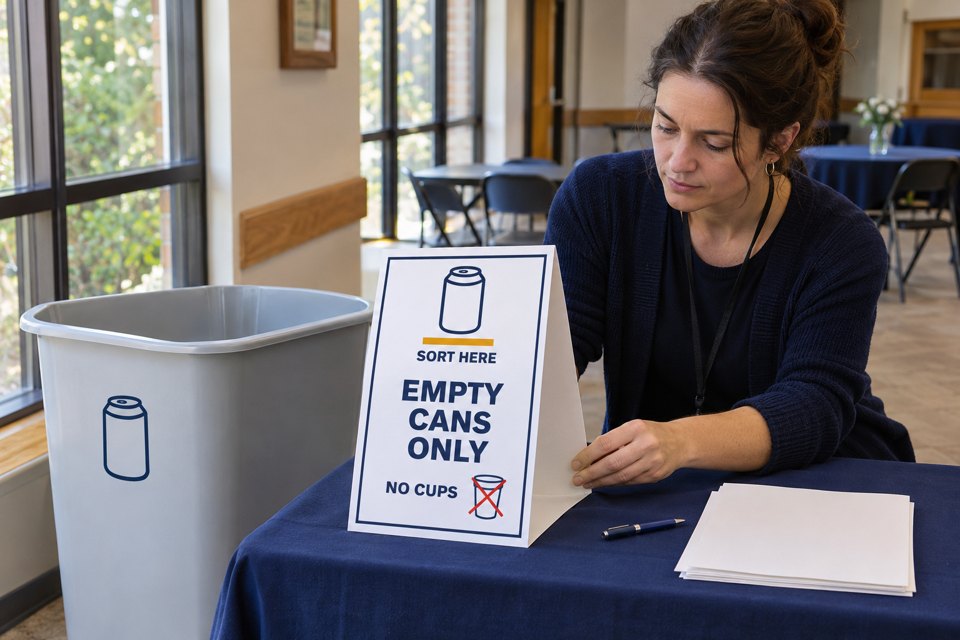
A useful bin sign names what belongs in that stream
Use the collector’s confirmed accepted-item list for this event. Name the material and any required condition, show the actual item when that helps, and make the instruction agree with the bin receiving it. A green background, recycling arrow or “eco-friendly” product description cannot establish acceptance.
The EPA’s common-recyclables guidance explains that a resin identification symbol does not necessarily mean local collection is available. It also distinguishes compostable plastics from conventional plastic recycling. Those are reasons to check the item and program together, rather than put similar-looking packages into one stream.
Conditions matter too. Seattle Public Utilities’ event guidance says single-use cups must meet the program’s empty/clean requirement at disposal, without assuming they can be rinsed at the event. Its discussion distinguishes drinks that leave different residues. This is a Seattle example, not a national cup-sorting rule.
Before drafting, ask the person arranging collection to confirm the event location and date, the actual item or package, its required condition and the stream that will receive it. Include the lid or other separable part in the question if one will be used. A household recycling webpage may help identify questions; it is not your event’s collection agreement.
Work through two similar-looking drinks containers
Fictional example: Sort Here is preparing a small indoor community session. The collection lead has confirmed empty aluminum beverage cans for one dedicated bin. A compostable-looking sample cup has been proposed, but no suitable collection arrangement for that exact cup has been confirmed. There is no assumed rinsing station.
Item A — the confirmed aluminum can
Record: the actual beverage-can format, the collector’s empty condition and the dedicated can bin are confirmed.
Decision: include it on that bin’s message, using a recognizable can picture and “Empty cans only.” Keep the guest instruction consistent with the collector’s condition.Item B — the unconfirmed cup
Record: appearance or a compostable claim does not establish acceptance in the can stream or a separate compost service.
Decision: do not add the cup to the can-bin illustration. Before using it at the event, the collection lead resolves its actual destination with the supplier and collector, or chooses a suitable alternative with a confirmed service.
The team keeps its already planned can service and does not order the unconfirmed cups. That closes this preparation decision without inventing a new compost bin or claiming all cups are non-recyclable. If the event needs a different drinks format, check that item and collection arrangement before changing the guest message.
Give the guest an action and an answer for uncertainty
For this fictional can-only bin, the complete notice could read:
Use that last line only when a helper will actually be available at the indicated table. The helper’s response to an unfamiliar cup is: “This bin is for the confirmed empty cans. Let me check the approved destination for that cup with our collection lead.” Do not guess from the color or symbol on its base.
Keep the main item name large enough to read before the guest reaches the opening. Use a picture of the actual can format rather than a collage of every material that might be recyclable elsewhere. Put the notice with the correct opening; a freestanding message between several bins can leave the destination ambiguous.
Before opening, walk through the station with a colleague using clean example items away from live collection. Ask which opening receives the can and what they would do with an unfamiliar cup. If they select the wrong opening, correct the placement or wording and repeat that part. This is an internal clarity check, not proof of a measured reduction in contamination.
A cancelled service needs a new arrangement, not the old sign
If the collector cancels before opening, the earlier can message is no longer enough. Keep the affected station out of service while the collection lead arranges an approved alternative. A complete temporary notice for the example is: “Can collection is not open here. Please ask the collection helper at the information table for the current disposal location.” Use it only while that help point can provide a real answer.
When the alternative is confirmed, replace the outdated directions at every affected station and brief the people answering questions. If a bin fills during the event, the responsible team must follow the actual servicing arrangement; a sign should not direct guests to keep using an unavailable opening.
Do not turn a printed notice into a recycling result
Keep the approved item list, message version and any unresolved question with the event record. Counts of signs, bins or guest questions do not establish the weight collected or the share successfully recycled. If you also track supplies, separate stock records from measured waste. Report only the collection quantities and outcomes you can actually support.
A paper display may suit a dry information point
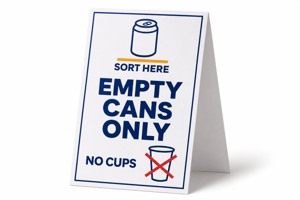
Use existing collector-approved signage when it already explains the station. If a staffed indoor information table needs a repeatable message, compare custom paper table tents for a dry information point. The linked product lists 5 × 7-inch, 14pt card stock, full-color printing, glossy as the default finish and a matte option. The current minimum is 25.
It is a paper display, not a weatherproof bin label or an acrylic holder. Keep material instructions tied to the actual collection arrangement. Review custom marketing materials and confirm the approved artwork and configuration with DecentCustom only after deciding a new display is needed. The illustrated design does not certify recycling acceptance or environmental impact.