A National Craft Month clear-out can begin with supplies already at home. Before offering leftover yarn or fabric, sort what you have, retain useful material information and check the intended recipient's current instructions. A box of mixed materials is not automatically a donation the organization can receive.
How should I prepare leftover yarn?
Seattle ReCreative's material donation guidance asks for organized, untangled yarn with as much known labeling as possible. It excludes yarn that is musty, wet, moldy or dirty.
Separate the yarn you can identify from material whose composition or history you do not know. Keep existing bands and labels with their matching yarn; do not guess a fiber composition to make an offer look complete. A helpful description states what you actually know and leaves missing information unresolved.
For a group clear-out, keep each person's material information attached to the right bundle. Combining every remainder into one anonymous bag makes it harder to describe what is being offered. Sorting is preparation for a receiving decision, rather than proof that the contents qualify.
What information is useful when offering fabric?
Untrash Creative Reuse's donation page asks donors to measure fabric and note the measurements on each piece, except small quilting squares. Its guidance also asks for untangled fibers and excludes dirty or musty items.
Record the size of each piece rather than calling an assorted pile “a bag of fabric.” Keep scraps, larger pieces and partly completed work distinguishable, because the recipient may treat them differently. Do not infer that every listed category is currently being accepted: Untrash's page uses dated and bold formatting to identify its current selections.
Measure and describe the actual material you plan to offer. A decorative new label should not replace an original product label or conceal an unknown ingredient, condition or material identity.
Does an accepted-items list mean I can deliver now?
No. On November 20, 2026, Seattle ReCreative's page carries a November 16–December 1, 2026 donation pause. It also publishes general appointment guidance and a small yarn-only walk-in exception. The temporary pause must be checked before relying on a general rule.
The page's dated pause is an example of why current notices matter; it is not a March 2027 schedule. Recheck the intended organization when planning the actual delivery. A National Craft Month theme does not confirm a receiving window.
Seattle ReCreative also says capacity can affect its final decision at drop-off. An item appearing on a list is therefore different from an organization agreeing to receive your particular quantity.
Should I use a container I want back, or mail the supplies?
Seattle ReCreative asks for sorted materials in containers donors can leave. Untrash requests a description and estimated volume when arranging an appointment, and advance approval for mail-in donations. These are named recipients' instructions, rather than one nationwide packing rule.
Before packing, check whether the receiver expects to keep the container and how it wants the contents grouped. Existing suitable containers may already meet the task. Do not buy branded bags on the assumption that staff will transfer everything out of your own storage tote.
For a mailing, use the recipient's actual current approval and delivery process. Finding an address does not establish that an unsolicited package will be accepted.
Three material groups, one corrected plan
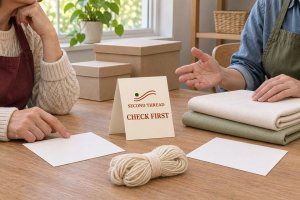
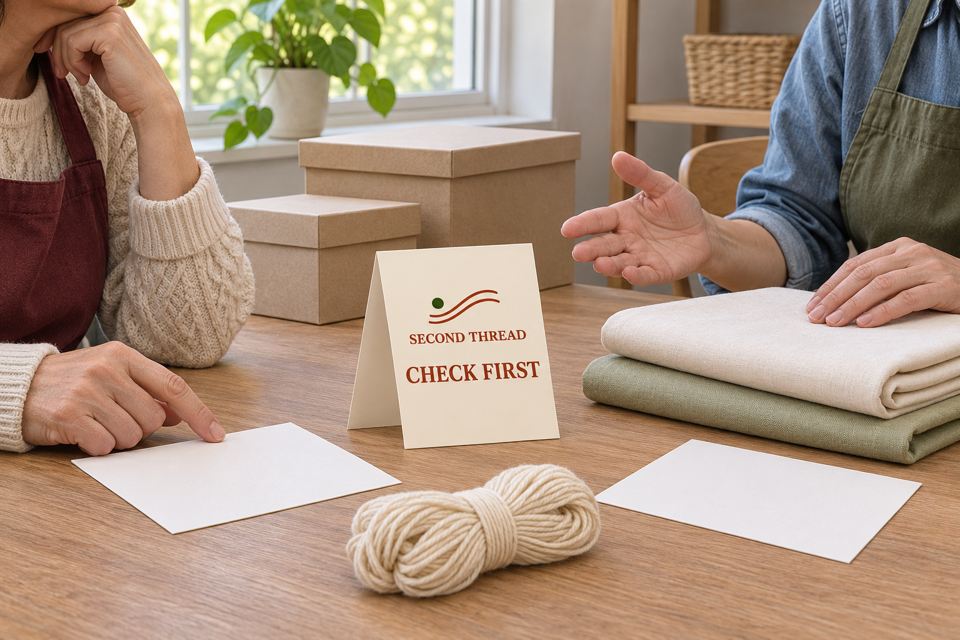
Fictional example: Second Thread plans a March clear-out. Its first inventory combines untangled yarn with matching bands, measured fabric pieces and a separate unmarked container of unknown material. The organizer has drafted “bring any craft supplies” before finding a confirmed recipient.
The group replaces that invitation with an internal inventory. The yarn keeps its bands; each fabric piece keeps its measurement note. The unknown material is excluded from the proposed donation offer, with no claim that it is safe, accepted or suitable for another use. No disposal procedure is inferred.
The organizer withdraws the public collection promise and retains the supplies while the receiving arrangement remains unresolved. The group approves its existing digital inventory for planning and cancels the proposed new print purchase. This completed fictional decision establishes no real donation, appointment or recipient response.
A paper reminder after collection details are approved
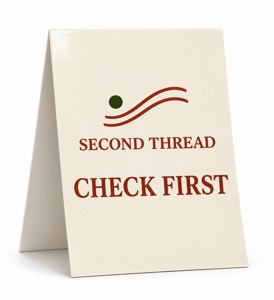
Information at an authorized indoor desk
If a separate print need remains, table tents for approved collection information list a 5 × 7 inch face, default 14pt stock and glossy finish. The current quantity control starts at 25; that does not establish a need for 25 collection points.
Compare custom table tents with existing accurate notices. Bring original artwork and approved wording to DecentCustom for proof review. A paper reminder does not authorize a collection or serve as a donation receipt.
Reviewed November 20, 2026 against the two linked recipients' pages. Their local conditions can change; no March 2027 acceptance, actual donation, tax treatment or environmental saving is verified. Second Thread and the completed inventory decision are fictional.