An ounce rating describes capacity. It does not establish whether a cup suits the tasting activity, the product or the way your team will serve it.
Start with the tasting activity and its approved service plan. Confirm the vessel’s purpose, material, shape and handling requirements. A beverage cup is a candidate only after those checks; a printed logo or a familiar capacity is not enough.
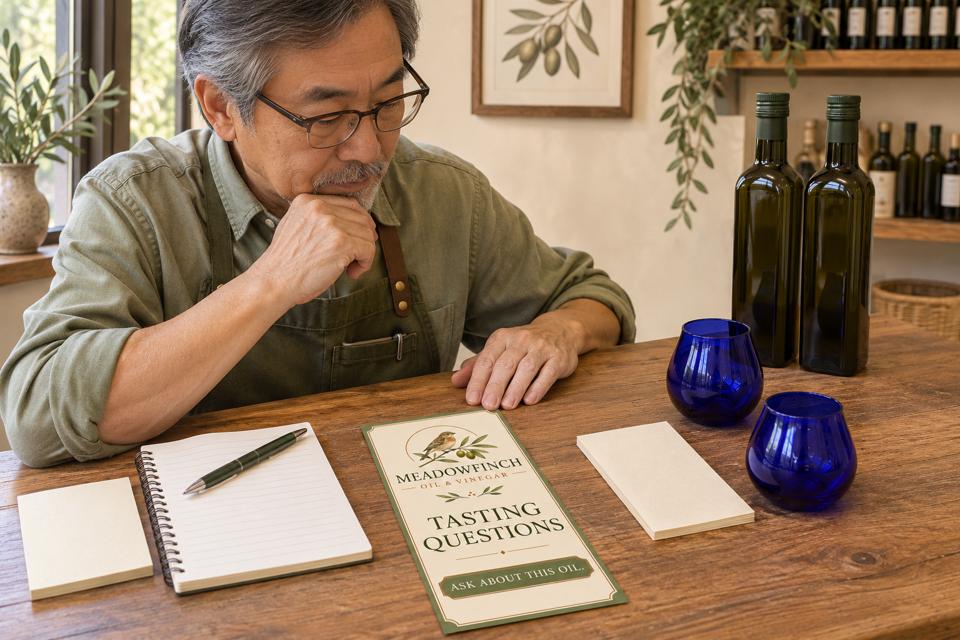
Are you introducing a product or conducting formal sensory assessment?
A shop conversation about an oil and a structured assessment of its sensory characteristics are different activities. Write down which you are organizing before shopping for supplies. Do not call an informal retail tasting a certified panel assessment merely because the glasses look professional.
The International Olive Council’s current standards index links its standard for an oil-tasting glass. In that formal analytical context, the document considers features including a narrow mouth for concentrating odors and dark glass to avoid bias from the oil’s color. Capacity is only one characteristic of the apparatus.
This is a useful example of purpose shaping equipment. It is not a claim that every retail sampling activity must use that apparatus, nor proof that a blue glass in a product photo meets the standard. Where formal assessment is intended, work from the applicable method with the responsible specialist.
Our original shop research also includes Olive This!’s historical private-tasting page. Its 2022 post and 2024 discussion establish historical activity, not the current vessel, portion, staffing or availability for your own event. Those details remain separate questions.
Give the supplier the use case before asking for a price
A listing that says “8 oz” has not answered what the vessel will contact, how it will be used or whether it supports your tasting purpose. Use a brief that lets the supplier respond to the actual application.
| Detail to establish | Question it should answer |
|---|---|
| Activity and responsible person | Who approves the tasting method and the equipment needed for it? |
| Product and contact conditions | What oil or vinegar will contact the vessel, under what intended conditions? |
| Vessel characteristics | What material, mouth, shape and other features are required for that activity? |
| Service arrangement | How will vessels be issued, collected and managed under the approved process? |
| Quantity and timing | How many suitable vessels must be available when, and what is the reserve based on? |
Ask for information supporting the exact material and intended use. General wording such as “for beverages” or “premium quality” does not by itself verify compatibility with your oil or vinegar application. Do not assume that one product’s suitability transfers to another liquid or another service arrangement.
The handling and cleaning decisions belong with the responsible operator’s actual process. This guide does not supply a serving quantity, a washing method or a food-handling protocol.
A worked buying decision: stop before ordering the wrong unit
In the fictional Meadowfinch exercise M1414, a planner expects 24 guests to encounter two products each. That describes 24 × 2 = 48 planned sample presentations. It does not yet specify the number of physical vessels to purchase.
The planner has found a printed drink cup with a familiar ounce rating. However, the proposed material’s suitability for the intended oil-and-vinegar contact is unverified, and the service plan has not established how vessels will be managed. Ordering 48 cups now would turn two unanswered questions into a purchase.
The decision in this example is to pause that cup order. The planner checks whether the shop’s existing approved vessels cover the activity, then asks a qualified supplier for the missing information if needed. The 48 presentations remain a planning count, not a serving dose, a sanitation rule or a claim that vessels should be reused.
A complete supplier question
“We are planning a retail introduction to two oil-and-vinegar products. Please confirm whether the proposed vessel is suitable for our specified products and contact conditions, and provide the relevant material and use information. We will confirm the required shape, physical quantity and handling arrangement with the person responsible for the activity before approving an order. Please identify any conditions or uses the vessel does not support.”
Fill in the real product and contact conditions when making an actual inquiry. Do not let the supplier infer them from a logo file or an event title. If the required evidence is unavailable, keep the vessel unapproved and consider an appropriate alternative rather than changing the wording to imply certainty.
A printed information card has a different job
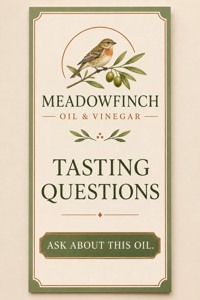
Help customers ask about the product
The fictional Meadowfinch card is a conversation prompt. Explore custom rack cards or compare rack card formats only if additional information has a useful role. These links lead to paper information products, not tasting vessels.
The current rack-card listing describes a 3.74 × 8.27-inch format with stock and finish choices. Define the message before asking DecentCustom or another designer to prepare artwork. Keep product identities accurate, and have the responsible shop reviewer approve any specific descriptions.
Do not place sample food on the card or infer oil resistance from the illustration. The image is a paper artwork concept. Existing shelf information or an employee explanation may already answer the customer’s question, making a new print order unnecessary.
Approve the activity and the supplies separately
Keep a record of the selected vessel, its supporting information, the intended use and who approved it. Check the actual received item against that selection. A matching color, shape or logo alone does not establish that the right product arrived.
Review the information card separately for accuracy and readability. If your tasting plan changes, reassess the affected supplies instead of assuming the original choice still applies. Keep the quantities in meaningful units: people, presentations and physical vessels should not be mixed into one count.
Does a larger cup give us a better tasting?
Capacity alone cannot answer that. Determine the requirements of the activity and review the actual candidate.
Do we need to replace our existing vessels?
Only if the intended activity calls for a change. An existing suitable, approved setup can remain the appropriate option.
Is a printed information card required?
No. It is an optional way to support a customer question, and it does not resolve vessel suitability.
Sources and scope
Reviewed November 8, 2026. The IOC documents supply limited formal-equipment context; the retailer page is historical. M1414 and Meadowfinch branding are fictional. No tasting vessel sold by DecentCustom was verified as suitable for this activity, and no actual event, contact-material test or business result is claimed.