Farmers market preparation guide
A useful market checklist connects each task to a responsible person and the organizer’s current instructions. Keep a planned setup separate from permission to trade.
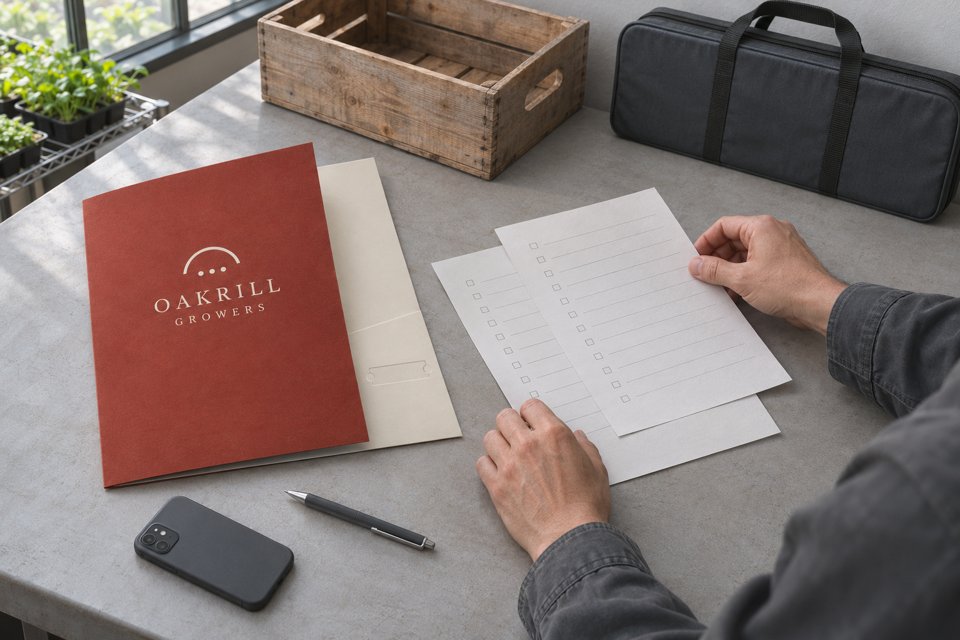
Start with the organizer’s current status, not last week’s checklist
Before packing for a farmers market, confirm the actual event, location, operating status and instructions for that session. Then assign the loading, setup, information and closing checks to named people. A checklist is useful when it shows who must act, what they must confirm and what stops the next step.
Use the current handbook and notices for your market. The Food Trust’s 2026 handbook, page 13, places official weather closure decisions with its program and tells vendors not to trade during an official closure. Page 21 describes case-by-case changes and communication. This is one operator’s process, not a universal weather threshold.
Record the official information route, the person responsible for checking it and how the rest of the team will hear the result. Keep the source and time of the latest instruction beside the status. A forecast, a neighboring vendor’s message and the organizer’s confirmed instruction are different pieces of information.
If attendance is affected or instructions are unclear, use the market’s actual contact process. Do not invent a replacement venue, assume a later opening or treat the absence of a message as confirmation that nothing has changed.
A completed setup plan with owners and stop points
Fictional example: Oakrill Growers has two staff members, Elena and Sam, preparing for its approved Saturday market. The following is a filled planning example, not the operating schedule of a named market or a substitute for equipment, food-handling or event instructions.
Before departure — Elena owns the status check
Check: the current organizer notice, approved date, location, assigned space and arrival instructions.
Record: the source, when it was checked and the confirmed status.
Done when: Elena has a current answer and tells Sam which plan applies.
Stop point: a closure or unresolved change is addressed before the team treats the ordinary loading plan as permission to attend.
Loading — Sam owns the packing list
Check: the actual table and approved display equipment, current signs and price cards, payment supplies, packaging and the cleaning/waste items the market requires.
Record: packed items and missing items on the current list; remove obsolete duplicate cards.
Done when: Elena and Sam know what is present and any missing required item has been resolved.
Stop point: do not mark a required item complete because a similar item was packed last week.
Arrival and layout — Elena owns the location check
Check: the actual assigned space and organizer’s arrival instructions before placing equipment.
Record: any confirmed layout change and who communicated it.
Done when: the team is working to the current approved arrangement.
Stop point: an apparent spare space is not an invitation to relocate the stall.
Before sales — Sam checks information with Elena
Check: the approved identity wording, each current product-price-unit offer, the intended customer approach and the actual payment process.
Record: corrections made before trading and who confirmed them.
Done when: the information and the team’s answers agree.
Stop point: remove a stale offer while its replacement is being confirmed.
For the detailed information check, use the business identity and price-card check. Before choosing a cover or layout, measure the actual market table. This list connects those tasks to the preparation sequence without repeating their entire methods.
Work through a weather cancellation without inventing a fallback
In the example, Elena receives a confirmed organizer notice before departure: Saturday’s market is cancelled. She records the notice and its time, tells Sam not to follow the ordinary departure plan, and replaces the team’s “attending” status with “cancelled by organizer.” She does not move the stall to a nearby parking lot or announce an unapproved indoor venue.
The example’s complete customer-facing message is:
This wording is an editorial example for an operator to adapt after the cancellation is confirmed. It promises no alternative pickup, delivery, refund or replacement date. Those decisions depend on the actual order terms and the responsible business.
Elena updates the current event announcement and any active “find us today” notice that the business controls. Sam checks those same customer-facing places against the new message. An earlier printed flyer cannot be recalled remotely; the team should use the current contact routes available to it rather than claim every reader has seen the correction.
If the status is still unconfirmed
Elena keeps “confirmation pending” in the internal record and follows the organizer’s actual contact and attendance process. She does not publish “cancelled” or “open as normal” without the corresponding confirmation. If the organizer later confirms an amended session, the team checks the new location, hours and setup instructions before replacing the ordinary plan.
The checklist provides no wind, lightning, temperature, tent-weight or road-safety threshold. For an actual developing hazard, use the responsible authorities’ and organizer’s current instructions rather than a generic packing list.
Make closing a handoff to the next session
For the fictional team’s ordinary completed session, Sam gathers the display pieces and removes old price cards from the active set. Elena checks the required cleanup against the market’s instructions. Together they identify what is returning, what needs attention and which information must change before the next session.
The Food Trust’s setup and cleanup section, page 15, assigns vendors responsibility for their space and removal of their waste. Treat the actual market’s current requirements as the checklist input.
Completed next-session note: “Table and current identity sign returned. Apple price cards removed from the active set for owner review. Sam checks the revised packing list; Elena confirms the next session before the list is reused.” This is a record of responsibility within the example, not evidence that equipment has passed inspection or that next week’s attendance is approved.
Keep the working list accessible before buying a branded folder
A phone record, plain printed sheet or existing folder can carry the plan. The useful part is the current information and the team handoff. Compare custom presentation folders only when there is a separate, justified need for printed document sets.
9 × 12 inch presentation folder
The current listing offers paper folders with inside pockets and a business-card slot. The default paper is 14pt with a glossy finish; 16pt and matte options are listed separately. The current minimum/default quantity is 100 folders.
That minimum does not justify a new batch for one checklist kit. This is a conditional dry indoor paperwork option, not a weatherproof container, required market document or safety system.
AI paper-folder artwork with the same fictional Oakrill Growers identity as the scene. Click the small image for the exact product. The images do not prove weather protection, printed finish or approval by a market operator.
Keep the plan current at every handoff
Assign the status check, packing list, pre-opening information review and closing record before the event. If a separate printed-document need is justified, take the intended use, quantity and artwork to DecentCustom for current configuration and design review. Keep using ordinary materials when they already support the team’s work.