To order employee recognition apparel without guessing sizes, select the actual style, confirm how its current size chart is measured and collect each recipient's choice privately. Keep unanswered requests pending instead of filling them with an assumed medium. Offer another recognition format when clothing is not welcome.
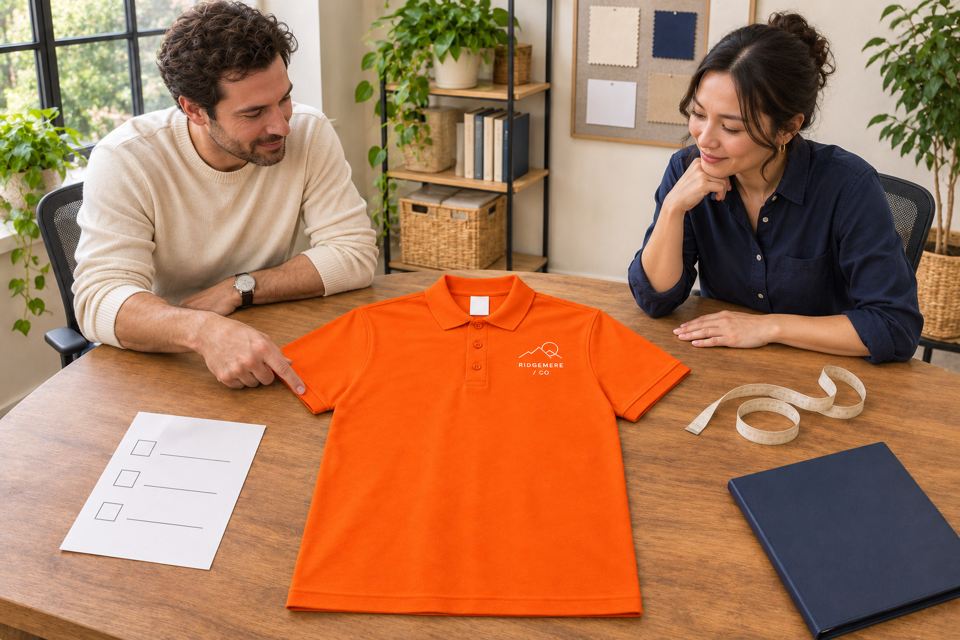
Start with whether the person wants the garment
A shirt for an optional team gathering, a personal appreciation gift and required work clothing involve different expectations. Explain what the item is for before asking someone to choose it. Do not use a recognition gift to imply an unannounced dress requirement.
If the recipient does not want clothing, use an approved alternative or keep the acknowledgment without a physical item. Our recipient preference guide provides a fuller starting conversation. Gallup's recognition guidance likewise recommends asking how people prefer to receive acknowledgment; it does not establish that branded apparel is the right choice for everyone.
For roles with protective clothing, safety or other workplace requirements, have the responsible workplace owner specify what is appropriate. A promotional polo's appearance or fabric description does not establish suitability for those requirements.
Check the measurement definition before using the numbers
The words “chest” and “size chart” are not enough to tell you what a number represents. A chart can describe a person's body circumference or dimensions of the finished garment laid flat. Confirm the measurement points, units and any stated tolerance for the exact style under consideration.
For an example of that distinction, a SanMar specification sheet presents garment measurements separately from its body-size guidance and explains the measuring methods. That sheet concerns a different supplier's Carhartt shirt. Its sizes, dimensions and performance claims must not be transferred to a DecentCustom polo.
Illustration only: 22 inches measured across a flat garment and 44 inches measured around a person's chest describe different objects and methods. Although 22 × 2 = 44 arithmetically, that does not show that the garment fits that person. Construction, room for movement, the chosen cut and the supplier's measuring convention still matter.
If the selected chart uses finished-garment measurements, follow its stated method when comparing a garment the recipient already likes. If it uses body measurements, follow that chart's body-measurement instructions instead. Do not substitute one approach for the other or add an invented universal “size up” rule.
When the chart or method is missing or unclear, pause the size decision and ask: “For this exact style, is the chest figure a flat garment width or a body circumference? What are the units, measuring points and production tolerance? Please provide the current chart.” Do not borrow a chart from another product simply because both are polos.
Send enough information for an informed choice
Share the exact product link or style reference, the current chart supplied for that style, the intended color and how the garment will be used. Give a real response deadline only after the coordinator has established it; no production or delivery date is assumed here.
“We are considering an optional logo polo for our team gathering. Please review the linked style and its current size chart, including the measuring method, then reply privately with your preferred size and available color choice. If the cut or size range does not work for you, or you prefer another recognition format, tell the coordinator privately. We will confirm the final option before ordering.”
Add the actual style, chart and confirmed choices before sending that example. A request containing a broken chart link is not complete. If a choice is unavailable, return to the recipient with the available alternatives rather than silently substituting a different size or cut.
The coordinator usually needs the chosen style and size, not everyone's body measurements. Let recipients use sizing information privately. Keep any necessary individual choices in the appropriate internal channel; do not display a person's size beside their name on a public event list.
A complete example: twelve confirmed shirts are not fourteen
Fictional Ridgemere plan: fourteen people are offered an optional shirt after the style and chart have been clarified. Twelve confirm choices: 2 small, 5 medium, 4 large and 1 extra large. One person chooses another recognition format, and one has not replied.
- Confirmed apparel: 2 + 5 + 4 + 1 = 12 shirts for those exact confirmed choices.
- Alternative: one separate recognition task, assigned to the coordinator.
- Pending: one follow-up request. The size remains unknown.
- People accounted for: 12 confirmed apparel choices + 1 alternative + 1 pending = 14 people.
Do not add an extra medium for the missing response. If an order must be decided before that reply arrives, the responsible coordinator needs to choose an agreed course of action with the person or use an appropriate alternative. A blank response is not consent to a guessed size.
Before purchasing, send the recipient their recorded style, color and size for a final check. If the style changes after responses were collected, provide its own chart and reconfirm affected choices. The old size label is not automatic approval of the replacement.
Use the selected product's facts and leave unknowns unresolved
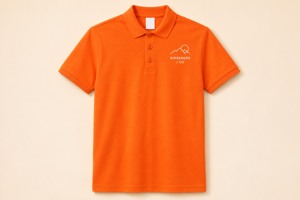
One regular-fit polo candidate
DecentCustom's regular-fit short-sleeve polo lists a turndown collar, three-button placket, ribbed cuffs and unisex XS–3XL options. The description states 220 GSM cotton, with a polyester-content exception for gray.
The orange Ridgemere image is an AI design concept, not a fit sample, an approved print proof or confirmation that a chosen color and size are currently available.
The product also states possible measurement variation of up to 2 inches (5 cm). Clarify how that note applies to the selected style and chart before relying on a close measurement comparison. This review has not verified a readable current dimension chart or an individual fit result for the item; request that information before collecting final sizes.
Compare custom polo shirt options if another cut or range suits the recipients better. A request to DecentCustom can specify the exact style, desired option, confirmed size quantities and logo placement, while asking about the current chart and availability. Do not treat a product's case pack as the size distribution your team needs.
The apparel plan is ready when each included choice refers to the current style and chart, the actual color and size can be supplied, the artwork has been reviewed and unresolved requests are clearly held back. A matching logo does not compensate for an unwanted garment or a size chosen on someone else's behalf.
Reviewed November 8, 2026 for US team coordinators. Ridgemere, its people and quantities are fictional. No body measurements, fitting sessions, employee purchases or recipient outcomes were collected.