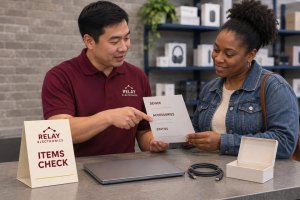
Match the visit to the service you actually want: showroom browsing, a personal demonstration, support or a scheduled event. Each can have a different time, place and confirmation route. A support number or an event photograph does not establish that the showroom is open for your intended visit.
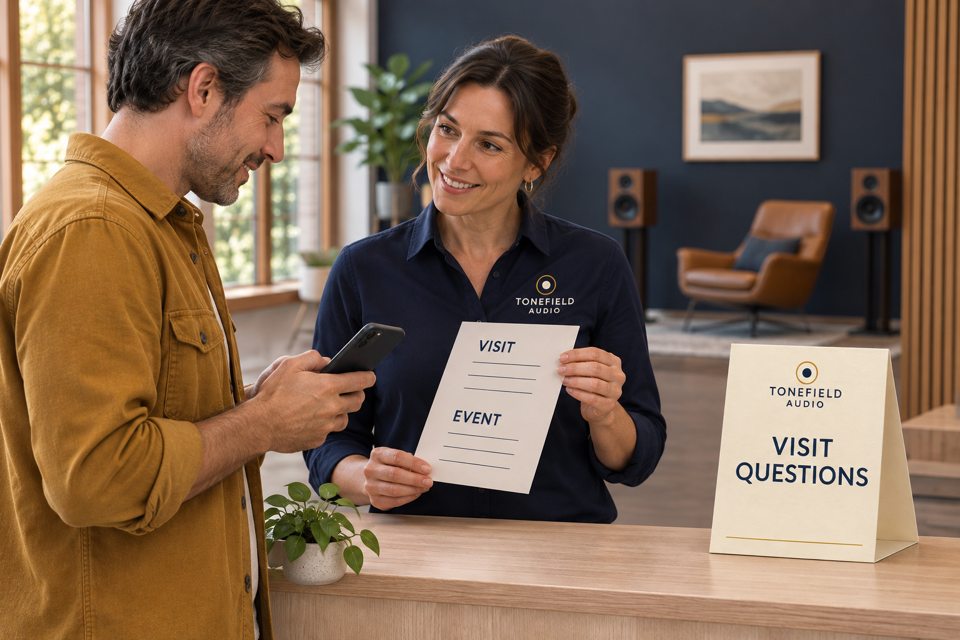
What does the visitor want to do?
Start with a specific question: “Are you coming to browse, hear a particular system, speak to support, collect an order or attend an event?” Then identify the location and the information that confirms that activity. A shop's general opening hours may answer a browsing question while leaving an appointment, collection or registered event unresolved.
Audio Advice's Raleigh showroom page gives a clear example. It lists weekly showroom opening hours separately from a service phone described as available 24/7, and welcomes walk-ins as well as appointment requests. The support contact does not turn that published showroom schedule into round-the-clock physical access.
Similarly, B&H's store information separates store, pickup and telephone hours. It also describes personal Tech Corner advice through an appointment or a drop-in route, alongside Event Space programming. Those are distinct services at one retailer, not a single promise attached to the word “open.”
These examples explain which distinction to check; they do not establish another store's hours or service entitlement. Use the business's current information for the actual activity, and ask the responsible team when the public information does not answer the customer's question. Do not invent a listening slot simply because a product is displayed on the website.
An after-hours call is not a listening appointment
Fictional T51 conversation: A customer sees a support contact marked 24/7 on Tonefield's information and asks, “Can I come now with my partner to hear the speakers?” In this example, the published showroom schedule says it is closed. No personal demonstration has been confirmed.
The adviser first distinguishes the visit request from support for an existing installation. If the customer needs support, use the business's appropriate support route and establish the applicable arrangement. If the customer wants a demonstration, the showroom team must confirm the visit. A support telephone description alone does not establish access, an adviser on site or availability of the requested system.
Fictional visitor reply: The 24/7 description applies to the support contact, while the showroom is closed under its current posted schedule. We have not arranged a listening visit for you and your partner. Please use the showroom contact to ask about a visit during its opening hours or a confirmed appointment. Tell the team which system you want to hear so they can check the appropriate arrangement; we cannot confirm that demonstration from the support listing.
The working note for T51 reads “showroom visit requested; no appointment confirmed; directed to showroom team.” It does not say “two people booked” or “support visit arranged.” If the team later confirms a time, record that actual confirmation and its scope instead of treating this initial inquiry as the booking.
A demonstration can mean several different experiences
A casual product demonstration, an individual consultation, a seated class and an outdoor photo walk require different visitor information. Ask which format the event organizer actually describes. A photo of a crowded presentation is not evidence that every visitor needs a ticket, and a tabletop display does not prove that a named class accepts walk-ins.
B&H's Event Space FAQ distinguishes casual tabletop Demo Experiences from scheduled workshops and other programming. It says individual event details determine timing, equipment requirements and meeting information; some events occur away from the store. It also explains that registration is used for updates about changes or cancellation.
There is a limit to what its generic text resolves. The introductory section describes registration as guaranteeing a seat, while later answers describe seating as first come, first served unless specified otherwise. Do not select the most convenient sentence and promise a seat. Check the particular event information and, if needed, ask the organizer to resolve the uncertainty before advising a visitor.
These are one operator's event formats, not a calendar of confirmed future events for every electronics shop. Do not turn an old product launch or a past demonstration into an upcoming invitation. For a current visit, the actual event page and confirmation need to identify the relevant occurrence.
Two visitors, one confirmation: a complete reply
Fictional E62 inquiry: A customer has one confirmation for an evening demonstration and asks whether a partner can join them at the shop. The message available to the adviser does not establish whether it covers another attendee, and the event overview mentions that some sessions meet elsewhere. The adviser has not yet checked this occurrence's venue or admission arrangement.
Fictional customer reply: You currently have one event confirmation. We have not established whether it covers your partner or whether another registration is needed. We also need to check the meeting location for this specific session; please do not assume the shop is the meeting point from the general event overview. We will use the event contact to confirm the attendance and location details. Until that answer is available, we cannot confirm two places or a shop arrival arrangement.
The next record states the open questions and the colleague following up: “E62: confirm whether the existing reservation includes a guest; confirm this session's meeting location; adviser Rowan checking with event team.” It neither rejects the partner without checking nor treats one confirmation as two admissions.
After the organizer answers, give the customer the actual attendance instruction and location through the established event channel. If another registration is needed, explain that step without describing it as completed. A request, an available registration page and an issued confirmation are different states. A newsletter subscription is also not evidence that an event place has been reserved.
A changed event needs more than a corrected desk sign
If the organizer changes the time, venue or format, compare the new instruction with the customer's existing confirmation. Identify what changed and the appropriate next step. A photo walk moved to another meeting point does not become a normal showroom visit simply because both involve the same retailer.
Use the actual organizer's update process and keep the relevant confirmation or message. Staff can check whether the new information has been supplied through that process; they should not assume that every affected visitor has read it. If the record only shows that an update was sent, distinguish that from an acknowledged revised arrangement.
Before travel, the visitor needs the specific activity, location, time and any relevant attendance or equipment instruction. A brief reply that clearly leaves an unresolved question open is more useful than a polished invitation that guesses the answer. No new printed notice is necessary if the existing event page and direct reply already provide that route.
Use a stable prompt beside current visit information
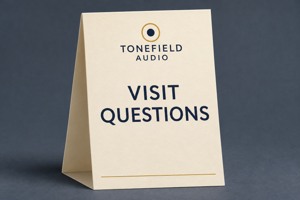
General questions, with current details elsewhere
For an authorized dry indoor counter, paper table tents for showroom visit questions can carry a stable heading such as “Visit Questions.” This listed paper product is 5 × 7 inches on 14pt card stock, with finish options; current quantity validation starts at 25.
Keep changing hours, event dates, individual reservations and customer details in the appropriate current channel. Check the folded footprint, readable artwork, placement permission and quantity actually needed. The AI concept is not an approved event announcement or proof of outdoor durability.
Compare table tent formats only when an existing display or direct conversation leaves a useful gap. Give DecentCustom approved public wording and configuration requirements. A reusable sign, current website or event confirmation may already serve the visitor.
Reviewed November 9, 2026. Tonefield, Rowan, T51 and E62 are fictional. The cited examples describe two operators; B&H's two pages are one operator. No actual customer visit, event booking, appointment, seating, product availability or reader outcome was verified. No store hours were changed.