A campaign heading does not verify a product attribute. Check the selected item and the evidence for each statement before adding an environmental claim to Earth Day materials.
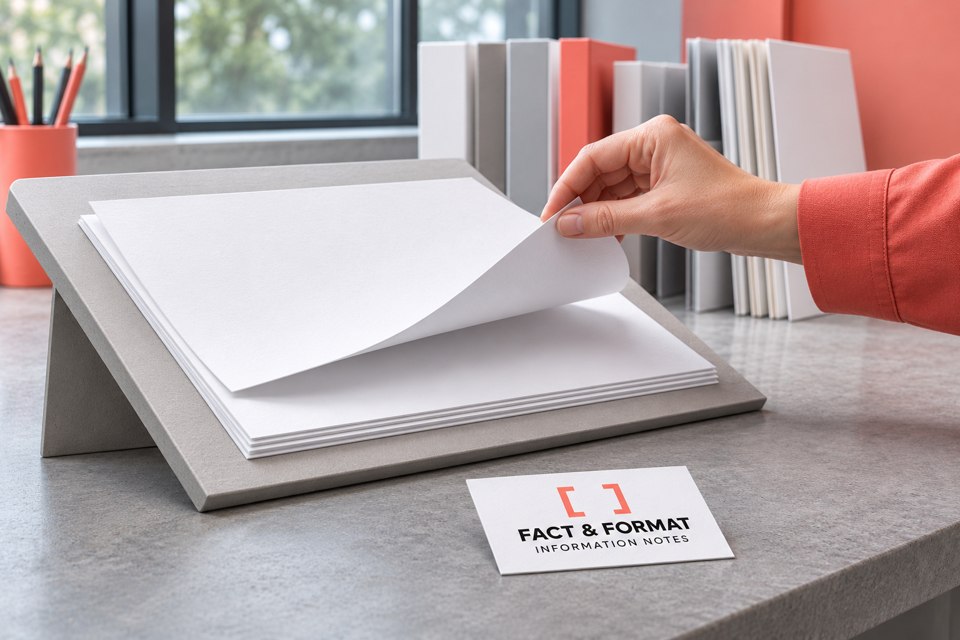
Start with the exact statement a reader will see
“Earth Day information” describes a topic. “This is an eco-friendly card” describes the product. Those statements need different support. A green color, leaf illustration or campaign heading cannot establish the material composition or overall environmental effects of the item carrying it.
The FTC’s published Green Guides summary cautions against broad, unqualified environmental benefit claims and calls for clear, specific qualifications. It also explains that using a certification does not remove the need to support express and implied claims. Use that as a reason to examine the complete message, including imagery, rather than adding a reassuring badge to unsupported copy.
This is a practical copy-and-evidence review. It does not establish that a particular advertisement has received legal or certification approval. Keep the evidence and the exact wording available for the organization’s normal approval process.
Match each statement to its subject and source
| Proposed statement | Evidence to identify | Question before using it |
|---|---|---|
| Size or thickness | The exact product and chosen specification | Does the statement describe this item and configuration? |
| Recycled content | The relevant material documentation and scope | Is it about the card, its stock, the packaging or something else? |
| Recyclable | The actual material and applicable collection conditions | Has acceptance been checked for the intended location? |
| Certification or seal | The real certification, its scope and permitted use | Does it apply to this product and the message being made? |
Record the source, date and unresolved question beside each line. If support is missing, hold or remove the claim. Do not fill a gap with a competitor’s slogan, a general material description or an assumption about what customers expect from Earth Day.
Recycled content and recycling after use are separate questions. EPA’s common-recyclables guidance says to check what the local program accepts. It also explains that a plastic resin symbol does not necessarily mean an item can be collected locally. Neither a symbol nor a broad material category confirms disposal instructions for every place.
Distinguish an available option from the selected item
A product page can list multiple paper stocks and finishes. The presence of a recycled-stock option does not show that the default, a displayed design or a particular order uses it. Keep the chosen specification with the artwork and any material documentation.
For the linked business-card product below, the reviewed listing identifies glossy stock as the default and lists Recycled Matte among other options. An option name or catalog description is not, by itself, proof of the selected order’s composition or a certification. Check the actual configuration and supporting documents before transferring an attribute into customer-facing copy.
A narrow supported fact also should not become an unsupported overall benefit. Knowing a card’s dimensions does not establish reduced waste, lower carbon emissions or a better lifecycle result. Keep the statement within what its evidence actually covers.
Complete the review by removing unsupported promises
Fictional copy-review example: Fact & Format drafts an Earth Day card described as “eco-friendly recycled cards—recycle anywhere,” with a leaf-shaped approval badge. The working specification still uses the product’s default glossy stock. The team has not obtained a selected-stock recycled-content document, certification or local collection confirmation.
The reviewer separates those gaps from the known format facts. The recycled-stock option in the catalog is not treated as the chosen stock. The broad environmental wording, universal disposal instruction and unsupported badge are removed.
The finished description reads: “Earth Day information on a 3.5 × 2-inch business card. The selected specification is standard 14pt paper with the default glossy stock.” The group’s identity remains ordinary branding. Any future environmental statement stays pending until its actual subject, evidence and approval are established. The review produces usable factual copy without pretending that missing documentation is a negative test result or a certification.
Keep the product description specific
A paper information card with a selected specification
These custom business cards with the selected paper specification are listed at 3.5 × 2 inches, with 14pt standard paper as the default thickness and a current minimum quantity of 50. The small image is an AI artwork concept, not a material test.
Compare custom business cards for an actual information need. Confirm the chosen configuration and artwork with DecentCustom. This example makes no recycled-content, certification, local recycling-acceptance or overall environmental-benefit claim for the illustrated card.
An existing digital notice or plain handout may already meet the information need. Decide whether more print is useful before selecting a new item.
FTC’s published October 2012 summary, EPA guidance and the current product listing reviewed for this article on November 13–14, 2026. The worked copy review is fictional. No manufacturing documentation, certification, local disposal approval, lifecycle assessment or legal approval was obtained.