A familiar sentence on a graphic is not enough to establish a historical quotation. Find the underlying document, identify what you actually read and keep your own discussion prompts distinct from Dr. King’s words.
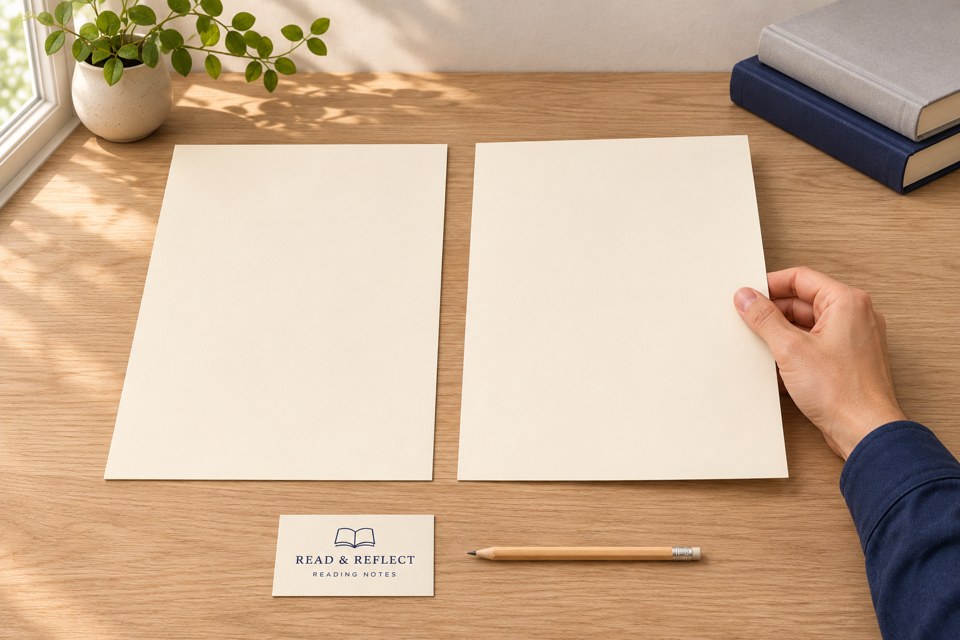
Identify whether you have a document or a record about it
The King Institute’s researcher information distinguishes primary-source documents, scholarly readings and an encyclopedia. It also points to Online King Records Access, or OKRA, for information about historical documents. These resources do different jobs: background context and catalog information are useful, but they do not automatically supply the complete original text.
The Institute’s Documents page reviewed for this article still displayed a planned-library notice and described OKRA as providing archival locations. An editor should inspect the actual resource reached, rather than treating a promising page title as proof that a speech has been opened and read.
Record what is in front of you: a full text, an image of a document, a transcript, an excerpt, a catalog entry or a later explanation. If you have only a record identifying where an item is held, keep the wording check pending until you can consult an appropriate actual text. A search result or generated answer can help locate a lead; it cannot replace that check.
Compare the proposed sentence with the actual source
| Check | Record what you verified | Keep unresolved when |
|---|---|---|
| Item identity | The source’s author, title, date and document type | You have only an unattributed graphic |
| Reading scope | The text or section actually consulted | The link provides only catalog information |
| Exact wording | The proposed sentence compared with the source | Words were added, merged or rewritten |
| Context | Who is speaking, to whom and in what setting | A fragment changes the apparent meaning |
| Your contribution | A clearly labelled explanation or discussion question | Your words appear to be the historical speaker’s |
Do not silently repair or modernize a sentence and then present the result as an exact quotation. Keep your summary distinct and identify its source. If different versions or transcripts leave a question unresolved, record that limit instead of selecting the wording that best fits the artwork.
Attribution and permission also answer different questions. The King Institute states that it cannot grant permission to reproduce King’s writings, statements or images. A research link or citation is not a statement of permission or endorsement. Follow the applicable material-review process before reproducing third-party content; this guide does not clear any particular use.
Let learners see the difference between evidence and interpretation
The Library of Congress’s primary-source analysis guidance describes observation, reflection, questions and further investigation as connected activities. It encourages close attention to what is actually visible or audible before drawing inferences.
Apply that approach to the material you have genuinely selected. Ask participants to identify a detail, explain what supports their interpretation and note what they still need to investigate. Label the facilitator’s questions as modern discussion prompts. They do not need to sound like historical quotations to be useful.
Keep the reading source available alongside the discussion. Check that the linked item supports the task and that the audience can use the actual format and access route. A tiny printed card may point to a maintained resource guide, but it should not be treated as a replacement for the document or its context.
Remove an attribution you cannot support
Fictional editing example: Read & Reflect drafts a learning card with an AI-generated slogan attributed to Dr. King. The editor has no underlying document and cannot verify that he used those words. The attractive layout does not resolve the source gap.
The editor removes the slogan and attribution rather than guessing a speech title. In their place, the facilitator writes an original question labelled “Our discussion prompt”: “What detail in the selected source supports your interpretation, and what would you investigate next?” These are the fictional facilitator’s words, not King’s.
The historical reading selection remains pending until the editor has consulted a suitable source and completed the wording, context and material-use review. The team keeps its existing digital planning notes and holds the proposed quotation-card order. It has corrected the attribution without claiming that a historical quotation has been authenticated or cleared for reproduction.
Use a small card for a stable resource route
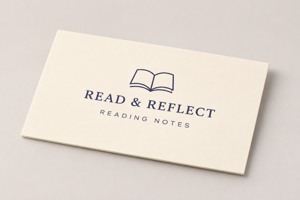
A general reading-resource pointer
These custom business cards for a reading-resource route list a 3.5 × 2 inch format, default 14pt glossy stock, square corners and a current minimum of 50. The image is an AI concept for ordinary printed paper, without a historical quotation, official seal or finished customer order.
Compare custom business cards only when a stable, maintained resource route and real distribution need justify a batch. Review the chosen wording and configuration with DecentCustom. An existing digital guide may serve the learning activity without new printing.
Institutional resources and product details reviewed November 14, 2026. Read & Reflect and the editing scenario are fictional. No King quotation, historical facsimile, reproduction permission, curriculum approval or measured learning result is supplied.