A class, an independent membership and an order of materials are different purchases. Check the selected service, instruction, materials and access route before planning a visit or buying custom extras.

Choose the service before comparing a package price
Creative businesses can offer taught classes, independent workspace, retail materials and private events. A single business may offer several of these, but the words “studio access” do not establish that an instructor, materials or a place in a particular session are included.
| Service | Confirm before committing | Do not assume |
|---|---|---|
| Taught class | Level, instruction, selected session and included materials | Every tool or unlimited future workspace is included |
| Independent membership | Eligibility, orientation, access conditions and material rules | Beginner teaching or unrestricted production rights |
| Retail materials | The actual item and the provider’s permitted use | A class booking, firing service or workspace access |
| Private or mobile event | Who provides the venue, furniture, instruction and supplies | A walk-in studio or every host responsibility included |
Start with the participant’s task and experience. Someone seeking a first lesson needs a different discussion from an experienced maker seeking independent time. A company host arranging an on-site activity also needs to know what must be prepared at its own venue.
Use the actual service’s inclusion list
Pottery Northwest’s registration information provides a useful named example. Its class tuition includes the first bag of clay, glazes, firing and open studio hours, while studio-access membership excludes clay. It also says the registration confirmation lists required supplies. Those distinctions should survive any shortened customer-facing guide.
On its membership page, the same provider describes an independent option for intermediate and advanced makers, with no instruction included. Eligibility includes a prior class there, and new members must attend orientation before receiving a shelf assignment and building access. These are linked pages from one provider, not independent evidence of a national studio rule.
Make a working list with four headings: included, separately purchased, already available and unresolved. Read the actual selected package before adding anything to the purchase list. A material that is supplied for a class should not automatically become an extra branded kit, and a member’s own tools do not establish that outside materials are permitted.
Confirm where and how the experience happens
Physical workspace and a mobile service are different arrangements. Paint the Town’s FAQ says it has no physical studio for guests to visit. For its on-site canvas events, it lists painting supplies and instruction while tables and chairs are the host’s responsibility. Its virtual offerings also distinguish shipped supplies from a bring-your-own-supplies option.
Use that example to ask the venue question early. Do not send visitors to a business address as though it were a walk-in classroom, or promise that a mobile instructor will supply furniture the host must prepare. Check the actual package, location and current confirmation rather than combining details from different service pages.
Keep access and professional-use rules with the operator. An information card cannot grant building access, approve materials, establish skills or replace orientation and the provider’s technical instructions. Supplies used for painting also have specific purposes: a paint-water cup is not evidence that guest drinking cups are provided.
Correct the service choice before buying extras
Fictional planning example: A new maker asks Form & Field for a first pottery lesson. A helper selects an independent membership because the description mentions studio access, then proposes an extra starter-material kit without checking the service inclusions.
The receptionist separates the questions. In this invented studio’s plan, independent membership does not include instruction and requires experience and orientation. The helper therefore holds that selection and checks an appropriate taught beginner class instead. Its actual confirmation must settle the session, included materials and any required tools.
For the example, the selected taught class includes its initial clay supply, so the helper removes the duplicate clay kit from the proposed purchase list. Any unresolved tool requirement remains a question for the class provider. The plan now points the beginner to teaching rather than independent access; it does not report a real enrollment or a universal class package.
The studio uses its existing service page and confirmation message to explain the difference. A new print order is considered only if repeated reception questions reveal a stable, useful information need. Course tuition and membership fees are not a budget authorization for custom merchandise.
A public service guide has a limited role
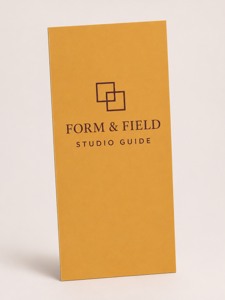
Ordinary paper for a dry reception counter
These custom rack cards for studio service information list a 3.74 × 8.27 inch format, default 14pt standard glossy stock and a current minimum quantity of 50. The AI image is an artwork concept. A holder is separate.
Compare custom rack cards only for an approved public guide with a real distribution need. Review the configuration and wording with DecentCustom. Keep private access details, changing bookings and professional instructions in the operator’s existing process.
Named operator pages and product details reviewed November 14, 2026. Their service conditions apply to their own offerings. Form & Field and the beginner scenario are fictional; no registration, material approval, workspace permission or measured business result was obtained.