Being present, speaking in a room and appearing in a printed or online campaign are different choices. Confirm the specific content and use before a personal contribution becomes promotional material.

Explain the activity separately from publication
For a World Cancer Day conversation, begin by explaining what participation involves. Can someone attend and listen? Is speaking optional? Is the event being recorded? Is the host proposing to publish selected words or images elsewhere? These are practical questions to settle before choosing stories for a poster or postcard.
The official World Cancer Day story-submission page is a distinct publishing route with its own terms and privacy-policy acceptance. A local discussion is a different setting. Do not treat participation in your event as a record of agreement to that platform’s process, or treat the platform’s process as documentation for your own printed campaign.
Keep attendance, speaking, recording and proposed publication visible as separate choices in the host’s process. A person should be able to understand the intended use without having to infer it from a camera, a sign or a general awareness slogan. If an intended use changes, return to the appropriate review rather than silently extending the earlier decision.
Review the words and the photograph as separate items
A contributor’s preference about appearing publicly and the rights associated with a photograph are different questions. A photo may have a photographer or another rights holder whose role must be checked. Having a copy of an image does not, by itself, complete that review.
The U.S. Copyright Office’s permissions and fair-use FAQ explains routes for asking about permission and notes that fair use depends on the circumstances, with no universal word-count or percentage shortcut. Use that as a source for further review, not as a claim that this article clears a particular quote, photograph or design.
For production, record the exact item and who is responsible for checking it. Keep personal-story choices, image rights and the host’s final publication approval distinguishable. An anonymous label or a cropped picture does not automatically resolve the questions. Use the host’s appropriate permission and rights process; the record below is an editorial tracking example, not a legal release form.
A completed fictional content-and-channel record
Fictional production example only. No real health story, image permission or publication agreement is supplied. Openvoice is preparing a community conversation. A contributor offers text for a local event webpage. Someone later proposes reusing it with a photograph on printed materials.
The coordinator tracks each item separately rather than marking the whole folder “approved”:
| Item | Recorded choice and scope | Production decision |
|---|---|---|
| A-01: contributor’s text, version 2 | In this example, the host’s completed review records the contributor’s agreed local event-webpage use through February 11, 2027. Printed posters and social posts are outside that recorded scope. | Keep the recorded webpage version separate. Hold the new print and social uses for the host’s appropriate additional review. |
| A-02: proposed companion photograph | The photographer and applicable reuse information have not been verified. No approved item-specific use is recorded. | Hold the photograph. Do not add it to the webpage, poster or card merely because it arrived in the same folder as the text. |
| A-03: host-written general invitation | The host’s own nonpersonal wording and original neutral artwork have been reviewed for the event page and an optional invitation card in this fictional workflow. | Use this separate invitation if the event arrangements and distribution plan are approved. It does not include A-01 or A-02. |
The dates, versions and review outcomes above are made up to demonstrate a production decision. They are not a recommended legal duration or a standard permission procedure. Actual requirements depend on the host, the material and the proposed use.
Keep the reviewed wording, channel, version, responsible reviewer and any limits together. If there is a question or requested change, make the contact route clear within the host’s process. Do not promise that recalling a digital file will retrieve every physical copy already distributed.
Resolve the poster request without stretching the webpage decision
The designer asks whether A-01 can be shortened for a poster and paired with A-02. The coordinator finds two unresolved changes: a new format and channel for the text, and an unverified photograph. The decision is to hold that design. Changing the layout is not evidence that the new use has been reviewed.
The team still needs a way to explain the event. It uses the separately reviewed A-03 invitation instead. A complete example of host-written, nonpersonal wording is:
Community Conversation: Ways to Take Part
You may attend and listen without sharing a personal story. Speaking is optional. For this fictional session, the host does not plan to record or publish contributions from the room. Any separate proposal to publish a contribution will be discussed through the host’s own review process.
Ask the organizer about the approved event arrangements and the available ways to participate. Joining the conversation does not submit a story to the World Cancer Day website.
This is example wording for a fictional arrangement, not a real invitation or a promise about another organizer’s practice. A real host must make the message match what the event will actually do. If recording or publication is planned, explain that accurately rather than copying this wording unchanged.
The workflow ends with a usable general invitation and a clear hold on the unresolved personal-content design. The organizer can continue the additional review separately; there is no need to fill the gap with an invented patient quote or an AI image presented as a real participant.
A neutral invitation can stand on its own
Use an existing digital notice first. If a printed card has a genuine distribution role, keep its wording consistent with the approved participation choices and event details. A general card can explain how to attend without reproducing a personal story or acting as a consent form.
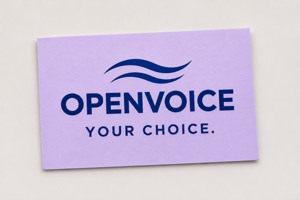
An optional community invitation card
These custom postcards for community event invitations include a 6 × 4-inch option and show 16pt as the default stock. The product page specifies order increments of 50; confirm the actual minimum and supported quantity before ordering.
Compare custom postcards for awareness event information, then bring reviewed wording and artwork to DecentCustom. If the digital notice meets the need, another print item is unnecessary.
AI paper-product concept. Openvoice is fictional. The card is not an official campaign asset, a medical form or a permission agreement.
For the follow-through after a discussion, the World Cancer Day local-action guide provides a separate example of assigning and checking one administrative action. Neither process requires turning participants’ private experiences into promotional material.
Public source descriptions and product fields reviewed November 16, 2026. All Openvoice items, choices and decisions are fictional. This article offers editorial production guidance, not legal advice, a consent template or clearance to reuse any person’s story or photograph.