Define who remains responsible for each part of the visit before choosing reception materials. A booking contact, an animal-care specialist and the person who approves a purchase may be different people.
Choose the service before assigning the role
A grooming appointment, daycare stay, owner-accompanied visit, training class, portrait session, adoption visit and veterinary appointment create different responsibilities. Do not describe all of them as a place to drop off a pet. Start with the actual venue and service, then identify who communicates, who performs the work and who can approve a change.
The Dog Yard Bar FAQ describes a social visit with owners remaining with their dogs and distinguishes it from drop-off daycare. Staff presence does not turn that accompanied experience into a different service. This is a named venue’s service distinction, not a universal rule for every pet business.
Separate four roles in the visitor’s explanation
Owner or accompanying visitor: identify what participation the actual service requires. The person making an enquiry may also be booking for a household or group. Do not assume that this person is the venue’s purchasing decision-maker.
Reception or reservations: explain the correct service, location and confirmed arrangement, and route questions to the right team. Acknowledging an enquiry or checking a reservation does not authorize a specialist service or establish professional eligibility.
Specialist or assigned care team: identify which work belongs with the actual evaluator, handler, groomer, trainer, photographer or veterinary professional. The Downtown Dog Lounge daycare page separately describes Concierge check-in for confirmed reservations and Trainer/Evaluator and Handler roles; it also makes evaluations location-specific. The role distinction matters without copying assessment techniques into a reception notice.
Venue operator: approve what the business promises, which area or service is offered and who handles exceptions. Adoption, animal-care and aftercare services can also involve different organizations. Keep their professional records and identification processes with the responsible provider.
Ask a separate question about purchasing
For any proposed reception material, name its user, artwork approver, payer and replacement owner. A receptionist who identifies an unclear message may not be authorized to order new signs or clothing. A volunteer, outside specialist or venue partner may use the space without controlling its branding.
Check existing notices and uniforms first. Ordinary branded clothing may identify an approved reception team, but it does not establish veterinary credentials, animal-care qualifications or protective performance. An ordinary paper sign cannot decide admission or replace a specialist’s assessment.
Worked example: correct an unsupported drop-off promise
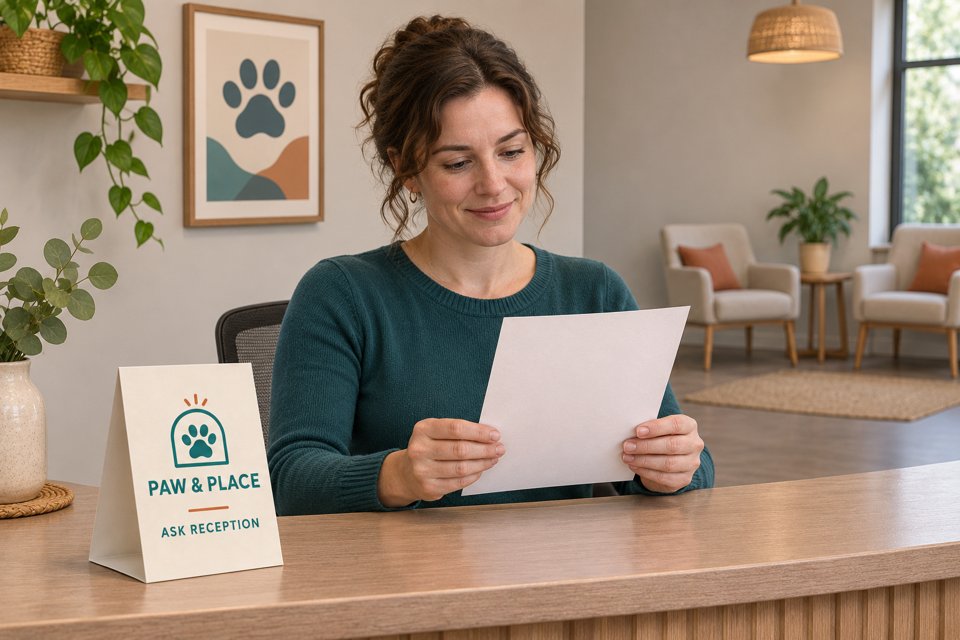
Entirely fictional example: Paw & Place coordinator Alex receives a proposed desk notice reading “Leave your dog with us while you shop.” Alex holds both the wording and its print request because the service brief describes an accompanied social visit.
In this invented case, the operator confirms that visitors remain with their own dogs and that the venue is not offering daycare under this arrangement. Alex revises the existing welcome message to explain the accompanied visit and directs questions about other services to reception. The operator approves the revision, and the desk team acknowledges the updated version.
The completed note reads: “Unsupported drop-off wording removed; accompanied-visit message approved and shared with reception. No daycare booking or professional assessment promised.” Existing materials can carry the correction, so no new tent or uniform is ordered. The people and outcome are fictional, not evidence of an actual venue decision.
Use a reception tent only for an approved public message
A conditional indoor paper option
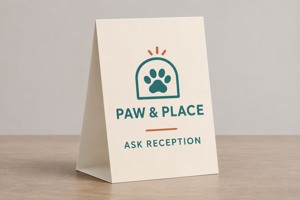
These ordinary table tents for a public reception message list 5 × 7 inches, 14pt stock and a default glossy finish. The current minimum is 25.
Compare custom table tents only for a remaining dry indoor information need, and review approved artwork with DecentCustom. This AI paper concept is not a care credential, admission authorization or animal-safety instruction.
Reviewed November 16, 2026. Named-provider examples support limited service-role distinctions. The role map and completed example are editorial and fictional. Actual staffing, professional qualifications, booking eligibility, purchasing permission and business results have not been verified.