Use Groundhog Day as a folklore or learning theme. Use the current local forecast and the host’s actual arrangements for decisions about an outdoor activity; a shadow story cannot settle those questions.
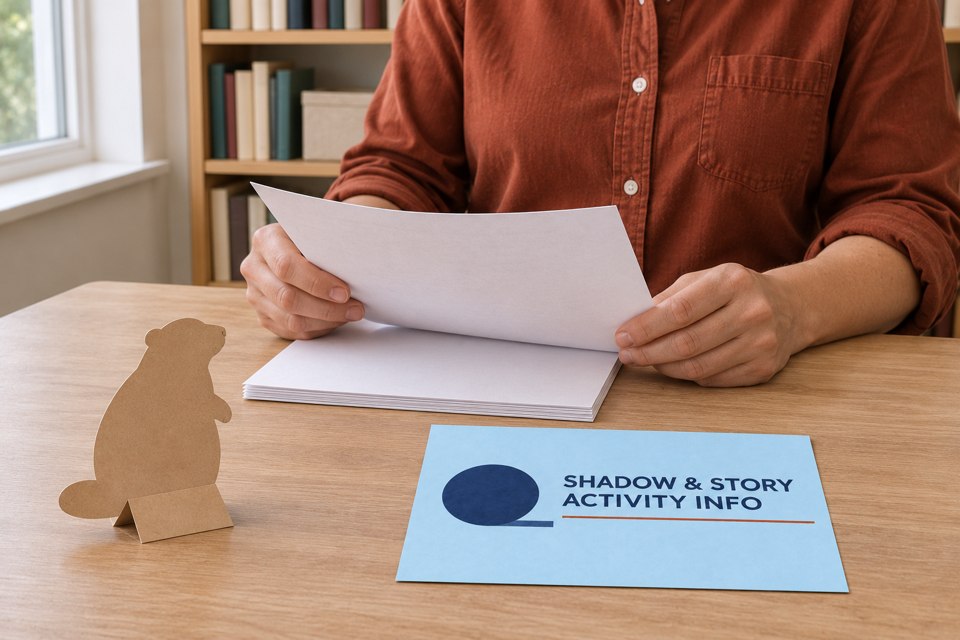
Describe the tradition without promising local weather
The National Centers for Environmental Information’s Groundhog Day explanation describes the February 2 tradition and the legend about a groundhog’s shadow. It also separates its comparison with national temperatures from current local forecasting: readers seeking weather for their area are directed to their local National Weather Service forecast office.
That distinction is useful for an activity coordinator. A story about six more weeks of winter can introduce folklore, questions about evidence or a discussion of seasons. It does not establish the temperature, road conditions or outdoor suitability at your activity’s location.
The NCEI page reviewed here was updated in January 2026 and discusses analysis through 2025. Do not turn a historical accuracy figure into a 2027 forecast or a promise about one city. A national monthly temperature comparison and a local event-day forecast have different places, time windows and purposes.
Match each participant question to the appropriate source
| Question | Use | Do not substitute |
|---|---|---|
| What is the tradition? | A clearly identified folklore or historical explanation | A promise of actual local weather |
| What might the season be like? | The relevant current climate outlook and its stated limits | Guaranteed conditions on your activity date |
| What weather is expected at this location? | The current local forecast and relevant official updates | A groundhog story or a national monthly average |
| Is this activity proceeding, and how do I join? | The actual host’s current arrangements and update route | A prior-year schedule or another event’s ticket |
Assign someone to check the host’s instructions and communicate changes through the existing activity channel. Do not print “runs whatever the weather” unless that accurately reflects the host’s actual policy and scope. This article does not assess outdoor conditions or set a weather-related operating rule.
Check the year on event information as carefully as the subject. At the review for this article, the live Groundhog Club banquet page asked visitors to stay tuned for 2027 information. That specific page did not establish the next banquet’s time, price or booking. It also did not describe a separate local school or library activity. Recheck the actual host before publishing an invitation.
Correct an outdoor promise while retaining the useful activity
Fictional planning example: Shadow & Story is preparing a community folklore session. A draft says that an early-spring prediction will guarantee a comfortable outdoor activity station. The coordinator has no basis for that promise and holds the proposed print file.
The revised plan separates the indoor folklore discussion from a proposed outdoor station. The host confirms the indoor session’s actual arrangements and identifies who will check local weather information and the host’s operating decision before any outdoor invitation is released. The coordinator does not invent a temperature threshold or treat the folklore announcement as that decision.
In this example, the approved message describes the confirmed indoor activity and its update route. The outdoor station remains pending. The host checks the final wording, and the coordinator uses the existing maintained activity page instead of ordering a separate postcard run.
If an outdoor component is later approved, its actual arrangements and change instructions need their own accurate update. The fictional correction preserves a useful learning activity without claiming a real forecast, safe outdoor conditions, admission to the official Groundhog Club program or permission to use an official mascot.
Keep a paper information piece within its role
Ordinary indoor activity information
These ordinary postcards for approved activity information offer a 6 × 4 inch option, default 16pt stock and glossy front-only finish. The listing states increments of 50; confirm the current minimum and selected configuration before ordering.
Compare custom postcards when a confirmed distribution need remains, and review approved original artwork with DecentCustom. A paper card is not a weather instrument, waterproof field form, admission ticket or official Groundhog Club merchandise.
Sources and product reviewed November 15–16, 2026. The live host page and its year were checked directly; older cached event details were not adopted. Shadow & Story is fictional. No weather assessment, real activity approval, ticket booking, affiliation or business outcome was verified.