A worthy cause is not enough detail for a donation message. Before printing, settle who receives the money, how it reaches them and what the shop is actually promising.
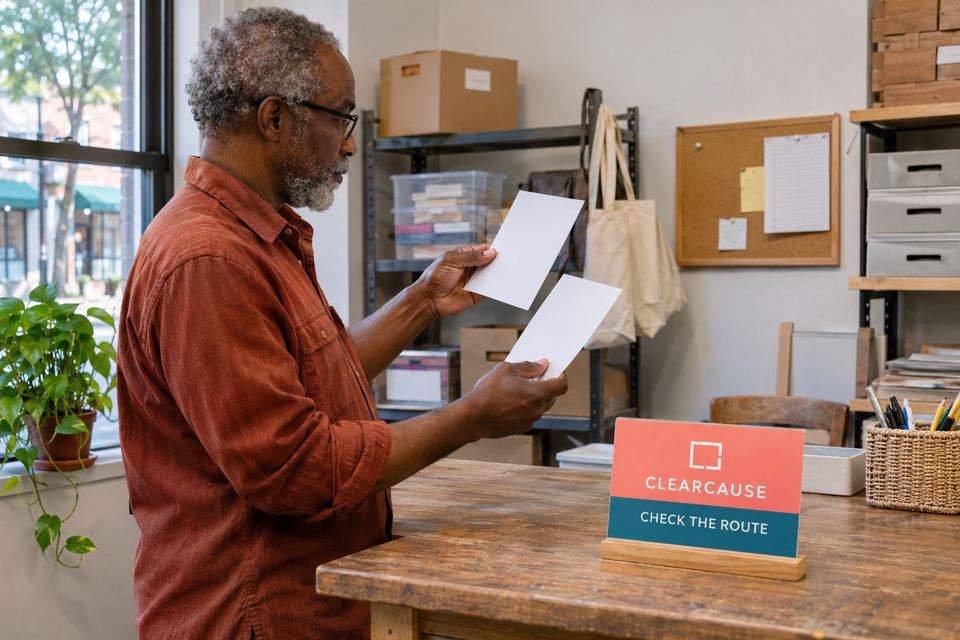
Begin with the recipient, not the campaign artwork
A World Cancer Day shop display can invite a conversation without collecting money. Once it asks for donations or promises a contribution from sales, the reader needs a different kind of information. An awareness slogan does not explain who will receive the funds, which organization has agreed to the activity or what the shop will do with the payment.
The official World Cancer Day fundraising guide starts with choosing whom to support and contacting that organization about its activities and guidance. It also calls for transparency about costs and the amount reaching the chosen organization. Use those points to resolve the arrangement before designing a donation request.
For a US audience, the FTC’s guide to checking a charity explains why the exact organization and destination matter. It recommends researching the charity and checking where a fundraising link sends money. Registration and possible tax deductibility require their own checks. A familiar cause, polished design or encrypted webpage does not establish that a fundraiser is legitimate.
Keep the host’s identity distinguishable from the intended beneficiary. Do not add an organization’s name, logo or “official partner” wording simply because the event supports a similar cause. The production file should show the responsible person’s confirmation of the proposed relationship and permitted wording. If that confirmation is missing, the artwork is still a proposal.
Separate a direct donation from a shop purchase
Draw the route in ordinary words before putting it on paper. Is the visitor donating on the charity’s own website, paying a fundraising platform, handing money to the organizer or buying a product from the shop? These are different arrangements. A statement about one should not be used to explain another.
For a direct online route, the reviewer should inspect the actual destination, displayed recipient and current campaign information. A short link or QR code can conceal a wrong or changed destination. Keep a readable organization name and a way for the reader to find its independently verified site. This article does not provide a payment link or select a beneficiary for you.
For merchandise, identify exactly what triggers the shop’s promised contribution. A phrase such as “proceeds help the cause” leaves unanswered whether it means a fixed amount, a proportion of sales or a figure after certain costs. Printing expenses and a selling price do not by themselves establish the donation. Have the responsible business and organization reviewers resolve the actual terms and applicable requirements before making that promise public.
Do not solve a missing calculation by writing “all proceeds,” “100%” or “tax deductible.” Those are specific claims, not decorative fundraising language. If the contribution arrangement remains unknown, mark it unresolved in the production record. Do not turn an estimate into a customer promise.
A fictional proof review that stops an unsupported appeal
Teaching example only: Clearcause is a fictional shop project, not a charity or live fundraiser. A designer receives a draft reading “Buy a card; all proceeds fight cancer,” with a proposed donation QR code. The manager has not confirmed a beneficiary or a contribution arrangement. The coordinator reviews each part:
| Proposed element | What is actually known | Decision before print |
|---|---|---|
| Beneficiary name and logo | No organization has been confirmed and no permitted logo use is recorded. | Hold the name, logo and any partnership claim. |
| “All proceeds” sales promise | No defined contribution basis, cost treatment or approved terms exist in the file. | Hold the fundraising sales message; do not substitute a guessed percentage. |
| Donation QR code | The intended recipient and payment destination have not been verified. | Keep it out of public artwork. Do not collect payments through the draft. |
| Shop’s own general awareness notice | The manager has reviewed the host-written wording separately. It requests no money and claims no beneficiary relationship. | Use only that limited notice if the shop still needs it. |
The review ends with the donation design held. That is a completed production decision, even though it does not launch a fundraiser. The coordinator saves the rejected proof and the reason, assigns the beneficiary question to the manager and keeps the contribution terms out of the print order. A designer cannot fill those gaps with a ribbon illustration.
Give the shop a usable message while the appeal is on hold
In the fictional case, the shop chooses a simple host-only notice instead of delaying an awareness conversation or printing an unsupported solicitation:
World Cancer Day: Pause, Learn, Ask
This is a shop-hosted awareness display. We are not collecting donations or offering a charity-linked purchase through this display. If you choose to support an organization, research its identity and donation route independently.
This wording fits the example’s actual decision. It must not be copied onto a display that does collect money or make a purchase-linked promise. The useful habit is to make the message match the arrangement, not to add a sentence that contradicts what staff are doing at the counter.
If the manager later establishes a real fundraising arrangement, treat it as a new review. Confirm the recipient, route, approved relationship, contribution terms and responsible reviewer together. Check the final proof against those records. A previously approved awareness notice does not approve a later donation offer.
If your materials also use a personal contribution, the World Cancer Day story-publication guide addresses that separate content-and-channel review. Permission to use a story does not establish where donations go.
Order a paper notice only after the message has a job
An existing shop notice or digital page may be sufficient. A small take-away card makes sense only when someone needs a reliable reminder away from the counter. Keep the final text readable; a slogan alone cannot carry the recipient and payment details of a real appeal.
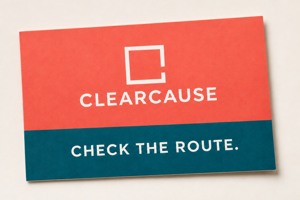
An optional awareness information card
These custom postcards for community awareness notices include a 6 × 4-inch option and show 16pt as the default stock. Orders are specified in increments of 50; confirm the actual minimum and supported quantity before ordering.
Compare custom postcards for event information, then bring the approved wording and artwork to DecentCustom. The paper product does not verify a charity, collect a donation or establish tax status.
AI paper-card concept; Clearcause is fictional. Campaign guidance, FTC information and current product fields reviewed November 16, 2026. This is an editorial print-review example, not legal or tax advice, a donation request or a claim of official endorsement.