A resource card should help someone find the promised information after the event. Name the publisher and destination, explain the language route and check what the link actually opens.
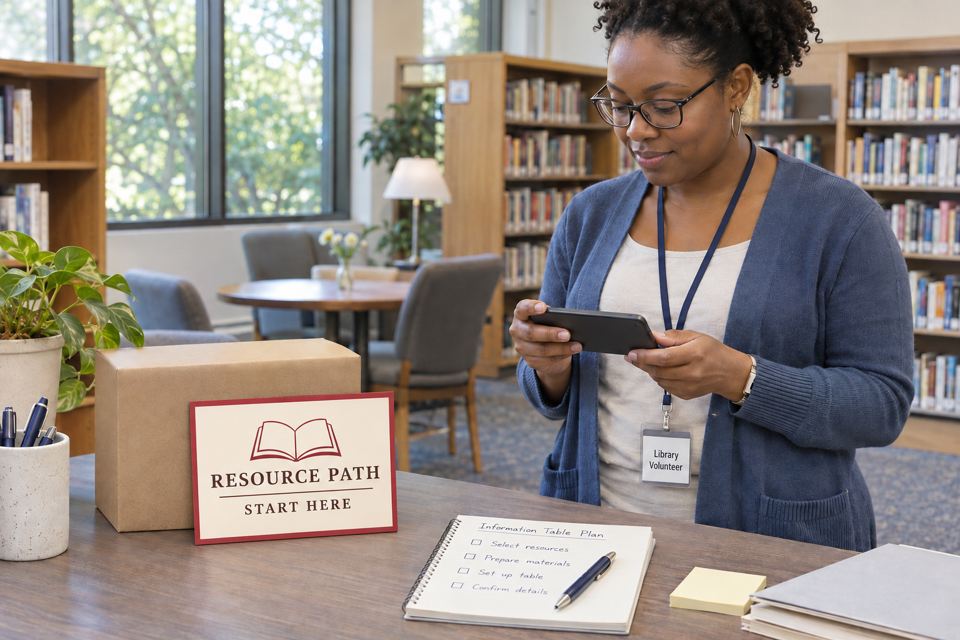
Choose the reader’s next task before the card design
For a Wear Red Day information table, “learn more” is too vague to select a destination. Does the reader want a particular introductory fact sheet, a webpage with language choices or information for a later conversation with a healthcare professional? Choose the task the host can support rather than putting a general agency homepage behind a health slogan.
Two official starting points illustrate the difference. The NHLBI page for The TRUTH About Women and Heart Disease identifies an English, four-page fact sheet for women, with a July 2023 publication date. That makes the landing page a specific way to identify that resource, not a newly published Wear Red Day 2027 edition.
The FDA Office of Women’s Health Heart Health for Women page provides a different route. It contains web information and lists fact-sheet download choices in multiple languages, including English and Spanish. Its page showed “Content current as of: 01/29/2026” when checked. A host looking for language options can point to that page without making its own translation.
These descriptions come from the public HTML pages. The linked PDFs were not reviewed for this article, and the embedded videos were not played. A page listing a download does not establish that its file, translation, print quality or accessibility has been checked. If the host plans to hand out a particular document, review that actual document through the appropriate process first.
A completed fictional brief for a resource pointer
Resource Path is a fictional community host. In this example, it wants a short reminder that people can use after a library information table closes. It has not decided which languages visitors prefer, so it does not print a claim that one English handout meets everyone’s needs.
| Decision | Recorded choice |
|---|---|
| Reader task | Find the publisher’s women’s heart-health resource page and see its listed language options. |
| Destination | FDA’s Heart Health for Women webpage, with FDA named as the publisher. The card is a host-created pointer, not an FDA publication. |
| Reason for this route | The host wants to show where the publisher lists choices. It is not selecting or reviewing a specific translated PDF in this example. |
| Content boundary | No rewritten treatment instructions, diagnostic checklist, government logo or claim that the host provides clinical care. |
| Before production | The coordinator checks the final address on a phone, checks the exact printed wording and confirms a way to request help finding the page. |
| When to change the plan | If the destination moves, the wording overstates the review, or the printed address cannot be read, hold the card and revise the route or use the existing digital notice. |
The choice is bounded. It says what the card helps a reader do and what the host has not checked. It does not promise that every visitor can use a phone, that every listed language is wanted locally or that a short printed pointer replaces the publisher’s information.
Write copy that names the publisher and opens the expected page
For the fictional brief above, a host-written card could use this wording:
Find Women’s Heart-Health Resources
Publisher: FDA Office of Women’s Health.
Starting page: Heart Health for Women.Visit the page to find its information and listed fact-sheet language options. Ask our information-table coordinator if you need help finding the page.
fda.gov/consumers/womens-health-topics/heart-health-women
This is a Resource Path reminder, not an FDA publication or medical advice from our host.
This is example copy, not a finished physical proof. The long address needs a readable treatment at the intended card size. If it cannot fit comfortably, choose another supported route rather than shrinking it until it is unusable. A real host must also provide the help it describes; do not print a coordinator contact that nobody will staff.
A code may be an additional route if the actual final artwork is generated and tested, but do not use an AI-drawn pattern as a working QR code. Name the destination in visible text even when a tested code is included. The illustrations in this article intentionally contain no code and do not simulate an official fact-sheet cover.
Test the promise made by the exact artwork
Compare the final card with its destination. Does it still open the named publisher and page? Does the language wording describe what the page offers? Is the resource a webpage or a file download? Did someone accidentally replace the specific address with a homepage or an unrelated fundraising page?
Keep the source title, address, review date and artwork version with the production file. Recheck before another print run. A working link today is not a guarantee that the publisher will retain the same route indefinitely. In research for this article, an older “Spread the Word” route led to a page-not-found message and was excluded.
If a visitor asks for personal medical guidance, the ordinary information card does not equip a volunteer to provide it. Keep the host’s role clear and direct people to the appropriate qualified support for their situation. The value of this card is helping someone find a named official resource, not compressing clinical decisions into promotional copy.
Use a take-away card only when the reminder has a purpose
An approved digital notice can deliver the same link without another print order. A paper reminder may help when someone wants to keep the source name after leaving the table. Choose the format around that use, and check actual wording at actual size before committing to a quantity.
If the table is part of a workplace activity, the Wear Red Day workplace clothing guide covers the separate choice of existing red clothing or optional team shirts. Keep that apparel decision separate from choosing a useful information resource.
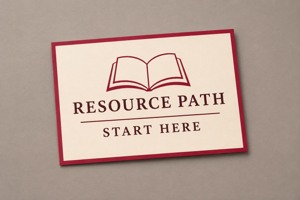
An optional short resource reminder
These custom postcards for a short resource reminder include a 6 × 4-inch option and show 16pt as the default stock. The page specifies increments of 50; confirm the actual minimum and supported quantity rather than treating that increment as a verified minimum.
Compare custom postcards for community information, then bring the approved destination, readable copy and artwork requirements to DecentCustom. Buying the card does not make the host an official health-agency partner.
AI paper-card concept. Resource Path and its brief are fictional. Official resource HTML pages and product fields reviewed November 16, 2026. Linked PDFs, translations and videos were not reviewed or certified. No medical advice, health outcome or agency endorsement is claimed.