A staff headcount is not a shirt order. Confirm the garment and size selections first, keep unanswered requests visible, and add spare pieces only for a stated reason.
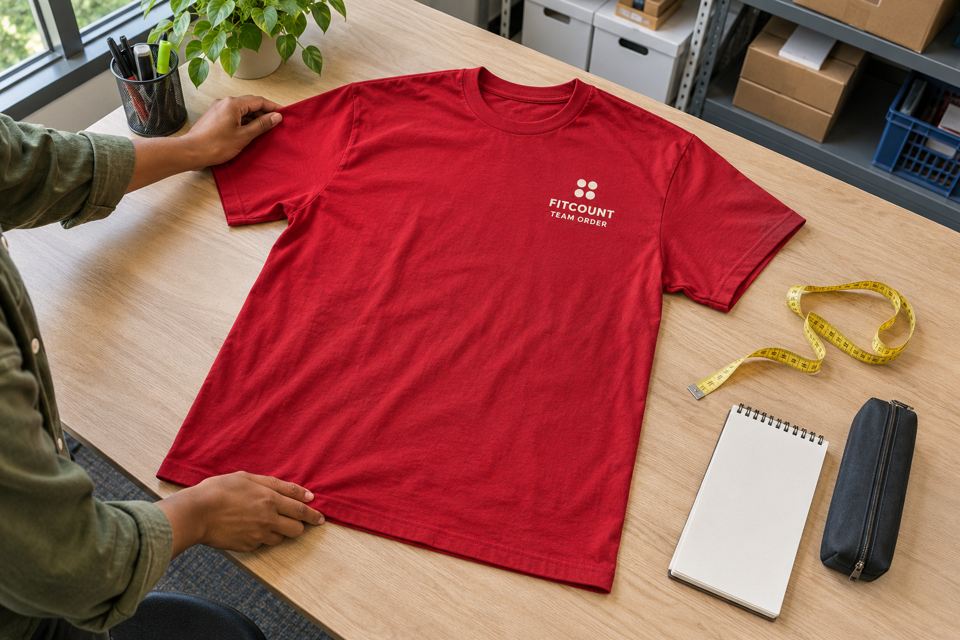
Confirm the garment before collecting size letters
For an optional Wear Red Day shirt, first settle the actual style, color and permitted workplace use. If that decision is still open, collecting “small, medium or large” can create a list that belongs to the wrong garment. The workplace clothing decision guide helps separate existing red clothes, normal uniforms and an optional team order before this step.
Then obtain the current size chart for the exact product. Check whether each figure describes a body measurement or a finished garment, what unit is used and how the measurement is taken. Do not assume the letter on a familiar shirt has the same physical meaning on a new style.
A clear illustration of the distinction appears in SanMar’s S500T measurement definitions: its product measurements describe a flat garment chest measurement, while its body-measuring instructions describe measuring around the chest. Those definitions demonstrate why the labels matter. That is another supplier’s shirt; none of its size numbers or fit ranges are a chart for the DecentCustom product discussed here.
When this article was checked, the target product’s measurement-guide image did not load. We therefore do not supply a made-up measurement table or substitute another brand’s chart. Ask for the current product-specific chart and measurement method before final size approval. A sample or comparison process, where available and appropriate, can help the buyer make a choice; it is not replaced by an AI shirt image.
A worked example: 12 confirmed pieces, two defined spares, three pending people
All counts below are hypothetical teaching inputs. Fitcount is a fictional team planning an optional red shirt. After the garment and chart review in this example, its coordinator records confirmed selections in five size buckets. Each confirmed person is counted once; a revised request replaces the old entry rather than creating a second shirt.
| Size | Confirmed pieces | Separately approved spare pieces | Proposed pieces |
|---|---|---|---|
| S | 2 | 0 | 2 |
| M | 4 | 1 | 5 |
| L | 3 | 1 | 4 |
| XL | 2 | 0 | 2 |
| 2XL | 1 | 0 | 1 |
| Total | 12 | 2 | 14 |
Calculation: confirmed pieces = 2 + 4 + 3 + 2 + 1 = 12. Approved spare pieces = 1 M + 1 L = 2. Proposed order = 12 + 2 = 14 pieces. Three other people have not confirmed their requests and are recorded outside this size table.
In the fictional plan, the coordinator and budget owner agree to the two named spares for possible late requests where the fit and actual need are checked. This is an example decision, not a recommended size mix. A spare M does not solve every unanswered request, and two extras are not a rule for every team.
The zeroes in the spare column mean no spare was approved in those particular size buckets. They do not describe unknown customer demand. Do not turn the three unanswered people into zero demand or distribute them across sizes based on a guess.
Keep a request deadline without inventing the missing sizes
Pending requests need an owner and a clear next step. In the example, the coordinator contacts those people through the team’s appropriate internal process and asks them to confirm whether they want the optional shirt and, if so, to select a size after reviewing the exact garment information. No health explanation is requested.
If a person changes a confirmed M to L before the order is finalized, decrease M by one and increase L by one. The confirmed total stays 12. If a previously pending person confirms a new request, add one to the selected size and update the confirmed total. Save the revised version so the supplier does not receive both lists.
If someone remains unconfirmed at the agreed cutoff, choose an explicit response: hold that request, discuss a later order subject to actual terms, or use suitable existing clothing. Do not promise a last-minute delivery or assume an exchange can be made. Check the applicable order and return conditions before offering an option.
A small team does not need a complicated system. It does need a single current list, a distinction between confirmed and pending, and someone responsible for resolving changes. Avoid exposing personal names or sizes in public campaign content; an order count is enough for an article or event summary.
Hand over one version that can be checked against the artwork
The final order file should identify the exact product, approved red option, size-chart version or confirmation, quantity by size, approved spares and artwork version. Include the required arrival date as a requirement to confirm, not a delivery promise made by the coordinator.
For Fitcount, the draft handoff says: “Proposed quantity: 14 pieces, made up of 12 confirmed selections and two separately approved spares. Size totals: S2, M5, L4, XL2, 2XL1. Three people remain pending and are excluded from this version. Do not place their sizes by inference. Confirm available variants, the supported mixed-size order and the required arrival date before final acceptance.”
That paragraph lets another person reproduce the total and see the unresolved work. It does not claim that the supplier has accepted the mix or that every size is in stock. When a fact changes, revise the list and the total together; do not edit only the headline quantity.
Keep the product’s minimum and packing specification separate
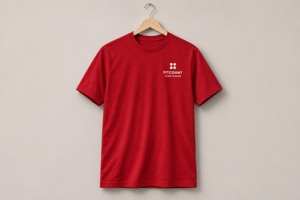
A cotton crewneck to check against the actual list
These custom red cotton T-shirts for a confirmed team order list 100% cotton, 170 GSM and XS–3XL options. The current configuration includes red. Its order field shows a minimum of 2, while the specification separately lists a 72-piece case pack.
Neither number approves the fictional 14-piece mixed-size order by itself. Confirm how the minimum applies to the requested variants, obtain the usable current size chart and check actual availability and decoration requirements.
Compare custom T-shirts for group order comparison, then bring the confirmed list and artwork requirements to DecentCustom. Keep pending requests visible until they are resolved.
AI apparel concept; Fitcount and all people, quantities and spare decisions are fictional. Sources and current product fields reviewed November 16, 2026. No physical measurements, universal size distribution, fit guarantee, campaign affiliation or delivery result is claimed.