Describe the confirmed activity before choosing materials. A table offering educational resources does not, by itself, offer screening, personal advice or an appointment.
Start with the visitor’s actual next step
For American Heart Month, decide whether a visitor can take educational information, register for a named activity or use a separately confirmed service. Give each action its own description and responsible owner. A general awareness invitation should not leave people to infer that a clinician, screening or personal assessment will be available.
The CDC’s American Heart Month communications toolkit identifies February as the observance month and separates public-facing tools from resources intended for cardiovascular health care teams. That audience distinction is useful when choosing what to share. A resource listed for a clinical team does not become a community volunteer’s service instruction.
The month supplies a planning context, not a local appointment schedule. Confirm your activity’s date, location and scope with its host. Do not transfer a previous year’s campaign date or a provider’s unrelated service into the new notice.
Check three different promises
“Pick up information.” The resource owner checks the original page, intended audience, current edition and any conditions for using the material. The table coordinator confirms which approved items will actually be available. This check is complete when the listed material and the visitor-facing description agree.
“Register for an activity.” The event owner confirms the specific session, joining process and what establishes a place. A request for more information is not automatically a booking. Keep unresolved session details pending until the responsible host answers them.
“Receive a service.” Ask the actual provider to confirm the service wording, location, availability and participation route before advertising it. If those facts are unresolved, remove the service promise from the active notice. A branded tablecloth, volunteer shirt or resource card cannot establish that the service exists.
Keep the administrative record small: proposed statement; responsible owner; source or confirmation; approved wording; current notice location; time checked. This is an editorial handoff, not a clinical protocol or a form for collecting visitors’ health information.
Use a source without implying its endorsement
NHLBI’s slides, flyers and drop-in articles page describes educational uses and gives conditions for its drop-in articles, including permission limits on program logos and press-release use. Review the conditions for the actual material you select; a source citation does not establish approval of your organization or artwork.
Keep the source organization distinct from the local host. Use your approved original identity for the event information. If a logo or reuse question remains unanswered, hold that artwork while you resolve it rather than adding an official-looking mark to fill space.
Worked example: hold an unconfirmed screening claim
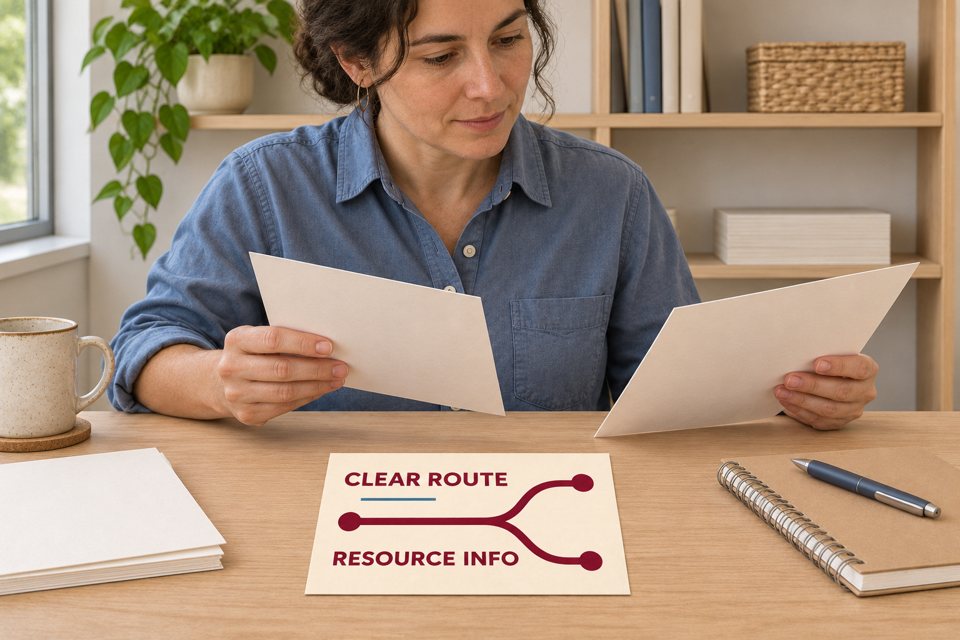
Entirely fictional editorial example: Clear Route is preparing a community information table. An early notice says, “Free heart checks and personal advice—drop in during February.” Organizer Dana has only confirmed a table for approved educational resources. No provider has confirmed the advertised clinical service.
Dana holds the notice. She asks the host to state the actual activity and records its answer: an information table only. Eli checks the selected resources and the revised visitor instructions. The corrected wording structure is:
“Visit our American Heart Month information table to find the educational resources listed on our current activity page. This table does not provide screening, personal medical advice or appointment confirmation. Use the named provider’s own contact route for questions about its services.”
Before publishing, they add the real confirmed date, opening hours, location and usable activity-page address. They remove the unconfirmed service promise from the draft and other active notices they control. A proposed future provider session remains pending and is not advertised as part of this table.
In this example, their maintained page and existing plain directions already serve visitors. They make no additional print order. The completed outcome is accurate information about an educational table, not a confirmed screening, improved health outcome or real customer event.
Print a stable route only when it has a separate use

Ordinary resource information
These ordinary postcards for a maintained resource address offer a 6 × 4 inch option, default 16pt stock and glossy front-only finish. The listing states ordering increments of 50; confirm the current minimum and selected configuration before ordering.
Compare custom postcards if a reusable indoor information route is still needed. Review approved artwork and quantity with DecentCustom. A paper card is not a medical device, screening record, appointment confirmation or official campaign credential.
Reviewed November 16, 2026. Official pages support the named resource and reuse facts only. The people and notice are fictional editorial examples. No clinical advice, provider availability, legal clearance, real event, source endorsement or health or business result has been established.