Show when a specific office is open, when it closes during the day and which dated exceptions replace the regular schedule. A holiday notice also needs a clear end.
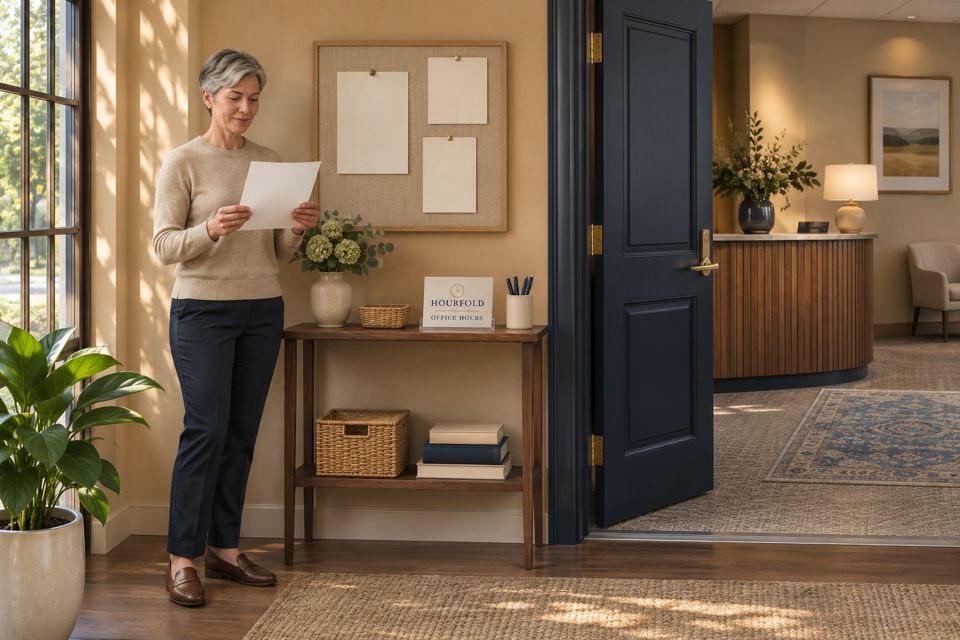
Separate regular hours, daily closures and dated exceptions
A line reading “Monday–Friday, 9 a.m.–5 p.m.” can mislead someone if the reception office closes at lunchtime. A second line reading “holiday hours apply” still leaves the visitor to work out which days change. Keep three layers visible: the regular weekly schedule, any closure within an otherwise open day, and the dated exception that overrides those hours.
Arboretum Dermatology’s contact page lists weekday office hours and explicitly identifies a daily noon-to-1 p.m. closure. This is a concrete example of why the opening and closing endpoints alone do not describe availability throughout the day.
Oculus Eyecare’s appointment page separately lists 2026 holiday-week exceptions. Its example shows that a regular schedule and a holiday schedule can coexist. Confirm the actual office’s approved dates rather than borrowing another organization’s holiday pattern.
Identify which team the hours describe. Reception, an optical counter and a clinical department may not share one schedule. Posted opening hours also do not establish appointment availability. Keep service-entry requirements separate, as explained in the specialty-visit and optical-shopping guide.
Give every exception an owner and an end
Before changing a notice, record the specific location or department, the affected dates, the replacement hours, the approved source and the expiry or restoration action. Include the year in a seasonal notice. A recurring holiday name is not enough to establish this year’s operating decision.
If two sources disagree, hold the proposed notice while the responsible office owner resolves them. Do not select the longer schedule because it looks more convenient. Record which version was approved and which old notice it replaces.
List the public places that actually carry the information: the approved visit page, appointment instructions, reception script and any printed entrance notice. Update the relevant surfaces together. This does not require creating more channels; an unused handout adds another version someone must remember to maintain.
A holiday-week notice with no hidden lunch opening
Fictional worked example, not an actual clinic schedule. Hourfold Reception normally opens Monday–Friday, 9 a.m.–noon and 1–5 p.m., and closes on weekends. Its office manager approves a shortened Wednesday and Thursday–Friday closure for November 23–29, 2026. The coordinator checks the calendar’s day/date matches and prepares this complete working schedule:
| Date | Reception hours | Exception to regular hours |
|---|---|---|
| Monday, November 23 | 9 a.m.–noon; 1–5 p.m. | None; closed noon–1 p.m. |
| Tuesday, November 24 | 9 a.m.–noon; 1–5 p.m. | None; closed noon–1 p.m. |
| Wednesday, November 25 | 9 a.m.–noon | Closed after noon |
| Thursday, November 26 | Closed | Approved holiday-week closure |
| Friday, November 27 | Closed | Approved holiday-week closure |
| Saturday–Sunday, November 28–29 | Closed | Regular weekend closure |
The public entrance notice can be shorter without losing the necessary meaning:
Hourfold Reception: November 23–29, 2026
Monday–Tuesday: 9 a.m.–noon and 1–5 p.m.; closed noon–1 p.m.
Wednesday, November 25: 9 a.m.–noon only.
Thursday–Sunday, November 26–29: closed.
Regular reception hours resume Monday, November 30: 9 a.m.–noon and 1–5 p.m.
The office manager approves the notice against the working schedule. A colleague tests two questions: “Can I visit reception at 12:30 p.m. Tuesday?” and “Is reception open Friday?” Both answers are no. The coordinator updates the named public channels, removes the conflicting draft, and records a November 30 restoration check. On that check, the temporary notice comes down and the regular schedule remains. No new policy about clinical appointments or after-hours care is inferred.
Match the print format to the information’s lifetime
For a short exception, a temporary office-approved notice may be more practical than ordering a stack of holiday cards. Put changing dates where the team can replace them. Reserve a reusable handout for stable information, such as where the office publishes current hours, after that route is verified.
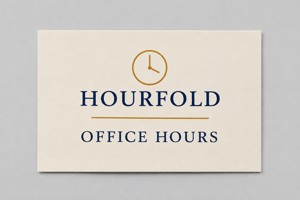
An optional reusable office-information card
These custom postcards for office information offer a horizontal 6 × 4-inch format, with 16pt stock shown as the current default. The page shows quantity increments of 50; confirm the actual ordering requirement instead of assuming a minimum that has not been verified.
Compare custom postcards for visitor handouts and bring approved wording to DecentCustom. If a corrected visit page and temporary notice solve the problem, no custom card is necessary.
AI artwork concept of a flat paper card. A display stand is separate. This product does not update itself or establish appointment availability.
Check a closed period and the day after expiry
Read the finished notice as someone choosing when to arrive. Verify one midday closure, one exceptional day and the first day the regular schedule resumes. Check the year, location and department name, then compare the printed proof with the approved online wording.
Keep the source, approver and removal action in the team’s change record. A notice is finished when the dates agree across its actual uses and someone owns its expiry, not merely when the design looks complete.
Selected public office information and product fields reviewed November 14, 2026. The Hourfold schedule is fictional, with calendar day/date matches checked. This is administrative communication guidance, not clinical or emergency-care instructions.