Name the exact service and joining route before giving a visitor directions. A business being open does not confirm a particular appointment, walk-in place or community session. The useful reception message tells someone which offer they are asking about, what step comes next and where the confirmed visit takes place.
For a studio owner or reception coordinator, the first decision is whether the visitor needs a booking route, a walk-in inquiry or an activity-calendar entry. Make that decision before adding a welcome pack or printing a general “come in anytime” message.
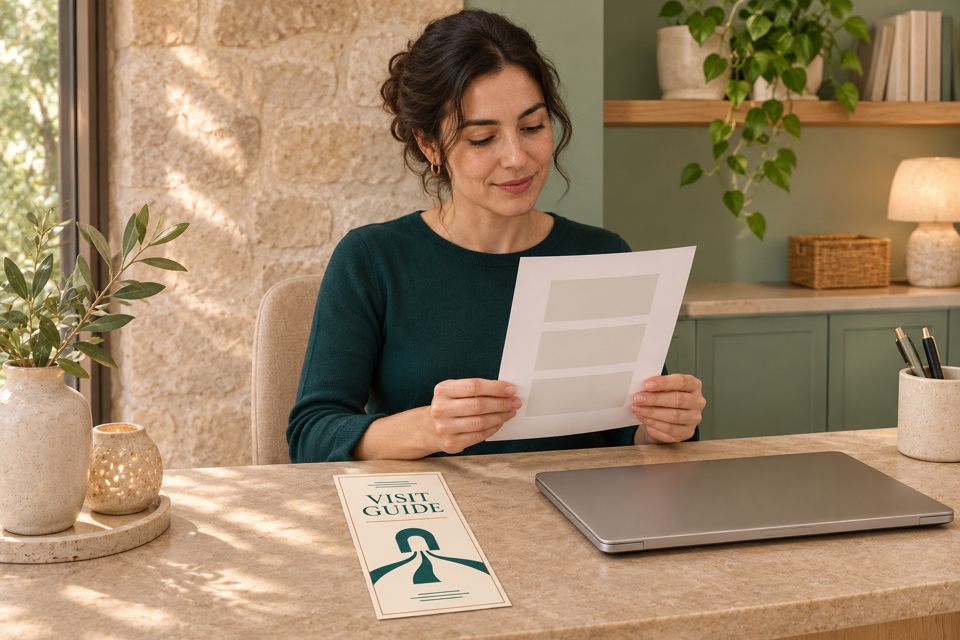
AI illustration of reception planning. The person, studio and Visit Guide artwork are fictional; no real appointment or client record is shown.
Separate the service from the way someone joins it
Actual operators use different routes. Amethyst Massage’s FAQ says its services are appointment-only and directs first-time clients through online booking and intake. That is a specific operator’s process, not a rule for every personal-service business.
At Olympus Spa’s Lynnwood FAQ, Day Pass access is walk-in only, while the same page separately discusses booking services. A person asking about admission and a person asking about a service appointment therefore need different answers even within one business.
Visitor’s purpose
Route to explain
What to verify before giving directions
A particular personal-service appointment
The provider’s current booking or inquiry process.
Service, provider, location and confirmation status.
Access offered on a walk-in basis
The exact offer and the operator’s current availability instructions.
Whether walk-in access applies to this offer, rather than every service.
A scheduled community session
The current activity entry and its joining instructions.
Date, format, venue entrance and the right question contact.
Keep the distinction visible in headings and spoken replies. “We accept walk-ins” is incomplete if it applies to one offer. “Your message was received” is incomplete if a visitor might read it as an appointment confirmation.
Confirm the activity’s location and entrance
A business name, mailing address or shared-building address may not be enough to guide a visitor. Confirm the actual service location and use the host’s approved arrival information. If an appointment takes place off site, explain that arrangement through the provider’s established process.
Seattle Insight’s center page provides a useful community example: it describes a lower-floor space with a particular entrance and directs readers to its calendar for other scheduled activities. It also separates registration-change questions from other contact roles. These details describe that organization; they do not confirm a session at another venue.
For a shared building, check the activity and the entrance together. For a private studio, follow the provider’s approved method for sharing arrival details. Do not place a private address or access code on a public promotional item merely because someone needs directions after confirmation.
Worked example: replace a general invitation with three routes
Fictional editing example: a shared-building reception draft says, “Open today—walk in for appointments and community sessions.” The invented studio actually books its personal services, answers separate walk-in inquiries about one offer and lists community activities by date. The draft promises more than those arrangements establish.
Replacement reception message: Personal-service appointments: use our current booking page to select the service and location. Check the provider’s confirmation for your visit details. Walk-in inquiries: check the named offer’s current access information or ask reception before travelling. This route does not reserve a personal-service appointment. Community activities: open the specific calendar entry for its date, format, joining step and approved entrance instructions.
To finish the edit, the coordinator connects each line to the existing correct page and has its owner review the wording. A colleague then follows each route as a visitor: can they identify the offer, see whether anything is confirmed and find the appropriate arrival information? Any missing answer goes back to the owner before promotion.
The result is a complete routing message, not evidence that the studio has gained bookings or reduced questions. Its actual usefulness still needs observation in the business.
Use existing information before ordering another item
Start with the booking page, confirmation message, activity calendar and approved entrance notice already in use. Repair a misleading label or outdated link there first. A new printed guide cannot correct a contradictory booking page by itself.
If a visitor still needs a take-home reference, identify the exact missing task. Keep changing appointment details in the maintained system. Confirm who owns the resource, who can approve the artwork and where a paper item may be displayed before selecting a quantity.
Consider a stable visitor-information pointer
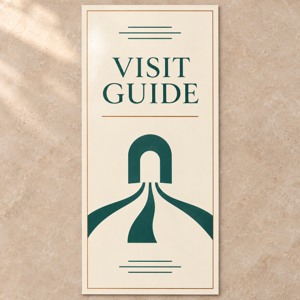
If reception repeatedly shares the same approved resource, custom rack cards for a stable visitor-information route are one possible ordinary paper format. They can point to the maintained service information without carrying individual appointment details.
The linked SKU is 3.74 × 8.27 inches, with a default 14pt glossy option and a starting quantity of 50. A holder is separate. Review an actual-size proof and rack card formats and options when preparing approved artwork with DecentCustom.
The Visit Guide image is an AI design concept, not a booking confirmation, admission credential or actual customer order. Keep the existing digital route when additional paper would serve no remaining visitor need.
Sources and linked SKU reviewed November 14, 2026. Operator examples retain their own scope; the reception rewrite is fictional. No current appointment capacity, universal admission rule, health benefit or visitor, search or business result is established.