Define the ordinary office or event task before choosing clothing and materials. Confirm the people, stock and permissions instead of turning a staff directory into an order quantity. Start by reviewing existing resources and supplies.
A reception shirt, a training folder and a professional care requirement serve different purposes. Keep the purchasing brief focused on the ordinary task the buyer can actually specify and approve.
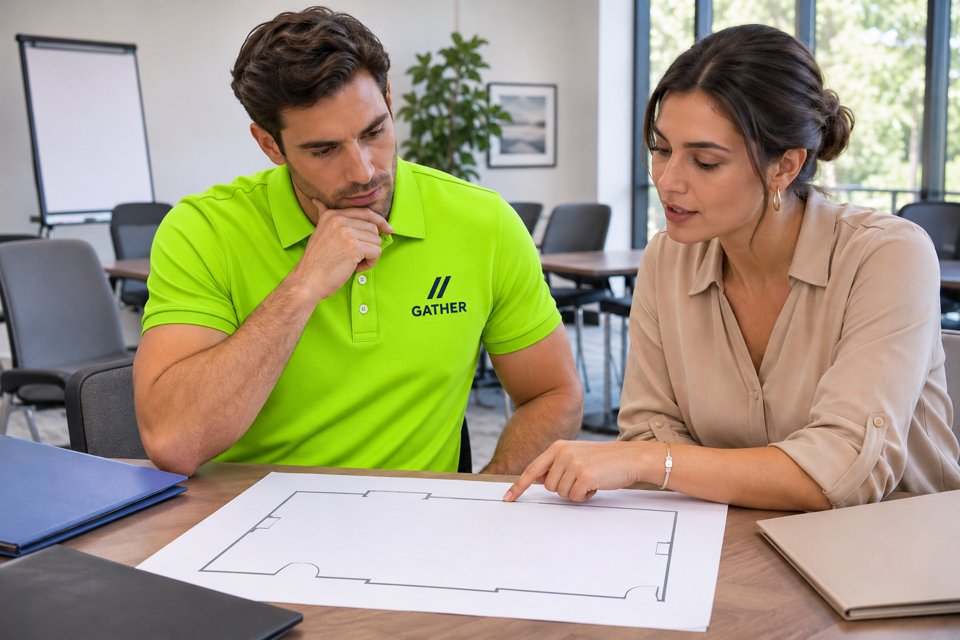
AI illustration of internal event planning. The people, room plan and Gather logo are fictional. The polo is an ordinary apparel artwork concept based on the linked garment’s appearance, not protective clothing, a care credential or a real customer order.
Confirm the event and the role before the item
With A Little Help’s FAQ describes in-person staff training and a care conference. That supports training as a real provider activity; it does not supply a date, attendee list or purchasing budget for your event.
Professional roles also need their own context. Seattle Children’s occupational therapy information distinguishes the OT and OTA roles in care. Do not infer an ordinary event clothing requirement from such a professional role description. A logo polo does not establish qualifications, replace an identity credential or satisfy a protective clothing requirement.
Ordinary task
Owner to confirm
Useful purchasing fields
Reception or event hosting
The office or event coordinator.
Actual wearers, existing approved shirts, sizes and artwork.
Internal training materials
The training organizer and information owner.
Confirmed participants, current materials and remaining stock.
Room display or delivery
The venue approver and receiving contact.
Approved space, placement, receiving location and required date.
Turn the proposal into a specific brief
Record who will use each item and what they need it to do. For apparel, obtain an actual wearer and size list through the organization’s normal process. A directory may include people who are not attending, do not need the item or already have suitable clothing.
Check the existing stock for the approved task before calculating the gap. Keep brand permission, artwork approval and any proposed display location explicit. A shared building, a home visit or an employee’s own vehicle is not automatic permission to add branding.
For a new order, compare the selected garment, sizes, quantity, decoration, proof approval and complete quoted cost. Include shipping, taxes and any confirmed charges in that comparison; leave unknown amounts unresolved. Confirm the receiving contact and required date against the actual production and delivery estimate instead of treating a general website headline as an event deadline guarantee.
Worked example: use the current stock for an internal session
Fictional example: an office is preparing an internal training session for 12 participants and 2 reception hosts. The organizer has 14 ordinary folders containing the current approved materials. Both hosts have existing approved shirts that still fit and serve their hosting role.
Folder need: 12 participants + 2 hosts = 14 people, with one folder each. Existing folders: 14; the gap is 14 − 14 = 0. Host apparel: 2 confirmed hosts and 2 existing suitable shirts; no new shirts are needed. Owners: the training organizer approves the materials; the reception coordinator checks the two host shirts and the venue arrangement. Decision: use the existing folders and shirts. Do not place a new event-pack or apparel order.
To finish, a colleague checks the participant count against the folder allocation and confirms that both hosts are covered. The organizer records the stock decision and any later change in the ordinary purchasing notes. If the actual event changes, review the affected item again; do not turn this fictional example into a standing stock rule.
This is a complete purchasing decision even though it produces no new order. If a later event has a confirmed gap, prepare a brief for that gap with the actual wearer list, permissions and budget.
Compare an ordinary polo only when there is a confirmed need
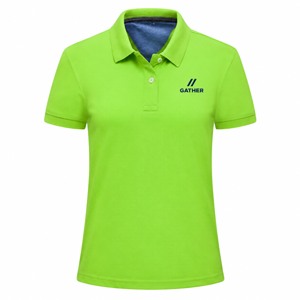
For an approved ordinary presentation task, custom short-sleeve polos for an approved office or event role are one option to compare. The linked SKU is decentcustom-cl-1205311; its specification lists 95% cotton and 5% spandex. The page currently starts at 2 shirts, matching its quantity validation.
That minimum is an order constraint, not a reason to buy clothing for two people. Check the actual size chart, selected options, artwork position and proof before ordering. Compare polo styles and options with DecentCustom if the selected garment does not fit the confirmed brief.
The lime green Gather image is an AI artwork concept based on the linked garment. It does not demonstrate protective performance, clinical suitability or staff authority. Keep the existing apparel when it already meets the ordinary task.
Provider examples, product specification and native quantity fields reviewed November 15, 2026. The event, roster and stock counts are fictional. Actual roles, permissions, fit, budget, delivery and professional requirements need confirmation for the specific organization; no real purchase or business result is reported.