Keep a produce availability statement tied to what the store has actually received and is offering. Keep an origin statement tied to that batch. A seasonal calendar, last week’s sign and an expected delivery can all be useful context, but none establishes today’s stock or origin on its own.
Seasonal, available and from a particular place mean different things
A crop can be associated with a season without being on your shelf. The produce you have can also come from a different region than the batch it replaced. Write those facts separately so a reader does not have to guess which meaning you intended.
Joe Randazzo’s locations page gives a useful example of that distinction: selection changes with the season, and Michigan or neighboring-region produce is described as available when conditions allow. That does not say every item is locally grown or currently in stock. Its wholesale page also directs buyers to discuss current availability rather than treating a general range as a confirmed order.
For your own list, identify the product and the actual batch or display being described. Keep the receiving or supplier information that supports the origin. If the source does not establish it, do not fill the gap with last week’s origin, a seasonal assumption or the location of the wholesaler’s office.
A batch change needs an information change
All details in the following Fenbridge Produce example are fictional. They demonstrate record maintenance; they are not live stock information, actual receiving documents or claims about the linked retailer.
Monday, November 9 — internal update
Previous display: The earlier Gala apple batch was recorded as Michigan-grown. That batch has finished. Its customer-facing origin message must not carry forward automatically to the replacement.
Replacement being offered: Dana checks the newly received Gala apple batch and its supporting supplier information, which identifies New York as the origin in this fictional example. Dana records the current batch separately and confirms it is the batch now being offered.
Sweet corn: A seasonal planning note mentioned it, but no arrival has been confirmed for the current offering. Keep it out of the “available now” claim.
Next expected apple batch: Its origin is not yet confirmed. Leave that future-batch field unresolved; do not copy New York into it just because that is correct for the batch on sale now.
Owner: Dana verifies the batch information. Milo updates the current customer list and staff note at 9:00 a.m., store local time, then checks that the old copy is no longer displayed as current.
This example assumes the previous batch has finished. If batches with different origins remain in use together, keep their identities and supporting information distinct. A single blanket claim for the product name may no longer describe everything being offered.
Rewrite the current message, not just the date at the top
Old copy to replace
“Michigan Gala apples available now. Sweet corn is in season.”
The apple statement described the earlier batch. The corn line describes a seasonal idea without confirming an actual arrival. Adding a new date would not repair either problem.
Complete fictional replacement list
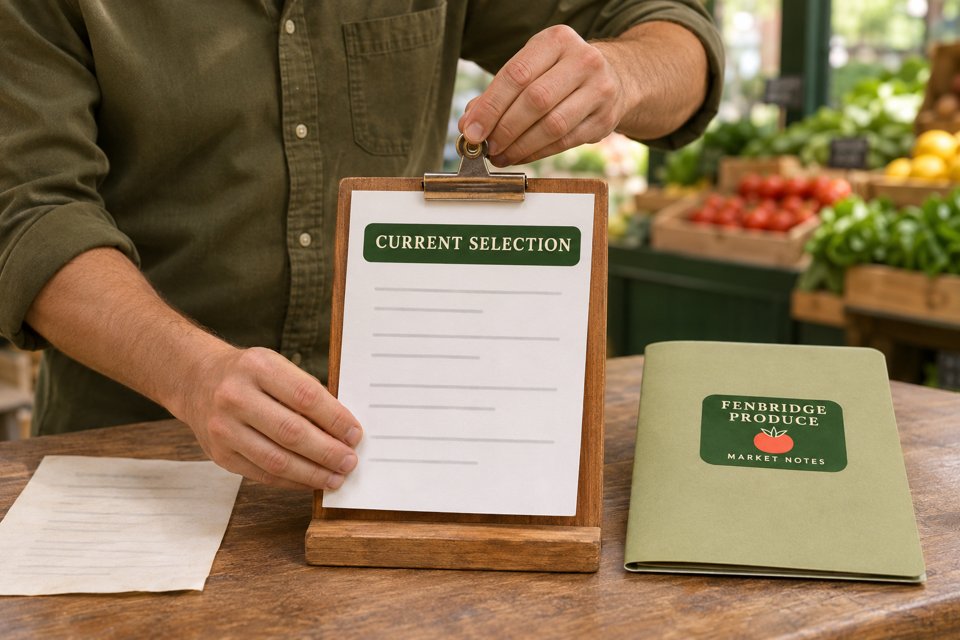
FENBRIDGE PRODUCE — CURRENT SELECTION
Updated Monday, November 9, 9:00 a.m., store local time.
Gala apples: The received batch currently being offered is from New York.
Sweet corn: Not currently available; a new arrival has not been confirmed.
For a case quantity, please check the current product, quantity and collection arrangement with our team before relying on this list. A current availability note does not reserve stock.
The replacement changes the actual claims, identifies the time of the check and gives a next step for a larger order. Do not add “guaranteed all week” or a future arrival date unless you have a basis for that particular promise.
A reply when a customer has photographed the old sign
“Thanks for checking. The Michigan sign in your photo described our previous Gala apple batch. That batch has finished; the received batch we are offering now is identified as New York-grown in our current records. We updated the list at 9:00 this morning. The old sweet-corn seasonal note also did not confirm an arrival, and corn is not currently available in this example. Please let us check the quantity and collection arrangement if you need a case; this message has not reserved one.”
Use the reply only after the underlying information is confirmed for the real goods. A polished explanation cannot replace the receiving or supplier record that supports it.
Give the update an owner and a destination
In the example, Dana owns the factual check and Milo owns the publication step. The handoff states the product, batch, changed claim, verification time and the places that need updating. “Someone should change the sign” leaves the task unfinished.
The completed update handoff
Counter list: Milo replaces the old sheet with the current list. The earlier sheet is retained as history, clearly separated from the current display.
Store website: Milo replaces the current-selection text with the same verified batch statement. An older seasonal article remains historical rather than being presented as today’s availability.
Staff note: Dana records which batch the current answer describes and that the next batch’s origin remains unresolved. Staff check the current record when a customer asks about a different batch or case quantity.
Wholesale and retail messages also need the correct route. Someone asking for a large case quantity needs confirmation for that request, rather than a screenshot of a general retail selection. Our guide to case orders and small purchases explains why the jobs differ.
Repeat the check when the relevant information changes: a new batch is offered, an item runs out, a supplier corrects the origin or an anticipated arrival remains unconfirmed. A timestamp shows when a check happened; it does not keep the information correct after the circumstances change.
Print stable identity; keep changing facts editable
A reusable identity label can identify the store’s internal notes folder. The current list inside should remain replaceable. Keep volatile origins, arrival promises and daily availability out of a large preprinted run when they will need changing independently.
Compare custom labels and stickers only if a stable identification task remains. If your existing folder and editable list are already clear, keep using them.
Finish the information update before the print decision
Choose one current product, identify the supporting batch information and replace the conflicting current copy wherever customers read it. Keep unresolved future details unresolved. If a stable printed identity would still help, bring that artwork, actual material and quantity requirements to DecentCustom. The ordinary editable information sheet remains a useful solution on its own.