Human-wildlife coexistence describes a continuing relationship shaped by people, wildlife and local circumstances. For an educational event, explain that relationship clearly before choosing a slogan or printing a handout.

What does human-wildlife coexistence mean?
WWF's coexistence explainer describes a dynamic situation in which the needs and interests of nearby people and wildlife are generally met. It treats coexistence as a relationship that can change, rather than a permanent endpoint.
In event copy, identify the topic being discussed. An introductory talk can explore how communities and wildlife share a landscape. That description is more precise than a claim that a host has already achieved a particular conservation outcome.
Does coexistence mean there are no negative interactions?
No. WWF explains that coexistence may still include adverse interactions and effects on people or wildlife. The degree and form of coexistence can vary with the setting and species, and change over time.
Review absolute words such as “always,” “everywhere” and “conflict-free” before printing them. A reassuring illustration does not supply evidence for those claims. If an event introduces a complex issue, describe the learning opportunity without promising a risk-free landscape or giving readers an improvised wildlife-management procedure.
Why can't one solution be copied everywhere?
The IUCN SSC specialist group's explanation emphasizes differences between cases, including their social, cultural and economic background. A response that overlooks underlying disagreements can leave the problem unresolved or intensify tensions.
For an educator, that means naming the place and source when presenting a case. Separate what a source actually observed from what your audience might hope to try elsewhere. Do not turn a photograph, a single successful example or a generic conservation slogan into an instruction for another community.
Whose needs should the explanation include?
The specialist group stresses collaboration among people with different interests and expertise. WWF also emphasizes the perspectives and needs of communities sharing space with wildlife, including people who bear the costs of those interactions.
A useful introductory panel should leave room for those human experiences alongside the needs of wildlife. Review whether the copy acknowledges the people affected, identifies whose account is being presented and avoids implying that one outside organization speaks for every local resident.
Can a poster or a giveaway establish that coexistence is working?
A printed item can convey information; its existence does not establish a conservation result. WWF's account describes continuing, integrated work and monitoring as part of understanding whether approaches succeed.
Keep the communication task and the field outcome separate. You may check that a handout contains an accurate explanation and a usable source link. Claims about changed wildlife interactions need their own relevant evidence, place and period. Printing a quantity of cards cannot supply those observations.
A completed educational-copy correction
Fictional example: Field & Neighbor's library educator receives a display draft headed “One poster ends wildlife conflict everywhere.” The draft supplies no project, location or results behind that promise.
The educator holds the design and reviews the wording with the host's subject reviewer. They replace the unsupported outcome claim with an introduction to coexistence as a changing, locally shaped relationship. The revised text acknowledges community perspectives and links to the cited explainers for further learning.
The reviewer approves the corrected educational copy for the library's existing display. Existing accurate handouts remain usable, so the educator orders no new cards. The completed fictional outcome is an approved explanation; it is not evidence that a real landscape's conflicts have changed.
A handout after the explanation is reviewed
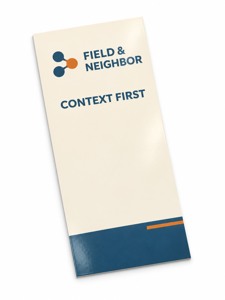
Printed rack card
These rack cards for a reviewed educational explanation list a 3.74 × 8.27 inch size, default 14pt stock and a default glossy finish. The current quantity control starts at 50.
Compare custom rack cards only after checking the need for another handout. Bring reviewed text and original artwork to DecentCustom for proof review. A card is an information format, not a management intervention or safety credential.
Reviewed November 19, 2026 using the cited WWF and IUCN SSC explanations. The fictional case illustrates a wording decision; it does not document a real conservation project or its results.