Community stores · local maker displays
Separate the maker’s story, the store’s selling role and the permission to use each photograph. A clear shelf card can work while an unverified image stays out of print.
Before printing a local-producer display, confirm the exact words, artwork and placement you intend to use. Knowing the maker, stocking their products and receiving a photograph are different things. A useful display tells shoppers who made the item and what the shop offers without implying a broader partnership or permission.
Start with a short, accurate maker card. Keep the store’s section badge separate. If an image is not cleared for the intended use, leave it out while you resolve that question; do not treat a credit line as the missing authorization.
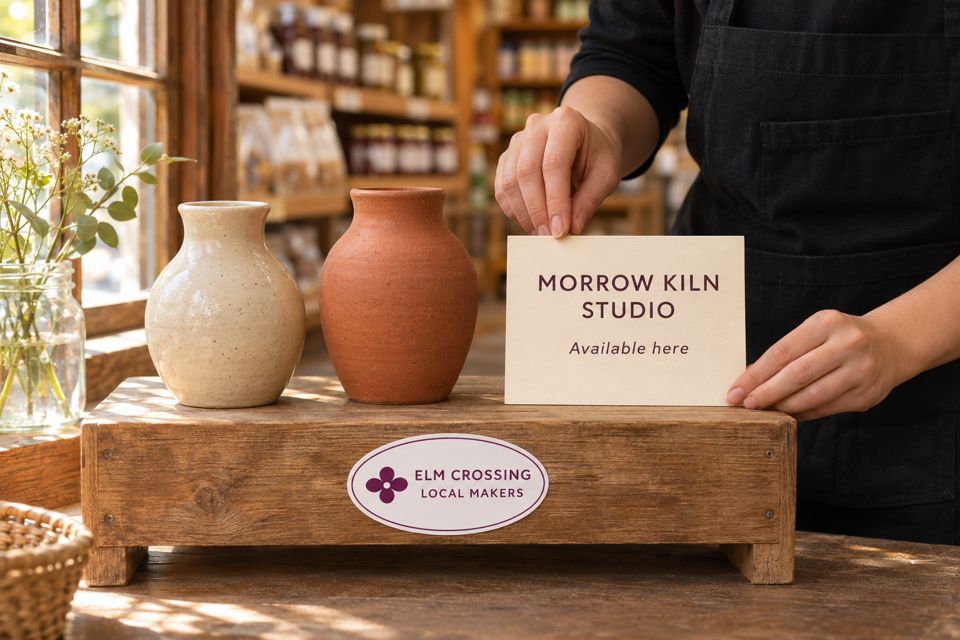
Identify the maker, the retailer and the image source
A general store can sell local work alongside groceries without being the manufacturer of everything on the shelf. Saxapahaw General Store’s local-artists page, reviewed November 5, 2026, describes functional handmade items offered in the store and notes that pieces rotate or move. Its community page places artists alongside other contributors to the business.
That is one North Carolina operator’s published model, not evidence that all neighborhood stores use the same arrangements. The artists page also links a consignment agreement. We have not reviewed that agreement’s terms and cannot infer its photo-use permissions from the link or from the fact that work is displayed.
For your own display, distinguish these roles before drafting:
- Maker: the person or business responsible for the item. Verify the preferred name, the relevant description and any factual origin statement.
- Retailer: the store offering the current selection. Describe that role accurately; do not turn “sold here” into “made here.”
- Image source and rights holder: who supplied the file, who created it and who can authorize the proposed use. Those may be different people.
The U.S. Copyright Office’s photography guidance explains that original photographs are protected and that the photographer is generally the initial owner, with exceptions such as qualifying work made for hire. Receiving a file from the photographed maker does not by itself answer who can authorize its use. Use that distinction to check the asset, rather than guessing from the sender’s name.
A filled example: approve the shelf text, hold the photo
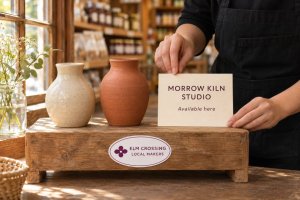
Fictional planning example: Elm Crossing General has an agreed retail-display arrangement for ceramic vases by Morrow Kiln Studio. The maker confirms the exact v2 description and its logo for one indoor shelf card. A separate supplied photo, studio-shelf-07.jpg, is credited to fictional photographer Devon Reed, but authorization for the proposed use remains unresolved. These are invented records for the example, not actual permissions or a real photograph.
Ready within the confirmed scope
Indoor maker card · version 2
Material: the exact maker name, approved description and approved logo version.
Placement: one indoor shelf card at Elm Crossing General.
Action: compare the final proof with the confirmed v2 file and placement before printing. Keep the confirmation with that proof.
Held pending clarification
Supplied studio photograph
Material: studio-shelf-07.jpg, credited to Devon Reed.
Missing answer: who can authorize this file for this display, and on what conditions?
Action: leave the image out of the card. The responsible staff member resolves the intended use through the store’s permission process; a credit alone does not close the gap.
Outside the recorded scope
Website or social reuse
Proposed change: put the maker card or photo into a public post.
Recorded scope: indoor shelf use only.
Action: do not assume that approval follows the artwork to a new channel. Confirm the new placement and relevant assets before preparing that version.
This record separates three decisions that a single “approved” checkbox would hide. It allows a verified text-only card to move forward within its confirmed scope while the photo stays on hold. It does not create an agreement or resolve rights on behalf of either party.
Give the shopper a complete answer without an unverified claim
For the fictional text-only card, the following copy identifies both roles and gives a useful next step:
Ceramic vases by Morrow Kiln Studio
Selected pieces sold by Elm Crossing General.
Ask our team about the current selection.
Use that wording only after its facts and scope are confirmed for the real display. The example deliberately does not say the vases are made in the store, that every pictured item is in stock, or that the maker endorses the shop’s other products. A nearby studio address alone would not establish where every item was made.
If you add a product-specific claim, verify it separately. For example, a decorative vase display does not establish food-contact suitability. Keep the maker’s original product information and required labeling intact; a store badge is not a replacement for either.
A portrait or workshop photo may add context, but it is optional. When the unresolved part is the photograph, replacing a clear text card with an unauthorized image does not make the display more useful. If a photo is later cleared, retain its exact file, permitted placement and any required credit with the corresponding proof.
Check the final use, then review when the display changes
Before printing, compare the proof with the saved confirmation: maker spelling, description, logo file, photograph if any, intended placement and version. Record who checked it and when. A useful record identifies the actual proof; “the maker said yes” without the file or proposed use leaves the next editor guessing.
Where a specific image carries a Creative Commons license, inspect that exact source and license rather than assuming all Creative Commons material has the same conditions. For example, the CC BY 4.0 deed summarizes credit, a license link and indication of changes, while cautioning against implying endorsement and noting that other permissions may matter. It is a summary, not the full legal code. No image in our fictional example is claimed to have that license.
Make a new check when the piece sells, the selection rotates, the card is moved or the intended channel changes. Replace an outdated availability statement instead of leaving a permanent label to imply that the original item remains for sale. Website and social versions should have their own current proof and confirmed scope.
For the separate purchasing handoff, our guide to version and purchasing approval covers how to keep an approved design attached to the right order. That purchasing record should refer to the display version that passed the content and asset checks, rather than substituting for them.
Print the stable store identity; keep changing maker details replaceable
A paper card in an existing holder may be enough. If the shop needs a consistent section badge, custom labels and stickers can carry the stable store identity. Keep the maker description, current selection and any asset-specific credit on the replaceable card. That separation reduces the amount of printed material affected when a piece moves or its information changes.
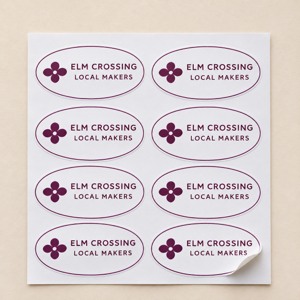
custom product labels
The current SKU decentcustom-st-000009 lists oval shapes, paper materials and matte finishes among its choices. Confirm the combination, dimensions and surface for your actual configuration. Its white-paper description is for indoor, dry use; this illustration does not demonstrate removability or adhesive performance.
Quantity starts at 1 ordering unit. The package description refers to sheets without establishing the number of finished labels per sheet. Confirm that count before comparing an order with the number of displays you need.
AI concept of the fictional Elm Crossing Local Makers badge used in the scene. The pictured label count is illustrative, not a promised sheet yield. Click the small image to open the actual product page.
When reviewing a printed item with DecentCustom, keep the approved artwork and intended surface with the configuration. The useful result is a display shoppers can understand and staff can maintain: who made it, where it is sold and which exact materials are cleared for that use.