Tell visitors exactly what their booking covers before they arrive. A farm shop visit, entry to an open day and a guided tour can be different offers, even when they happen on the same property.
Describe the visit people are actually choosing
Start with the named activity and the specific date or session on its current booking page. Then state what entry covers, what needs a separate reservation and where someone can check a question. Avoid a broad “everything included” headline unless the responsible operator has confirmed every activity it describes.
| Visit being advertised | What to confirm | What the invitation should say |
|---|---|---|
| Farm store visit | Store hours and whether shopping requires event admission | Name the store offer without implying a tour reservation |
| Public open day | The actual included areas and activities for that event | Identify included activities and any separately booked extras |
| Timed guided tour | Selected session, booking status and actual inclusions | Explain how to reserve that session and where confirmation appears |
| Organized group visit | Operator's accepted booking, group scope and arrival instructions | Use the confirmed group arrangement rather than a public-event invitation |
These are editing questions, not four standard products every farm offers. If your event combines shopping and a tour, spell out that particular combination. If no guided activity is available, remove the tour suggestion rather than leave it beside an attractive barn photograph.
Use the specific offer when a general FAQ leaves room for doubt
As checked November 13, 2026, O.G. Farms' own FAQ distinguishes free grounds and farm-store entry from paid tours and advance bookings. Its reservation section also contains both broad ticket wording and a drop-in feeding exception. That is a reason to resolve the precise visit type with the operator, rather than copy one sentence as a rule for every visitor.
Dade City Farms' FAQ separately describes seasonal public events, a market open during those events and privately booked visits outside public-event dates. This is another operator's arrangement, not evidence that your farm uses the same entry terms or schedule.
For your invitation, read the selected event's current details alongside the booking confirmation. If they disagree about an included activity, ask the responsible organizer to settle it before publishing. A line such as “tour arrangements not yet confirmed” is more accurate than treating a general shop-opening notice as permission to join a tour.
Complete the correction before a visitor sets off
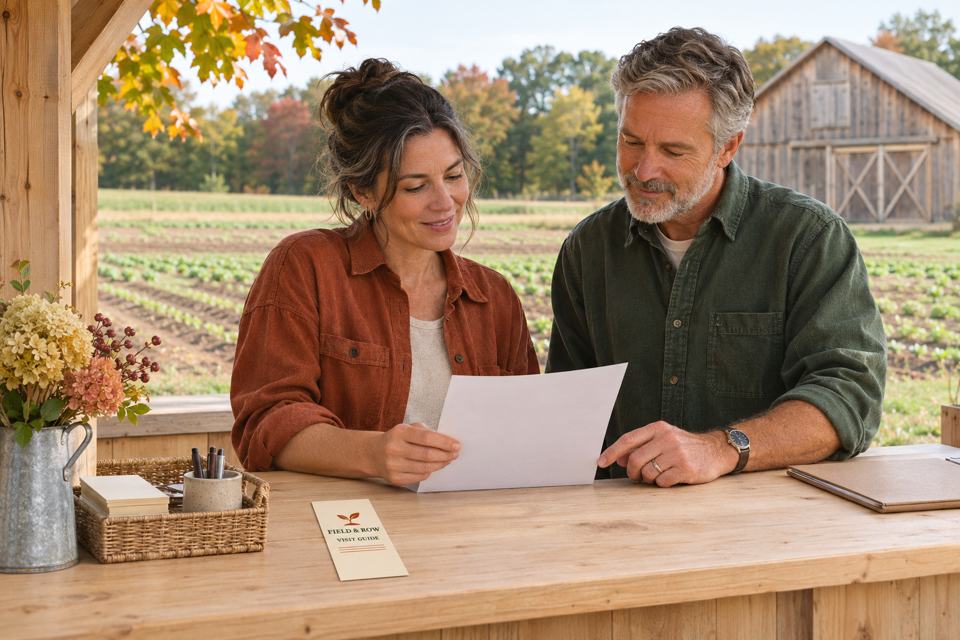
Fictional example: Field & Row posts “Visit the farm this weekend” beside a photograph of a guided group. A visitor asks whether arriving at the store reserves a tour. In this example, the organizer confirms that store shopping is available separately, while guided tours require a session booking. The editor replaces the ambiguous post with those two choices and the actual booking route.
The visitor chooses a tour and follows that farm's reservation process. Only after the provider confirms the selected session does the host send its arrival instructions. The original store invitation never becomes a tour ticket. If the visitor had chosen shopping only, the reply would have provided the store's actual hours and entry terms without suggesting a reserved guided activity.
The useful result is a resolved choice and matching instructions. This scenario is an editorial demonstration; no real visitor booking, payment or event change occurred.
Give the reader an offer and a next action
Visit: [specific event or activity, date and session where relevant].
Included: [operator-confirmed activities or areas].
Separate arrangements: [any extra booking or excluded activity that affects this choice].
Next step: [actual booking route or store-visit instructions].
Questions or changes: [current responsible contact route].
Fill the fields from the approved offer, then read the invitation as a first-time visitor. Can someone tell whether they need to book, what they are choosing and what to do next? Have the reception lead answer the same questions from the same version. If the two answers differ, resolve the difference before printing.
Keep changing availability on the current booking page
A stable visitor-information card
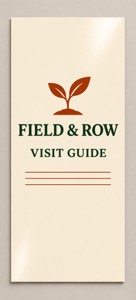
These custom rack cards for visitor information are listed at 3.74 × 8.27 inches, with 14pt standard paper and a glossy finish as default options. The current minimum allowed quantity is 50. The linked image shows an AI artwork concept.
Compare custom rack cards when a stable farm identity and help route would be useful. Prepare the actual artwork with DecentCustom after the information is approved. This paper card is not an admission credential, weatherproof direction sign or live availability display; a holder is not included.
An existing event page and a clear reply may be enough. If you print a handout, keep it at a suitable dry information point and direct changing session availability to the current source. Remove outdated copies through your own authorized process when the offer changes. Do not print an uncertain event date or unconfirmed inclusion merely to fill the design.
Sources checked November 13, 2026: the linked farm operators' own FAQs and DecentCustom product page. The comparison illustrates different published arrangements, not a survey of U.S. farms. Check the particular event's current terms before relying on an example.