Did you know upcycling recycle boxes can hold up to 800 writing utensils? This shows how important environmental awareness is today1. Brands like Decentcustom are now offering green promotional items to match this global trend.
Imagine walking into a busy trade show. You see people everywhere, checking out different booths. Among the many giveaways, you spot branded 7-outlet power strips being given out. It's not just the product's usefulness that catches your eye. It's the effort to support eco-friendly causes at events and tradeshows1.
Companies like Decentcustom are making custom products that do more than just market. They show their commitment to the planet. This shows that using custom logo products in marketing is more than a trend. It's a smart way to win over customers who care about the environment.
Key Takeaways:
Upcycling recycle boxes can hold up to 800 writing utensils1.
Branded 7-outlet power strips are used as eco-friendly promotional items at events1.
Recyclable FSC-certified packaging reflects commitment to sustainability1.
Sustainable promotional products like custom jute bags help build brand recognition and loyalty.
Companies like Decentcustom are leading the way in offering eco-friendly marketing solutions.12
The Growing Trend of Environmental Consciousness
Today, being green is key for businesses. They're using environmental marketing to meet the demand for eco-friendly products. This change shows how important corporate sustainability and green branding have become.
Importance in Marketing
Eco-friendly marketing is more than a trend. Studies show 73% of people think companies should care about the environment3. This has made sustainability a big part of marketing, especially with green products.
Also, 63% of consumers prefer buying from companies that focus on sustainability3. By using these strategies, businesses can improve their image and connect with eco-aware customers.
Business Commitment to Sustainability
Companies that care about the environment win customer loyalty. A survey found 81% of people expect companies to be green in their ads4. Since the pandemic, 64% of people have become more eco-friendly, making sustainable practices more important4.
This shift has led companies to focus on green branding. For example, 80 Acres Farms has cut water use by 97% with vertical farming. Coca-Cola aims to make all its packaging recyclable by 20254.
Sustainable Practices
Company Example
Vertical Indoor Farming
80 Acres Farms
100% Recyclable Packaging By 2025
Coca-Cola
Eliminated Microplastics in Products
A.S. Watson Group
Sustainable Meat Production
Grupo Éxito
Being green shows a company's values and helps build loyalty. For instance, 70% of customers might change their shopping if a store isn't green5. As businesses adopt sustainable practices, they lead in eco-friendly marketing. This builds strong relationships with customers.
Sustainable promotional products are key in building a green brand and keeping customers loyal. In 2023, the global market for these products grew a lot. This shows more people want to buy eco-friendly items6.
Building Brand Recognition
Research shows that 90% of people remember a brand after getting a promotional item. And 73% are more likely to buy from that brand7. This proves that green products can really help a brand stand out.
Also, 89% of people still remember a brand's name even years later. This shows how lasting the impact of these products can be7. Plus, 80% of consumers remember a brand's message if they get a promotional item. This shows the big impact of eco-friendly marketing7.
Customer Loyalty and Trust
Customer loyalty is also boosted by promotional products. 83% of consumers stay loyal to brands that give them these items7. This loyalty is clear when 46% of people have a positive view of brands that use eco-friendly items7.
Moreover, 99% of people are willing to go out of their way for these products. This shows how appealing and loyal-making eco-conscious efforts can be7.
Statistic
Percentage
Brand Recognition from Promotional Products
90%
Likelihood to Do Business with Brand
73%
Loyalty to Brands Providing Promotional Products
83%
Recall Brand After Two Years
89%
Favorable Opinion of Brands with Eco-Friendly Items
46%
Willingness to Obtain Promotional Products
99%
Demonstrating Corporate Social Responsibility
Companies show their corporate social responsibility by using eco-friendly products. A Deloitte study found that 93% of business leaders think companies should care for society, not just make money8. This idea leads to real actions in their marketing plans.
More businesses are taking big steps for the environment. For example, Lego wants to use green materials for all products and packaging by 20308. Ben & Jerry’s Foundation gives out about $2.5 million each year to help groups in Vermont and the U.S8..
Using green products in marketing is a big part of CSR. It helps build a brand's value and shows it cares about the planet. Salesforce is a great example, giving back one percent of its product, equity, and employee time to help others8.
Companies can get certifications like B-corp to show they're responsible. This helps them look good and shows they're serious about CSR9. They can also join in on CSR activities like giving grants, recruiting volunteers, and sponsoring events9.
It's important for marketing to match up with caring for the planet. This makes the company look good and builds trust. It also helps the world a lot. With the right actions and plans, businesses can make a big difference and do well for a long time.
Attracting the Eco-Conscious Consumer
Businesses today need to appeal to eco-conscious consumers to succeed. By focusing on green trends, companies can attract and keep this growing group. This commitment to sustainability boosts brand loyalty and meets the needs of today's shoppers.
Consumer Trends
The number of eco-conscious consumers is growing fast. A huge 83% of shoppers want to return to brands that care about the planet10. Also, 91% worry about carbon emissions, plastic, and water waste, showing the need for businesses to act10.
Younger people, especially, value sustainability. Almost 90% of those aged 18 to 39 think it's key10. And, nearly 90% are willing to spend more on products that help the environment10.
Sustainable Choices
Companies that succeed with eco-conscious consumers focus on sustainability. Using recyclable and biodegradable packaging is a big plus10. Certifications like B Corp and Carbon Neutral Certified show a brand's green commitment10.
Using renewable energy and reducing waste makes a business look greener11. Sustainable products also help spread the word about a brand and keep customers loyal12.
By keeping up with green trends and offering eco-friendly products, businesses can grow their customer base. It's not just a choice; it's a must for any business looking to the future.
Setting Your Business Apart with Sustainability
In today's market, being green is more than just caring for the planet. It's also a way to stand out and gain an edge. Using eco-friendly products shows you're committed to the environment and sets you apart.
Going green can really pay off. It makes customers trust and stick with you more. A study shows 78% of people value eco-friendly products, making them a smart choice13. Plus, it boosts your team's morale and shows you care about more than just profits13.
Choosing green products helps your business in many ways. They might cost more upfront, but they save money and last longer over time13. They also give you a chance to stand out, especially when launching new products or campaigns14.
Using green items can also inspire people to live healthier. It shows you're serious about making a difference. This can help you promote better living and show your dedication to the planet14.
Being green can also make your brand look better. A study in Australia found green businesses are seen as more trustworthy14. This can attract new customers and keep the ones you have. Plus, green products can help teach people to live better for the planet13.
In short, going green is a smart move for your business. It builds a strong, trusted brand. By focusing on sustainability, you can cut through the noise and stand out from the competition.
Choosing the Right Eco-Friendly Promotional Products From Decentcustom.com
Choosing the right eco-friendly promotional products is key for businesses. They want to improve their brand image and attract eco-conscious customers. Decentcustom.com has many customizable options that are both effective and green. This makes it easy to match your brand and what your customers like.
Material Selection
Choosing sustainable materials is very important. You can pick from recycled, biodegradable, or natural materials. The goal is to reduce harm to the environment and look good doing it. It's also important to choose materials that are durable and useful for a long time15.
Recycled and Biodegradable Options
Using recycled and biodegradable items is key to reducing waste and showing you care about the planet15. For example, recycled notebooks or biodegradable pens can help keep waste out of landfills. They still offer value to the user. Switching to these items can make your customers more loyal and think better of your brand1516.
Product Lifespan and Reusability
The length of time a product lasts and if it can be used again are big deals. Reusable items keep your brand in front of customers and cut down on waste. Things like reusable bags or drinkware can be used many times, making a big impact each time16. Adding these to your marketing mix can really boost customer loyalty and happiness1517.
Here are some things to think about when picking eco-friendly promotional items:
Does it fit with our brand?
Is it something our customers will use and like?
Does it have a low impact on the environment?
By carefully picking eco-friendly promotional items such as personalized visors and wholesale promotional pens from Decentcustom.com, businesses can connect better with their customers. They also show they care about the planet. This not only makes their brand more trustworthy but also meets the growing need for green products1517.
Examples of Eco-Friendly Promotional Products
In today's market, businesses have many options to add eco-friendly products to their promotions. These choices include everyday items and new green giveaways. They show a brand's commitment to the planet. Let's look at some popular eco-friendly promotional items.
Reusable Bags
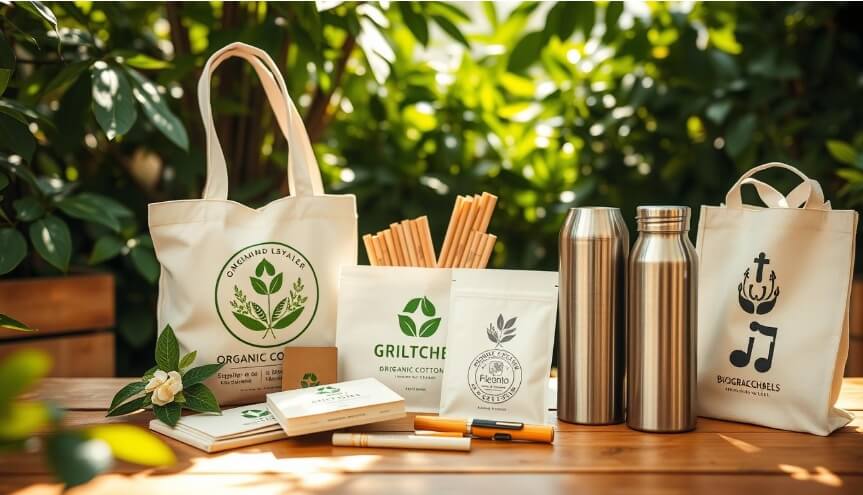
Promotional reusable bags are very popular. They are made from recycled plastic or organic cotton. These bags are useful and good for the environment18.
Recycled stationery, like notebooks, is also a great choice. Notebooks made from recycled paper or materials like Karst Stone Paper are durable and eco-friendly. For example, the Karst Hardcover Recycled Stone Notebook is waterproof and tear-proof19. Choosing these products shows a brand's commitment to sustainability.
Sustainable drinkware is another excellent choice. The MiiR 16 Oz. Climate+ Tumbler is made from recycled materials. It's not only useful but also offsets 110% of its carbon emissions, making it very eco-friendly19. Such items improve a brand's image and support the environment.
Plantable Seed Paper
Plantable seed paper is a creative way to promote sustainability. These items can be customized with a brand's message. When planted, they grow into flowers or herbs. This reduces waste and gives a nice experience to the recipients.
Solar-Powered Chargers
Solar-powered items, like chargers, are leading the way in combining tech with green living. They use the sun's energy, reducing our need for traditional power sources. This helps lower our carbon footprint. Such products appeal to those who care about the environment.
Integrating Eco-Friendly Products into Marketing Strategies
Adding sustainability to marketing is more than just using green products. It's about creating a brand that cares about the planet. Many people want to buy from companies that protect the environment20. This shows a chance for businesses to draw in more customers by being green.
Today, people like to support companies that care about the planet21. This change means using eco-friendly items in marketing can make a brand more appealing. Brands can show they care by choosing items made from recycled stuff.
When picking green products, think about materials, usefulness, and quality21. Companies like Patagonia and Google have made their brands better by going green20. Being eco-friendly can also make a brand more loyal and get good press.
It's also important to focus on products that last20. Green products often last longer, saving money in the long run. Plus, green marketing can even get tax breaks in some places20.
Recognition Express in the UK has lots of green products like notebooks and tech21. Using these items in marketing can help businesses match what customers want. It also helps follow rules and stand out in a busy market20.
Material Selection for Sustainable Products
Choosing the right materials is key for eco-friendly promotional items. Options like bamboo, recycled silicone, and natural cork are great. Bamboo grows fast, needs little water and fertilizer, making it perfect for items like pens and mugs22. It also has FSC certification, showing it's harvested responsibly22.
Sustainable cotton is another top pick. It's grown without harmful chemicals22. It's used for clothes like T-shirts and hoodies. These items have GOTS certification, proving they're organic and made ethically22. Companies like Strategies offer pens made from recycled materials, like water bottles and cork23.
Jute and cork are also great choices. Jute is natural and doesn't need many chemicals. Cork is harvested without harming the tree, making it renewable22. They also have certifications like WFTO and OEKO-TEX® for their eco-friendliness22.
Recycled plastic, especially rePET, is good for the environment. It turns old plastic into new products, reducing waste22. The Recycled Claim Standard (RCS) verifies how much recycled content is in these items22. Stainless steel is also popular because it's fully recyclable and durable, often certified for green production22.
There's a growing interest in eco-product materials for all kinds of items. At Strategies, they offer eco-friendly electronics, bags, and drinkware. They work with ethical suppliers to ensure quality and environmental standards23.
Choosing the right customizations and packaging is also important. Using digital printing, water-based inks, and minimal packaging helps the environment24. It shows a company cares about sustainability and helps the planet.
To learn more about sustainable materials for promotional items, check out this guide here22.
Educating Your Audience on Environmental Benefits
Teaching people about the good things sustainable products do is key. A strong environmental communication strategy and marketing tools help. They let businesses share how their choices help the planet.
Using Marketing Materials
Marketing stuff is vital for educational green marketing. Things like brochures, digital stuff, and infographics show how green products are good for the earth. For example, reusable bags and bottles cut down on waste and keep your brand in sight.
Using these tools shows your company cares about the planet and making things in a green way25.
Social Media Strategies
Social media is great for sharing eco-awareness. Good social media for eco-awareness plans share facts and stats on green living. For example, 58% of distributors like green products, and 50% of buyers care about sustainability26.
Also, talking about switching to reusable items can connect you with green-minded people. This can spark interest and get people talking27.
It's also smart to talk back to your followers, do live Q&A, and share what they say. This way, you educate and build a community that cares about the planet. By doing this, you can show your green efforts and keep customers who support your cause.
For more tips on adding green products to your marketing, check out this resource.
Aligning Your Messaging with Environmental Responsibility
In today's market, it's key for companies to show they care about the planet. By talking about eco-responsibility, businesses can connect with what people value. This makes their brand stronger and more appealing.
Consistency in Branding
It's important to always talk about being green. Using items like jute and cotton bags shows you're serious about the environment. These bags are made from natural stuff and can easily break down28.
These products are a better choice than old ones, which more people want. Making sure your message is always about being green builds trust.
Positive Brand Image
Being green is now a big part of what makes a brand stand out. People like products that are good for the planet and are willing to pay more for them29. This shows there's a big demand for green stuff in marketing.
By choosing to be sustainable, you can make your brand look better than others. This can also make customers more loyal and happy to support you.
Being able to customize green products with cool designs helps show your commitment28. Also, talking about being responsible and diverse can attract more people. This helps you build strong relationships with your audience30.
Good marketing that's also responsible is key for lasting success. It helps you build strong bonds with customers and makes your brand look better30. To really show you care, teach your customers about the good you're doing for the planet. For more tips on matching your brand with green values, check out this resource.
Measuring and Communicating Impact
It's crucial to understand and share the results of sustainability efforts. This builds trust and boosts your brand's image. Measuring environmental impact is key, using tools that track website visits, social media, and sales31. These metrics help see how well you're doing and where you can get better.
Creating detailed impact reports is vital. These reports outline what's been achieved and what's still to do. Sustainability reporting makes everything clear and helps everyone work together31. A study by frog and BT showed how redesigning TV products improved customer satisfaction by 7 points32.
Telling the story of your impact communication efforts is also key. Using stories can make the benefits clear to investors, partners, and customers31. It's important to focus on specific goals that measure and guide your actions.
Table 1 shows different ways to measure environmental impact:
Methodology
Key Feature
Benefit
Data Analytics Tools
Gathering Website Traffic and Sales Trends
Tracking Business Performance
Comprehensive Impact Reports
Summarizing Key Findings
Enhanced Transparency
Storytelling Techniques
Engaging Stakeholders
Effective Communication
Relevant Indicators
Specific KPIs
Informed Strategic Decisions
For example, GP stakeholders in VC firms focus on real results, not just metrics like email open rates impact communication. CEOs also value initiatives that save time and make money, showing their practical value33.
Listening to customer and stakeholder feedback is also important. It helps improve your goals and products, making your impact communication more effective31.
Collaborating with Like-Minded Businesses
Working together with businesses that share your values can make a bigger difference. Green business collaborations help share resources and knowledge. This boosts eco-friendly efforts in the industry.
Increased Reach
Marketing through partnerships has many benefits. It helps you reach more people. By teaming up, brands can tap into new markets and meet new customers34.
The Adidas and Allbirds sustainable sneaker collaboration is a great example. It cut down carbon emissions by a lot, showing the good it can do35.
Partnerships also help you reach customers at the right time. This can increase sales34. For example, Kylie Cosmetics and Kendall Jenner's work reached many beauty fans. This boosted their brand and built loyal customers35.
Shared Resources
Working together can save money. Sharing marketing costs can be very profitable for everyone34. Bombas and Pixar's partnership is a good example. They combined their creativity to make something special35.
To start a partnership, set goals that match your sustainability aims. Make co-branded content and plan your campaigns well34. Knowing each other's strengths and making a clear plan helps the partnership succeed.
Create a Co-Marketing Agreement: A formalized plan that includes goals, timelines, and content ownership
Set Mutual Goals: Align brands' objectives for an effective collaboration
Develop Co-Branded Content: Engage audiences with joint marketing materials
Assess Strengths and Weaknesses: Leverage complementary strengths to optimize efforts
Continuously Evaluating and Improving Strategies
In the world of sustainability, businesses must always change and get better. They need to keep up with new green trends and use the latest eco-friendly technologies. This way, they can boost their brand and stay successful in a competitive market.
Staying Informed
Being up-to-date on green trends is key to a good sustainability strategy. Using data to track how well you're doing is very important. For example, data helps you know who to sell to and how well your marketing works36.
Tools like Eyk help marketers get useful insights quickly. They offer models and a big library of data to understand how marketing affects sales36. This helps marketing efforts match up with the company's goals36.
Adopting New Technologies
Using new eco-friendly technologies is crucial for better sustainability strategies. Companies should quickly add new tech to their marketing plans. This can lead to better engagement and happier customers37.
Working with influencers and using content from customers also helps a lot. It builds trust and keeps customers coming back37.
Tools like Eyk help track how well marketing is doing. This lets businesses make smart choices and improve their plans36. It builds trust and keeps customers coming back36.
Keeping up with new tech and trends is good for a company's green efforts. It helps them stay ahead and meet customer needs. Always checking and improving is key to lasting success and helping the planet.
For more insights on continuously evaluating your product strategies, you can read this detailed guide.
Creating a Sustainable Workplace
Creating a sustainable workplace is more than just green practices. It's about a complete approach. This includes green office initiatives and getting employees involved in sustainability.
Green Office Initiatives
Green practices can make a big difference. For example, reducing, reusing, and recycling materials cuts down on waste38. Turning off computers at night and using energy-saving lights also helps save energy and money39.
Working from home a few days a week can also help. It can lower pollution by up to 10%38.
Using waterless urinals and efficient appliances can save water38. Having a recycling system in the office encourages responsible use and reduces waste39. Switching to digital documents can also save paper and lower carbon emissions39.
Boosting Employee Engagement
Getting employees involved in sustainability is key. Workshops and training on sustainability can help them adopt green practices39. Asking for their green ideas can lead to many suggestions and increase participation38.
Offering rewards for eco-friendly actions can also encourage a green workplace39.
Conclusion
Our exploration into eco-promotional synthesis shows how vital environmental awareness is for today's marketing. Using sustainable products in promotions boosts brand visibility and connects with consumers' values. With 89% of people remembering advertisers two years after getting a product40, the effect is clear.
Green branding also helps build a loyal customer base. Studies reveal that 85% of people remember the advertiser and are more likely to shop with them41. This proves that going green is more than a trend; it's a key to lasting success. Businesses can attract eco-aware consumers by choosing sustainable options.
To wrap up, using promotional products sustainably is a wise marketing move. It improves brand recognition, builds loyalty, and shows a company cares about the planet. For more on the role of promotional products in marketing, check out this resource. By choosing wisely, companies can lead towards a greener future and enjoy the benefits of green branding.
FAQ
Why is environmental awareness important in the use of promotional products?
Environmental awareness is key in the world of promotional products. It shows a company's dedication to being green. Companies like Decentcustom offer green items that help the planet and market well.
How can companies demonstrate their commitment to sustainability through promotional products?
Companies can show they care about the planet by using green products. This makes them look good and builds trust with customers.
How do eco-friendly promotional products affect brand recognition?
Green products help brands stand out. People remember and support brands that care about the environment. This builds strong loyalty and trust.
What is Corporate Social Responsibility (CSR) in the context of promotional products?
CSR means companies use green practices in their marketing. By choosing eco-friendly items, they improve their image and help the planet.
How can businesses attract eco-conscious consumers?
To attract green customers, offer products that show you care about the planet. Keep up with green trends and show you're committed to being green.
What makes sustainability a unique selling proposition in a competitive market?
Being green sets a business apart. It shows you're responsible and forward-thinking. Using green products sends a strong message.
How should businesses choose the right eco-friendly promotional products?
Pick products that are made from sustainable materials and last long. Decentcustom.com has many options like recycled and reusable items.
Can you provide examples of eco-friendly promotional products?
Good examples include reusable bags, recycled notebooks, and solar chargers. These items show you care about the planet.
How can companies integrate eco-friendly products into their marketing strategies?
Mix green products with marketing to show you care about the planet. This balances your goals with being responsible.
What criteria should be considered when selecting materials for sustainable products?
Choose materials that are good for the planet. Use recycled and biodegradable stuff. Make sure products can be used again.
How can businesses educate their audience about the environmental benefits of their promotional products?
Use marketing and social media to teach people about your green products. This helps spread the word about your eco-friendly choices.
Why is it important to align brand messaging with environmental responsibility?
Being consistent and showing you care about the planet makes your brand stronger. It shows you're serious about being green.
How can businesses measure and communicate the impact of their eco-friendly practices?
Use methods to show how your green efforts help the planet. Share this info with everyone to build trust and show your commitment.
How can collaborations with like-minded businesses enhance sustainability efforts?
Working with others can make your green efforts bigger. You can share resources and promote each other's green work.
What steps can businesses take to continuously improve their sustainability strategies?
Keep up with new green trends and use the latest tech. Always look for ways to do better and stay relevant in the green market.
How can businesses create a sustainable workplace beyond promotional products?
Make your office green and get everyone involved. A green workplace shows you're serious about being eco-friendly.