Hanukkah and Chanukah are both used in English. Before approving a printed note, choose the wording for its actual purpose and intended recipient. A spelling preference and a person's observance are two different questions.

Is Chanukah a misspelling of Hanukkah?
No. The My Jewish Learning FAQ explains that there is no standard English transliteration of the Hebrew word. It uses Hanukkah and identifies Chanukah and other variants as common spellings.
An English spellchecker may prefer one form, but that preference does not make another established form an error. For a particular community notice, retain the spelling the host has approved. For your own general article, choose a consistent style and check headings, image captions and the final artwork together.
What is an appropriate greeting?
My Jewish Learning lists “Happy Hanukkah” among its greetings. When you know the recipient celebrates and are writing a holiday note, that gives you a straightforward English option. If the host uses Chanukah in its own materials, agree on that spelling in the actual message.
The same FAQ suggests “Happy Holidays” or “Season's Greetings” when you are unsure whether someone celebrates Hanukkah. These are options for a general seasonal message. They do not establish what a particular person prefers.
For an ordinary business thank-you, you can also state the real purpose directly: appreciation for the person's help or work together. Do not infer religious observance from a name, a business relationship or membership in a mailing list.
Does choosing an English spelling approve Hebrew artwork?
No. The English spelling decision does not check a separate Hebrew text, its meaning or its layout. If a host supplies wording in another script, keep that approved wording intact and arrange an appropriate language review of the actual proof.
Do not label a proof correct simply because an automated tool produced it or because the letters look familiar. Ask the reviewer to check the version that will actually be printed, including the placement of the text within the design. This article supplies no Hebrew artwork or translation approval.
How can we keep the approved wording consistent?
Keep a short approved message with its intended use beside the artwork file. Distinguish a named host's holiday notice from a general appreciation card. If the purpose changes, review the wording again before reusing the file.
Check the actual print proof against that message. The title in an email, the name of a saved image and the text placed in the artwork can diverge. A final review should identify the chosen file and read the visible words, rather than relying on an earlier approval of a different version.
A completed spelling and recipient review
Fictional example: Open Hello's coordinator receives two drafts: a community notice using the host's preferred Chanukah spelling and a general thank-you for business contacts. A proposed edit would replace every Chanukah with Hanukkah and add the holiday greeting to both drafts.
The coordinator pauses that edit. The host confirms its existing spelling for the community notice, so the coordinator retains it and receives approval for the digital version. The general thank-you has no confirmed holiday audience, so its wording stays focused on appreciation.
The team already has accurate general appreciation cards. It reuses those cards and orders no new print. The two messages now have clear purposes without treating a spelling preference as a rule about every recipient.
A compact card for a short approved message
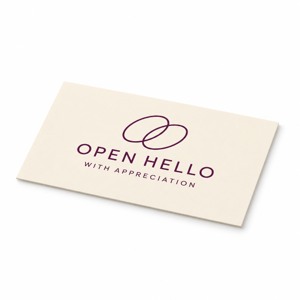
Flat standard-size printed card
These flat printed cards for a short approved message use a 3.5 × 2 inch format. The page lists standard 14pt stock, glossy paper and standard corners as defaults, with purchasing increments of 50.
Keep the wording short enough to read comfortably at the actual size. Compare custom business cards if a compact flat format fits the need, then bring the approved text and artwork to DecentCustom for review. This format is not a folded greeting card or an included envelope.
Reviewed November 19, 2026. The cited educational FAQ answers spelling and greeting questions; it does not measure customer frequency or determine an individual recipient's preference. Language approval, physical proof and arrival dates need their own checks.