Did you know that promotional products can make a huge impact, with 1,000 impressions per month? They last longer than digital ads1. This shows how powerful branded items can change how people see a brand.
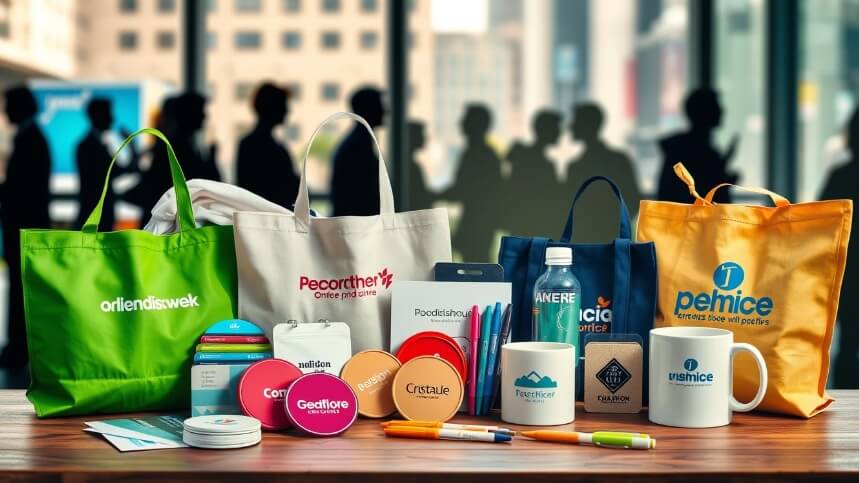
Imagine getting bulk pens with logos, personalized tote bags bulk, and USB drives at a trade show. Months later, you use that branded pen every day. This is the magic of promotional products - they quietly become part of our daily lives, promoting brands.
Companies are looking for new ways to make a lasting impression in today's market. Promotional products are a key strategy, creating a real connection between brands and people. These items remind us of businesses, boosting visibility and recognition.
Giving something for free is key to promotional products' success. When people get free items, they feel grateful, which can lead to more business and word-of-mouth1. Research shows that 94% of people like getting these items2.
Promotional products have a big impact on how we see brands. Studies show that 76% of people remember a brand from a promotional item2. Around 80% feel better about a brand after getting a free item3. This can lead to loyal customers and more sales.
Interestingly, these items aren't just short-lived gifts. A 2021 study found that half of people keep company swag for over five years. 70% keep these items for more than a year2. This means brands stay in people's minds for a long time, increasing the chances of future interaction.
As we dive into promotional products, we'll see how they can change how we see brands. They help build customer relationships and drive marketing success.
Key Takeaways
Promotional products generate 1,000 impressions monthly, surpassing digital ads.
94% of people enjoy receiving promotional items.
76% can recall brand names on promotional products.
50% of consumers keep promotional items for over 5 years.
80% feel more positively towards brands after receiving promotional gifts.
Promotional products leverage the principle of reciprocity in marketing.
These items create a tangible, long-lasting connection with consumers.
Understanding Promotional Products
Promotional products are key in today's marketing world. They range from branded items to corporate gifts. These items make a lasting impression on those who receive them.
Definition and Types
Promotional products include a wide range of items like pens, t-shirts, and tote bags. The industry is huge, with sales over $23 billion annually4. Outerwear, for example, can make a big impact, with 6,100 impressions over a lifetime4.
Historical Context
Using promotional items has been around for centuries. Businesses have always seen their value in building a good brand image. Today, these items are still a big part of marketing plans. People tend to like them more than regular ads5.
Today's trends in promotional items show what people want and what's happening in the world. PPE has become very popular because of COVID-194. Eco-friendly and tech items are also in demand, as companies want to be seen as responsible.
Promotional products are very effective because they last a long time. People keep them for about seven months, which means they see the brand often5. Even more, 81% of people keep them for over a year4.
Product Type
Estimated Lifetime Impressions
Consumer Retention Rate
Outerwear
6,100
81% for over 12 months
T-shirts
3,400
81% for over 12 months
General Promotional Items
Varies
7 months on average
Promotional products work well across all ages. They are more effective than many other marketing methods4. This shows how powerful real, tangible items can be in making a brand look good.
The Psychology Behind Promotional Products
Promotional products have a big impact on how we act as consumers. They tap into our desire to give back, creating a strong bond with brands. When companies give away free items, they're not just handing out stuff. They're building relationships.
Research shows that 80% of people are more likely to choose companies that offer free items6 such as customized office supplies. This shows how effective promotional items are in guiding our choices. Also, 85% of people remember the company that gave them a free item, showing the lasting effect7.
Promotional items are effective because they are something we can hold onto. They remind us of a brand, making us more likely to choose it8. 65% of people remember the brand on a promotional item they got, showing their lasting impact6.
Emotional connections made through these items also play a big role. A huge 79% of people feel valued when they get a free item, leading to more brand support7. This emotional connection, combined with the practical use of good designs, makes a big difference in how we act and feel toward brands.
The design and usefulness of promotional items are key to their success. Items that look good and are useful are more likely to be kept and used, making a bigger impact8. This is seen in how 58% of people keep these items for one to four years, giving the brand long-term visibility7.
Reciprocity Principle in Marketing
The reciprocity principle is a key tool in marketing. It uses human psychology to build brand loyalty and engage customers. By giving out free items or services, companies create a sense of obligation and positive feelings towards the brand.
How Free Gifts Influence Consumer Behavior
Gifts and items can change how people act. A study by sociologist Phillip Kunz showed this when he sent 600 Christmas cards to strangers and got over 200 replies. This shows the power of giving back9.
This idea is used in marketing too. Companies give out free trials or samples to draw in new customers.
Creating a Sense of Obligation
When people get something for free, they feel they must give back. Dr. Robert Cialdini, an expert in influence, says, "We are obligated to give back to others the form of behavior that they have first given to us."9 This feeling can lead to more sales and recognition of the brand.
For example, Spotify's free 30-day trial of their Premium membership lets users try the service without paying. This might turn them into paying customers10.
Fostering Positive Brand Associations
Promotional items and free resources can make a brand seem good. Companies like Helpscout give out free guides on customer acquisition and support. This builds trust and goodwill with their audience10.
Similarly, TOMS Shoes' "One for One" program donates a pair of shoes to a child in need for every pair bought. This makes customers feel good about the brand and loyal11.
Company
Reciprocity Strategy
Impact
Amazon Prime
Free two-day shipping
Increased sales and customer loyalty
Dropbox
Referral program with extra storage
Boosted customer retention
Starbucks
Loyalty program with free items
Improved customer retention and sales
By using these strategies, businesses can build loyalty and recognition through promotional items. This helps in the long run.
Tangible Brand Reminders
Promotional merchandise is a key tool in physical marketing. It leaves a lasting impression, unlike digital ads that fade quickly. These items are seen more often than most ads, making them a smart choice for boosting brand awareness12.
These items do more than just show off a brand. They keep it in mind for consumers, making it more memorable13. A pen or a USB drive on someone's desk keeps the brand top of mind.
There are many types of promotional products, from useful items like personalized photo night lights to lifestyle items like clothes12. This variety lets brands pick what fits their image and who they want to reach.
These reminders can also make customers feel valued. Giving loyal customers branded items can make them more loyal and likely to come back1213. This approach not only strengthens the brand but also makes customers feel appreciated.
Benefits of Promotional Products
Impact on Brand
Increased Brand Visibility
Higher Brand Recognition
Constant Brand Reminders
Improved Brand Recall
Strengthened Customer Relationships
Enhanced Customer Loyalty
Cost-Effective Marketing
Better ROI
Promotional products help create a positive link between brands and customers12. This emotional bond, combined with the physical nature of the items, makes them a strong marketing tool. They help brands stay relevant and memorable in today's competitive world.
Enhancing Brand Recognition and Loyalty
Brand recognition and loyalty are key to business success. Promotional giveaways help a lot in making a brand known and keeping customers coming back. Let's see how these tools can make a big impact and build strong bonds with customers.
The Power of Repeated Exposure
Seeing a brand often through promotional products helps people remember it. It usually takes 5-7 times to make a brand stick in someone's mind14. These items keep reminding people of the brand, making it easier to remember.
Building Trust Through Familiarity
Getting to know a brand through its products builds trust. This trust leads to loyalty, with 46 percent of people willing to pay more for brands they trust14. It's important to use high-quality items, as people see the brand's quality in the gift15.
Long-term Customer Relationships
Promotional products are great for keeping customers for a long time. A study shows most people keep these items for about eight months15. This keeps the brand in their minds and helps keep customers coming back.
Impact of Promotional Products
Statistic
Consumer Reception
89% received a promotional product in the past 6 months
Brand Recognition Boost
Color can increase recognition by up to 80%
Revenue Increase
Up to 33% with consistent brand presentation
Promotional giveaways are the most popular form of advertising across all ages15. They not only draw in customers but also increase recognition through word of mouth16. By giving out branded items and targeting the right people, businesses can boost customer interaction and brand visibility16.
Emotional Connections Through Promotional Items
Promotional products can create strong emotional bonds with consumers. They do more than just serve a purpose. They leave lasting impressions that help brands connect with people on a deeper level.
Emotional marketing through these items is very powerful. Customers who feel a strong connection to a brand are 52% more valuable. They are also 71% more likely to recommend the brand to others17.
Promotional items can make people feel happy or even passionate. By giving away useful items, brands can attract and keep customers. For example, a simple t-shirt or water bottle can remind someone of the brand for years, strengthening their bond with it.
Promotional items are great at making lasting connections. Bags, for instance, are kept for a long time because they are useful18. This helps build strong feelings towards the brand.
By making promotional items personal and meaningful, brands can build real connections. This approach not only meets customer needs but also inspires loyalty and positive word-of-mouth. The emotional impact of these items is clear: campaigns with emotional content perform nearly twice as well as those with only rational content17.
The Role of Design and Functionality
Design and functionality are crucial for effective promotional products. In today's market, businesses must focus on product design. They need to create functional promotions that connect with consumers.
Aesthetic Appeal in Promotional Products
The look of promotional items is key to grabbing attention. Graphic design makes content more engaging, leading to better experiences and higher sales19. A unique design helps a brand stand out, making it different from others19.
Balancing Form and Function
It's important to balance looks and usefulness in promotional items. Good design can make a product seem more valuable, making customers think it's of higher quality20. Design that's easy to use is key for customer happiness, with clear interfaces helping customers decide to buy from a brand20.
Innovation in Promotional Merchandise
New marketing ideas often use the latest in product design. Great design can draw in customers, sway their buying choices, and even lead to impulse buys20. In crowded markets, creative products can make a brand stand out, attracting more sales and market share20.
By focusing on looks, usefulness, and new ideas, businesses can make promotional items that do more than just serve a purpose. They leave a memorable mark on consumers. This way, promotional items become strong tools for building brand recognition and keeping customers loyal.
Promotional Products as Cost-Effective Marketing Tools
Promotional products are a budget-friendly way for businesses to advertise. They help increase brand awareness and customer loyalty. Plus, they offer a hands-on way to engage with customers.
Research shows that 80% of Americans have 1 to 10 promotional items. And 53% use them weekly21. This means people see brands more often, boosting recognition.
For example, 57% remember a brand from a mug, more than from radio or TV ads21.
Promotional products offer great marketing ROI. They can make other marketing efforts 44% more effective21. People keep these items for 5 months, giving brands more time to be seen22.
Also, 89% recall a brand from a promotional item for up to two years21. This shows how long-lasting these tools are.
"Promotional products turn customers into walking billboards, increasing brand visibility in the public sphere."
Promotional strategies are very affordable. Businesses can get thousands of items for just a few hundred dollars23. This makes them a wise choice for all sizes of businesses.
In summary, promotional products are affordable, long-lasting, and effective. By using them in their marketing strategies, businesses can make a lasting impression. They also build stronger connections with their audience, all while keeping costs down.
Measuring the ROI of Promotional Products
It's key to figure out the return on investment (ROI) for promotional items. We'll look at important marketing metrics to see how they impact brands. We'll also use customer analytics for deeper insights.
Tracking Brand Awareness
Knowing how well people know your brand is crucial. The cost per impression (CPI) is the main way to check ROI24. The Advertising Specialty Institute's yearly study helps us guess how many times people see a brand24.
It takes seeing a brand seven times to become a customer. This helps us guess how many new customers we'll get from promotions24. Promotional items keep working long after the campaign ends, helping your brand stay in people's minds24.
Analyzing Customer Engagement
Looking at how customers interact with your brand gives us clues. After getting a promotional item, 82% of people think more positively about the brand25. Important signs of engagement include:
Social media interactions (likes, shares, follows)
New email sign-ups
Website traffic increases
Actual sales growth
These signs show how well your campaigns work right away. They tell us about customer behavior and how they see your brand.
Assessing Long-term Impact
Looking at the long-term helps us see how well our brand sticks with customers. Promotional items last about eight months, keeping your brand in view25. To see the long-term effects, I look at:
Metric
Description
Return on Impressions
Measures brand visibility frequency
Customer Lifetime Value
Assesses long-term customer relationships
Brand Image Evolution
Tracks change in overall brand perception
While it's tough to measure, the impact of promotional items is key for strong customer ties25. By measuring how well promotions work, we can understand their value.
Integrating Promotional Products into Marketing Strategies
Adding promotional products to marketing plans can help a brand stand out. These items serve as walking ads, making a brand more memorable. 89% of people remember a brand's logo on a promotional item for up to two years26.
When planning marketing campaigns, I see promotional items as essential. They're not just giveaways; they're powerful tools that shape how people see a brand. Research shows that 85% of people are more likely to do business with a brand after getting a promotional item26.
The promotional products market is booming, hitting $26.1 billion in 202327. This shows how effective these items are in promoting brands. I've seen that these products stay relevant for over a year, giving brands long-term visibility27.
Using promotional items with digital marketing boosts campaign success by 44%28. This mix offers a strong way to promote a brand. It's important to pick high-quality items, as 72% of people link a company's reputation to the quality of its promotional products28.
When planning campaigns, I look at different markets. Education, healthcare, construction, nonprofits, and manufacturing/distribution are key areas27. Each has its chance for creative brand promotion.
Sustainability is becoming a big deal in choosing promotional items. I've seen that 88% of marketers suggest eco-friendly options, which match consumer values and improve brand image28. This choice not only helps the environment but also appeals to eco-aware consumers.
Case Studies: Successful Promotional Product Campaigns
Marketing case studies reveal how promotional products can enhance brand visibility and loyalty. I've seen both small businesses and large corporations use creative swag to change their image and attract new followers.
Small Business Success Stories
Local shops often use affordable yet effective promo items to grow their presence. A bakery I know gave out branded oven mitts, which customers loved using at home. This simple gift kept the bakery top-of-mind and drove repeat visits.
Corporate Brand Transformations
Large companies have achieved branding success through smart promotional campaigns. Coca-Cola's "Share a Coke" campaign with personalized bottles boosted sales and brand visibility significantly29. Nike's custom sneaker giveaway sparked social media buzz and increased brand loyalty among their target audience29.
Industry-specific Examples
Different sectors use tailored promo products to meet unique market needs. In the beverage industry, Red Bull's branded merchandise at events built strong brand loyalty29. For hospitality, Airbnb found that welcome gifts for guests led to positive word-of-mouth and more repeat bookings29.
These examples show the power of promotional products. Studies show that 89% of consumers remember advertisers on promo items received in the past two years30. Customers owning these products were three times more likely to contact the advertiser compared to other media30. Promotional swag can add personality to a brand, expanding reach and sparking meaningful consumer conversations.
Company
Promotional Campaign
Result
Coca-Cola
"Share a Coke" personalized bottles
Increased sales and brand visibility
Nike
Custom sneaker giveaway
Increased social media engagement and brand loyalty
Red Bull
Branded merchandise at events
Fostered brand loyalty and affinity
Airbnb
Welcome gifts for guests
Positive word-of-mouth and repeat bookings
The Future of Promotional Products in the Digital Age
Promotional products are changing in the digital age. Now, they mix with online experiences in new ways. This mix offers brands a chance to connect with people in fresh, exciting ways.
Tech-savvy promotions are changing the game. QR codes on items lead to special content. NFC-enabled products let people interact instantly. These tech-integrated items make brands more visible and engage customers better31.
Looking ahead, we'll see more personal touches. Tech items with brand logos will appeal to tech lovers. Eco-friendly tech gifts will win over those who care about the planet31. This shows a trend towards items that match what people value and how they live.
Measuring Impact in the Digital Age
As products change, so do ways to see how well they work. Now, we look at brand recall, how well they convert, and loyalty32. QR codes and custom URLs help us see how well campaigns do32.
Promotional Item
Digital Integration
Benefit
Wireless Charger
NFC-enabled
Instant brand interaction
Bluetooth Speaker
QR code for app download
Extended digital engagement
USB Drive
Pre-loaded digital content
Direct information sharing
The future of promotional products is about making lasting, interactive experiences. By using these tech-smart methods, brands can build stronger bonds with their audience. This keeps them ahead in the fast-changing world of marketing.
Sustainability and Eco-Friendly Promotional Items
The world is moving towards eco-friendly promotions. Businesses see the importance of green branding in today's market. They know people care about the environment.
Growing Demand for Green Alternatives
More people want sustainable products. About 62% prefer items that are good for the planet over others33. Giving out eco-friendly items can make a brand 53% more liked by people33.
Innovative Sustainable Materials
The industry is using new materials for eco-friendly promotional products. Items are made from RPET, organic cotton, bamboo, and more34. These materials help the planet and make brands stand out.
Aligning with Corporate Social Responsibility
Eco-friendly promotions match up well with corporate social responsibility. Items like recycled tech can make a big impact for a small cost33. Sustainable pens and clothes also make a lasting impression33.
Companies are also working on sustainable packaging and branding. Digital printing is now the top choice for eco-friendly gifts34. This shows a real commitment to taking care of the planet.
Customization and Personalization in Promotional Products
Personalized products are changing the game in promotional items. I've seen how custom items leave a lasting mark on people. 83% of people in the U.S. love getting items with ads35.
Branded items that match what people like feel special and relevant. This personal touch boosts how much people engage and remember your brand36. It's no surprise that 85% of people have shopped with a brand after getting a free item35.
Customization does more than just sell things. Companies that customize their products see a 20% sales boost. Also, 79% of companies that beat their sales goals have customized products37. This shows how personal touches can grow your business.
Customization is more than just adding a logo. It's about making products that speak to your audience. This not only increases sales but also builds loyalty and advocacy37. Today, with 80% of consumers preferring customized experiences, personalized products are a wise choice37.
Aspect
Impact
Sales Increase
20%
Consumer Preference
80%
Product Returns
40% decrease
Willingness to Pay
1 in 5 consumers
By offering personalized products, brands can make unforgettable experiences. This boosts engagement and sales. It's a strategy that works for both businesses and customers in today's marketing world.
Conclusion
Promotional products are key to how we see brands. They leave a lasting mark, with 85% of people remembering the advertiser. And 89% recall the company name even two years later3839. This shows how powerful these items are in marketing.
These products are also very cost-effective. They cost less than a penny per impression, making them a great value38. They help increase brand awareness and build customer loyalty. 85% of people choose to do business with the advertiser after getting a promotional item39.
The future of promotional products looks promising. They offer a chance for targeted marketing and standing out from competitors40. As companies aim to build goodwill and improve brand perception, these products will remain essential. With 82% of consumers buying from companies that gave them items, it's clear they lead to real business gains38.
In summary, promotional products are more than just gifts. They are powerful brand ambassadors. By using them to make lasting impressions, build loyalty, and drive business, companies can greatly improve their marketing and brand impact.
FAQ
What are promotional products?
Promotional products are tools used to make brands known and keep customers loyal. They include things like pens, clothes, stickers, and bags. These items help spread the word about a brand.
How do promotional products impact brand perception?
Promotional products greatly affect how people see a brand. They make a strong connection between brands and people. When people see a product as good or special, they think more of the brand.
What is the psychology behind promotional products?
The psychology of promotional products is interesting. It involves how people feel when they get something for free. It also includes how these items make a brand more memorable.
How does the reciprocity principle apply to promotional products?
The principle of reciprocity says people feel obligated to return a favor. When companies give out free items, it makes people feel good about the brand. This can make them more loyal.
How do promotional products serve as tangible brand reminders?
Promotional products remind people of a brand. Unlike ads that can be forgotten, items with logos stay in mind. This makes people more likely to choose that brand.
How do promotional products enhance brand recognition and loyalty?
Seeing a brand often through promotional products helps people remember it. This familiarity and trust lead to more customers staying with the brand. It also makes people more likely to recommend it.
How do promotional products create emotional connections?
Promotional products can make people feel happy or satisfied. This positive feeling helps people think well of the brand. It turns them into brand supporters who share good things about it.
Why are design and functionality important for promotional products?
The look and use of promotional products matter a lot. Items that are nice to look at and useful are kept and used more. This shows the brand cares about quality and new ideas.
How cost-effective are promotional products as marketing tools?
Promotional products are a smart and affordable way to market. They help increase brand awareness and keep customers coming back. They also engage people in a real way.
How can the ROI of promotional products be measured?
To see how well promotional products work, you can track how well people know your brand. You can also see how often they use what you gave them. And check if they keep coming back.
How can promotional products be integrated into marketing strategies?
Promotional products can be used in many ways to market. They can be given out at events or used in campaigns. You can also add special codes or links to them.
What are some examples of successful promotional product campaigns?
Many businesses have used promotional products well. Small ones have used cheap but creative items to get noticed. Big ones have changed how people see their brands with special campaigns.
How are promotional products evolving in the digital age?
In the digital world, promotional products are getting smarter. They can link to online stuff with QR codes or NFC. They can even bring digital experiences to life with augmented reality.
Are there eco-friendly options for promotional products?
Yes, there are more green promotional products now. Businesses want to be kind to the planet. So, they're making items that are good for the environment and still useful.
Can promotional products be customized or personalized?
Yes, you can make promotional products special for your audience. This can be personalized clothes, custom stickers, or even office supplies. It makes the items more memorable and meaningful.