Before approving a Hanukkah notice, check what its illustration represents. A search result labelled “menorah” does not establish that the pictured object, candle arrangement or caption matches the host's intended message.

Is the correct name menorah or hanukkiah?
My Jewish Learning's FAQ explains the distinction: menorah can refer broadly to a lamp or candelabra, while hanukkiah refers specifically to the Hanukkah candelabra. “Hanukkah menorah” is also commonly used when the context makes the meaning clear.
For a proof reviewer, this means the asset's filename is only a starting point. Read its description and inspect the actual object. A general Jewish symbol and an illustration meant to depict the Hanukkah candelabra can serve different purposes in a layout.
What is the ninth Hanukkah candle for?
Chabad's FAQ identifies the ninth candle as the shamash, or helper. Distinguish that helper from the eight Hanukkah lights when checking an illustration of the complete arrangement.
If a stock graphic has seven positions, do not assume that it depicts the eight-plus-helper arrangement just because it looks familiar. Ask what the graphic is intended to represent and whether it belongs in this particular notice.
Also distinguish positions from visible flames. An image may represent a particular moment rather than every light burning. A quick count of glowing shapes cannot establish whether the whole scene is correct. Have the responsible community reviewer check the intended depiction; this article does not provide lighting instructions.
Must Hanukkah candles be blue and white?
Chabad's FAQ says that any candle color is acceptable. Its answer concerns candle color. It does not approve every blue-and-white graphic, establish one required marketing palette or speak for every community's preferences.
Keep those questions separate in the design brief. A host may have its own visual identity or an approved illustration. Confirm the actual palette and file with that host instead of adding a cultural explanation that the source does not support.
What should the artwork reviewer actually inspect?
Open the image at its intended printed size. Look at the full object, the helper's distinction, the accompanying words and any cropped edges. A thumbnail can hide an extra branch, a missing position or a caption that changes the image's meaning.
Keep the original file and the host-approved version together. Record which file the proof uses. A correct description attached to a different image will not correct the image that reaches the final layout.
When a suitable approved illustration is unavailable, offer a text-only version for review. The event's clear name and confirmed practical information can still be useful. There is no need to invent a ritual drawing simply to fill space.
A completed correction using the existing display
Fictional example: Clear Frame's designer receives a Hanukkah information draft containing a seven-position candelabra graphic. The filename says “holiday menorah,” but the brief does not explain the intended object. The designer holds the proof and shows the actual image to the host.
The host does not approve that illustration and has no replacement file ready. The designer removes it and prepares a simple version using Clear Frame's own corner emblem, the host-approved event title and its already-confirmed information. The host approves the revised digital notice. Staff use their existing information display, so no new printed table tent is ordered.
The completed decision concerns that fictional notice. It does not certify a religious object or claim that text-only artwork suits every host.
An optional display for approved information
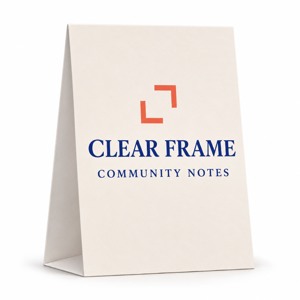
Folded paper table tent
These paper table tents for approved community information list a 5 × 7 inch face and standard 14pt stock. The current page offers glossy as the default finish and lists matte as an option; its quantity starts at 25.
Confirm the selected format and need before comparing custom table tents. Bring the approved artwork and requirements to DecentCustom for proof review. This ordinary information display has no religious function established by its printing.
Reviewed November 19, 2026. Published FAQ questions provide the educational basis; they do not measure customer frequency. Community approval, artwork use, physical suitability and arrival dates require separate checks.