A useful reading display gives visitors a specific place to start and a question they can answer. For 2027, a short exploration of Black newspaper publishing can connect a printed invitation with a digital historical resource.
Use the 2027 theme with a clear reading purpose
ASALH identifies its 2027 theme as “From Black Print Culture to Digital Blackness” on its official 2027 luncheon page. That link is the organization’s event page, used here to verify the theme. It is not a booking invitation from this shop or evidence of an affiliation.
For an independent U.S. bookshop’s February display, one manageable interpretation is to help a visitor learn about a Black-owned newspaper through a named digital resource. That does not exhaust the theme, represent every Black community or turn a modern webpage into the original newspaper. It gives the display a specific reading purpose.
Decide what the reader should be able to do after following the invitation: identify a publication, name the people who edited it and explain what kind of source they have opened. Those are clearer tasks than asking a decorative display to deliver an unspecified feeling of awareness.
Start with one named publication and one readable source
The Library of Congress’s newspaper-history overview provides a useful starting point. Its opening newspaper section discusses Freedom’s Journal, which began in 1827 as the first African American owned and operated newspaper. It names editors John Brown Russwurm and Samuel Cornish and describes regional, national and international coverage.
Keep the source type visible. This is a 2020 institutional overview by guest author Sophia Southard, published on the Library’s Inside Adams blog. Reading that section is not the same as examining a complete 1827 issue. If a later display uses an original issue, identify its actual date, page, repository and access route separately.
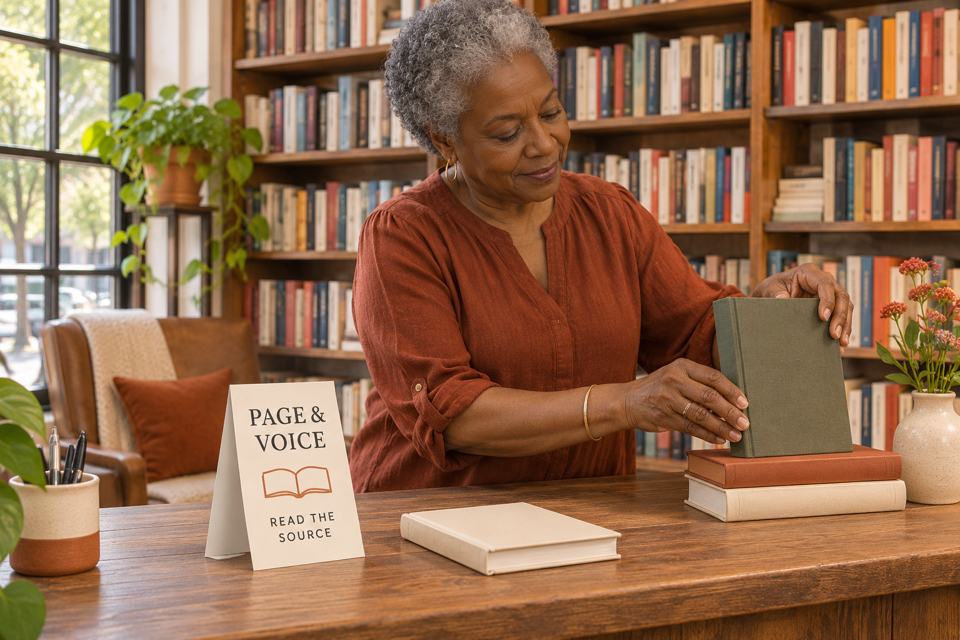
Page & Voice is a fictional bookshop. Its proposed self-guided display asks visitors to open the overview, read the first newspaper section and answer: “Who edited this publication, and what did its coverage include?” A second prompt asks: “Am I reading a historical newspaper page or a later explanation about it?”
A bounded example answer is: “The overview names Russwurm and Cornish and describes several geographic levels of news coverage. The page I opened is a modern institutional explanation.” This answer uses the selected section; it does not claim that one short reading captures the entire history of the Black press.
Completed source-card copy for the fictional display
Page & Voice — February Reading
Explore Black newspaper publishing.Start here: Honoring African American Contributions: The Newspapers
Guest author: Sophia Southard. Publisher: Library of Congress, Inside Adams.
Published July 22, 2020. Read the first newspaper section about Freedom’s Journal.Two questions: Who edited the newspaper, and what did its coverage include? Are you reading an original newspaper issue or a later explanation?
Reading address:
blogs.loc.gov/inside_adams/2020/07/african-american-newspapers/
This is original display-copy guidance with a credited reading reference. It does not reproduce the article, an archive image or an institution’s logo. The AI table-tent artwork is a simplified front concept; it does not contain this complete source card.
Give readers a usable plain-text address as well as any digital shortcut. If the final layout uses a QR code, create it from the verified destination and test the actual printed result. An AI drawing of a code is not a working reading route. This example does not supply a QR code or require one.
Check what a visitor can actually follow
Open the final link on a phone and confirm that it reaches the named reading rather than a general homepage. Check the author, publication date and selected section against the display copy. If a destination becomes unavailable, replace or pause the invitation while the owner checks an alternative; do not substitute an unrelated article behind the same label.
Offer a way for a visitor without a suitable device to find the reading, such as staff assistance or a permitted accessible reading copy. Confirm what the shop can actually provide before promising it. Keep the reading invitation available without making a purchase, email address or social follow the condition for participation.
Historical descriptions can contain language that needs context. Read the source before inviting the public to use it, and explain the selected scope. Use a credited modern display design rather than generating a convincing fake newspaper page or an invented historical portrait.
After opening the display, ask a willing reader whether they could find the named section and understand the question. That is a useful check of the route. It is not proof of a broader educational outcome, representative audience opinion or increased sales.
Choose a printed sign only if it helps the reading route
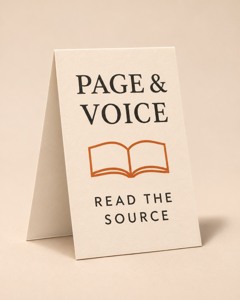
DecentCustom’s custom paper table tents for an indoor reading display list a 5 × 7 inch option, 14pt paper and a default glossy finish. The current minimum quantity is 25. That may exceed the needs of a shop setting up one reading station.
An existing clear paper label can be enough. If a new sign is useful, compare custom table tents in other layouts and provide DecentCustom with the actual approved wording and artwork. Check the complete text at final print size; the invitation, source credit and reading route must remain legible.
If the display has a fixed opening date, use the approval-to-arrival milestone guide to separate proof approval, dispatch and receipt. Adapt the process to the sign order; do not copy that guide’s fictional tote dates.
The product supports an indoor information display. It does not establish a partnership with ASALH or the Library, grant reproduction rights or guarantee what visitors will learn.