For World Creativity and Innovation Day on April 21, a creative studio can start with one recurring customer question. A small message prototype can help you learn what visitors understand before you commit to a printed batch.
Start with a question your own studio actually receives
The UN resolution establishing World Creativity and Innovation Day designates April 21 and connects creativity with problem-solving. For a workshop studio, that can be a reason to improve one customer-facing explanation rather than invent another giveaway.
Choose a question from current reception notes, booking conversations or the studio's own FAQ. Separate first-time workshop customers from independent members and retail shoppers. Their next steps may differ. A broad request such as “make our studio more creative” does not identify what anyone needs to understand.
Pickup is one concrete candidate. The Butterfly Effect Art Space's FAQ describes time spent painting separately from when fired pieces can be collected. Its pickup answer directs visitors to a board with the day's estimated pickup date. This Portland operator's example identifies a real information distinction; it does not establish your studio's process or a universal production time.
Check your actual messages before changing them. If visitors already understand the next step, choose another documented question. If staff cannot determine whether work is ready, fix that information route first. A clearer sign cannot supply a missing status.
Test an interpretation, not whether people like the design
IDEO.org's Design Kit framing method asks a team to define a problem with the audience, context and constraints in view. Its prototype-selection method asks what the team needs to learn about a concept. Apply those ideas to a specific studio question.
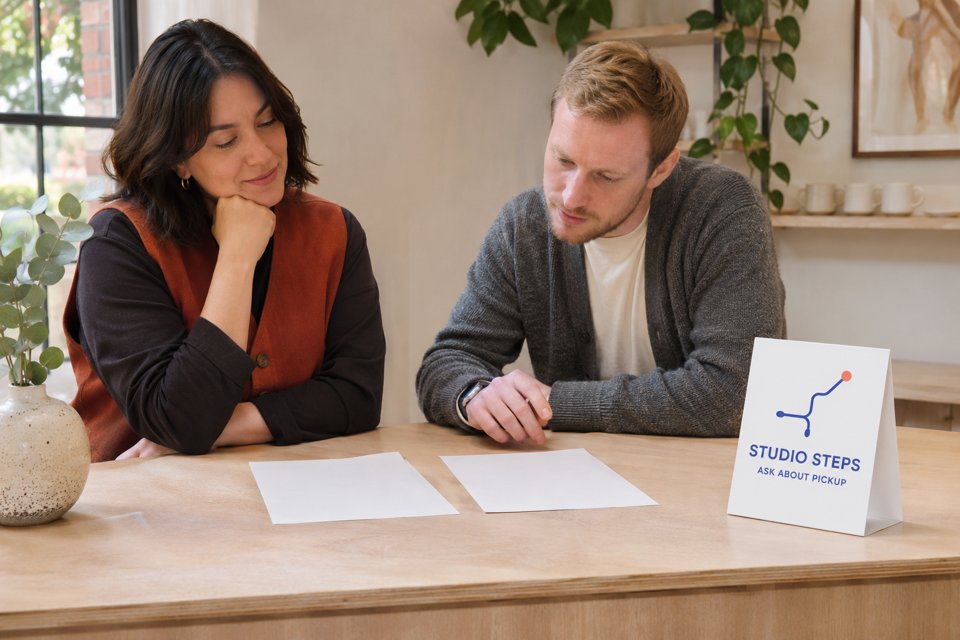
For a fictional Studio Steps team, the question is: “Can a first-time visitor distinguish an estimated date from confirmation that their own piece is ready?” The team must first confirm how its actual staff provide that confirmation. It is testing understanding of the message, not changing the production process.
Two draft directions could be:
These are original illustrative drafts, not either real operator's approved wording. The team checks both against its own procedure. It keeps layout, colors and placement comparable so the review stays focused on the message. Plain paper is enough at this stage.
A complete test card keeps the learning question visible
Here is the fictional team's plan. It has not been run, and the observation fields remain unanswered:
Question: Does the reader understand that an estimate is different from confirmation for their own piece?
Audience: people with the relevant first-time workshop experience, approached with the studio's permission. Do not assume staff familiarity represents a newcomer.
Before showing a draft: the reception lead confirms the current pickup explanation and where customers should get help. Label the paper as a draft for review, rather than putting an unapproved notice into service.
Neutral prompt: “What does this notice tell you about collecting your piece?” Follow with “What would you do next?”
Record: the version shown, the person's explanation, the next step they describe, any question they still have, and any help the reviewer gave.
Decision condition: revise wording that is read as an unconditional ready-date promise or leaves the next step unclear. If the underlying staff procedure is unresolved, pause the notice rather than decorate it.
Do not open with “You understand that this is only an estimate, right?” That supplies the interpretation you are trying to learn. Listen first, then provide the correct current information before anyone relies on a draft for a real pickup.
Separate a useful observation from a proven improvement
After a real review, keep the actual explanations beside each draft. Note where the reviewer had to clarify something. “I like the blue one” is a preference; “I would collect it on that date without checking my piece” is evidence about the action a message may suggest.
A small convenience group can reveal questions to investigate. It does not establish the behavior of every customer or prove that wording alone caused a business change. Do not turn uncollected responses into zeros or label an unrun draft the winner.
Revise the message, confirm it still matches the studio's procedure and review it again where needed. Keep the version and the decision: use, revise or pause, with the reason. The useful output is a clearer explanation of one next step, not a count of new promotional objects.
Print a stable prompt only after identifying its job
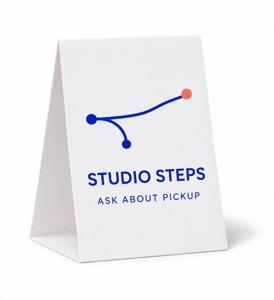
Existing instructions or the plain-paper draft may be sufficient. If an approved dry reception point needs a stable prompt, consider paper table tents for an approved dry studio reception point. The linked SKU lists a 5 × 7-inch format, 14pt card stock and a current minimum of 25.
The fictional Studio Steps design asks visitors to ask about pickup. It does not announce that any piece is ready. Keep current work status in the studio's actual system, and keep ordinary paper away from production areas where it is unsuitable. Compare custom marketing materials and review approved artwork with DecentCustom only after that separate print need is clear.