A World Health Day event may offer general information, a scheduled health service or both. Its title alone does not tell a guest what will happen. Before publishing a program, separate the organizer's information activities from any clinical service and confirm the details with the actual provider.

Does a health-event invitation mean screening is available?
No. A talk, a resource table and a screening appointment are different offers. Describe only the activities the host and any service provider have actually confirmed.
MedlinePlus's health-screening overview describes screening tests as looking for diseases before symptoms appear. Some tests take place in a doctor's office; others require different facilities or equipment. A community event's information table is not evidence that those services are present.
Before adding a service to the invitation, ask who provides it, where it occurs, whether an appointment is needed and what eligibility, preparation or cost information the provider wants guests to receive. Keep an unanswered field pending instead of filling it from another event's flyer.
Is a screening result the same as a diagnosis?
The distinction matters. In its patient overview of cancer screening, the National Cancer Institute explains that screening tests usually do not diagnose cancer; an abnormal result may lead to additional diagnostic tests. The same resource describes possible false-positive and false-negative results.
That is a cancer-screening example, not an assessment of a particular service at your event. It is a reason to avoid broad promotional promises such as an instant diagnosis or a result that guarantees overall health.
NCI also explains that discussing benefits and harms with a health care provider is part of an informed screening decision. Event copy should point to the appropriate provider's information rather than choose a test for every attendee.
What should guests ask about results and next steps?
MedlinePlus advises asking when results will be available and whom to talk to about them. Its overview also notes that the tests a person needs depend on individual factors. An event organizer's general notice cannot resolve those personal decisions.
For a confirmed service, ask the provider to supply the approved route for questions, result delivery and follow-up. Make clear which contact handles event logistics and which handles clinical questions. Do not direct a guest's personal result questions into a public promotional display.
If the host has only confirmed an educational session, describe it that way. A useful notice can explain where to find the program and whom to ask without suggesting that a test, diagnosis, result interpretation or treatment is included.
An unconfirmed diagnosis promise removed from the program
Fictional example: Clear Next Step drafts an invitation promising instant diagnoses at an April community event. The coordinator's review finds that the host has confirmed only an information session, with no clinical service provider attached.
The team withdraws that promise. It approves its existing digital notice describing the actual education-only program and host contact. Screening, diagnosis and results are not listed as included services.
The extra desk-notice purchase is removed, and no new order is placed. This completed fictional decision corrects the event's stated offer. It does not claim that a provider was later booked, a screening was performed or a health outcome was measured.
Use a desk notice for confirmed host information
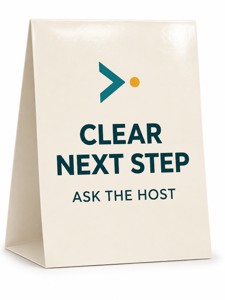
An optional indoor host pointer
If another ordinary desk notice is needed, table tents for confirmed host information list a 5 × 7 inch size, 14pt stock and a default glossy finish. The current quantity control starts at 25.
Compare custom table tents with the host's existing notice and review original approved wording with DecentCustom. This printed paper is not a medical device, clinical record system or verification of a health service.
Reviewed November 21, 2026 using MedlinePlus's general screening overview and NCI's cancer-screening patient information. This article addresses event descriptions and questions for providers, not individual test selection or result interpretation. Clear Next Step and its completed decision are fictional.