A bag given to a visitor and a bag issued with a returnable book set have different jobs. Identify who keeps the bag, what must travel together and how it comes back before selecting a new tote.
Keep a returnable library kit separate from a personal carry bag
For a National Library Week information point, a visitor might take home a folder and reading suggestions in a personal bag. A book-club kit is different: the bag can be part of a library's issued set, with its own contents and return process. Branding alone does not make the two interchangeable.
The University of Minnesota's book-kit guide describes a clear tote with six book copies and a small zipper bag for its Book Club Kits. Its Buddy Read Kits have two copies. The guide requires the pieces to be returned together to the Wilson Library desk during open hours, rather than in a book drop. This is a program for the university community, not a rule for every public library.
St. Joseph Public Library's kit page, updated September 2026, describes ten copies unless otherwise marked, plus supporting materials. It also directs borrowers to return the books together in the tote during open hours. These examples show why a buyer needs the specific operator's contents and return requirements; they do not prove that any particular promotional bag can carry those sets.
If a library has already issued a kit bag, keep it with the kit and follow that library's instructions. Ask the operator before changing its container, labels or identification. An opaque promotional tote is not automatically a replacement for an issued clear bag.
A carrying brief should name the contents and the owner
Start with the actual job: personal takeaway, staff transport or returnable issued set. Then record the specific contents, who packs them, who carries them and whether the bag must come back. Include the largest item's measurements and the complete packed weight once measured. “A few books” is not enough to compare bags.
An entirely fictional outreach brief could read:
Purpose: one visitor takes home three paperback books and one letter-size information folder from an outreach information point.
Ownership: the bag is given to the visitor. These are not borrowed copies from a library-issued book-club kit.
Contents to verify: the actual three editions and folder, with their measured dimensions and combined packed weight. No measured results have yet been entered.
Acceptance needed: the contents enter and leave without forcing them; the folder sits as intended; the handles can be grasped comfortably for the intended route; the sample's seams and base remain suitable during that check.
Decision: do not approve the bag from a photograph or book count. Check the actual sample and requirements first; retain the existing carrier if it already works.
This is a completed requirements brief with explicit outstanding measurements, not a report that a bag passed. For a returnable kit, replace the ownership section with the library's actual issued-container, contents-list and return process.
Use the actual books, not a generic “book capacity”
Different editions have different dimensions and weights. A six-copy kit and a ten-copy kit therefore do not establish universal bag sizes or load ratings. Paperbacks, large-print editions, folders and accessory pouches can change the packed shape.
Check the usable opening, inside base and handle access with the real contents. A printed outer dimension does not by itself establish the usable interior. If a listing leaves a measurement axis unclear, ask for the opened dimensions rather than assigning a meaning to the number.
For the actual intended use, record what was checked, with which contents, and what still needs confirmation. A local sample check is useful evidence for that task; it does not create a certified load rating, waterproof claim or guarantee for every future book selection. Keep contents together in the way the program owner requires.
Count bags by their issue or circulation role
A personal takeaway bag may be issued per recipient, while a returnable kit bag belongs to an active kit, not every member of its discussion group. Staff transport bags are another inventory line. Do not multiply all three by the event's visitor total.
Review existing carriers, damaged or unavailable stock and confirmed transfers using the same discipline as library program stock and supply counts. For returnable sets, include the process for missing components and checking the contents list with the responsible operator. The supplied bag may already solve the task without a new branded order.
A black non-woven tote is one candidate for a separate outreach task
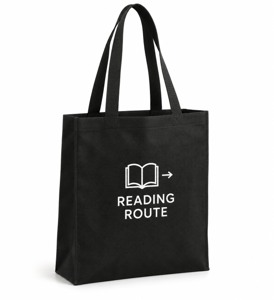
If a separate personal carry need remains, review black non-woven totes for a separate outreach carry task. The linked SKU lists 80GSM non-woven polypropylene, an open main compartment, an inner bottom board and 20 × 1.25-inch straps. Its current minimum is 12.
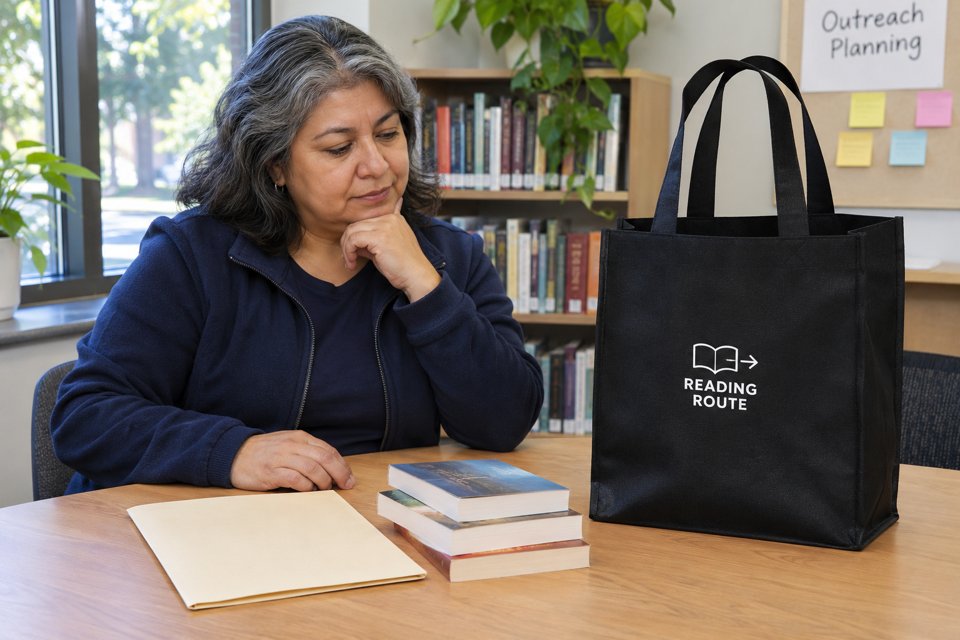
The dimensions are listed as 13W × 15H × 10 inches, with the third axis unnamed. Confirm the opened dimensions and suitability for the actual contents. The page's weight field is not a verified carrying-capacity result. The Reading Route image is an AI artwork concept, not a manufactured sample or approval to replace a library-issued kit bag.
Compare custom non-woven bags and provide DecentCustom with the confirmed carrying brief and approved artwork. The kit examples above support their own library workflows, not this bag's performance.