World Braille Day is a reason to discuss access to written information. Before ordering materials, confirm what people need to read, which format they request and how the organizer will deliver it.
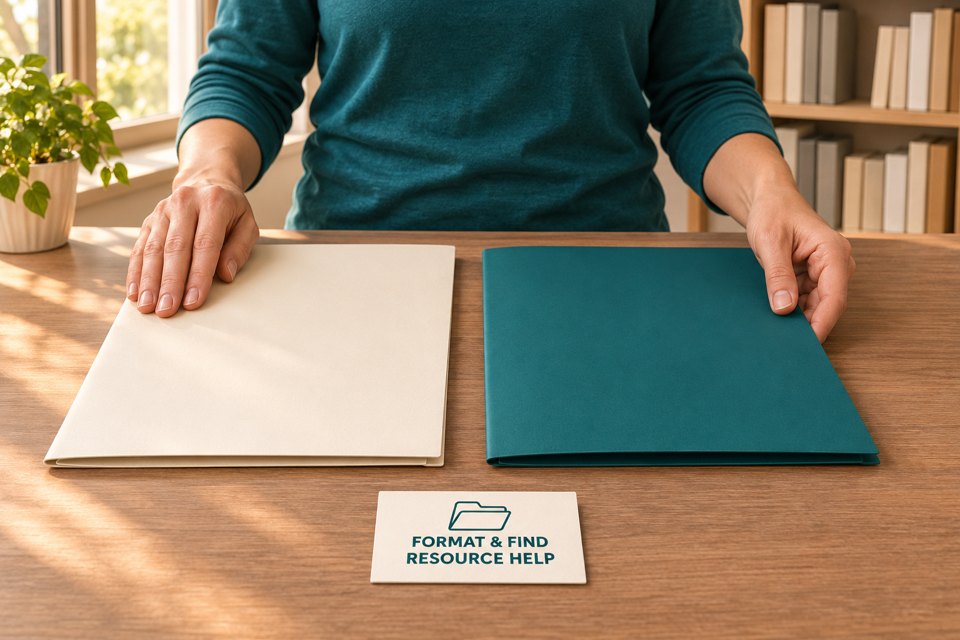
Start with what the reader needs to do
The UN resolution establishing World Braille Day names January 4 as the annual observance and centers awareness of braille as a means of communication. That purpose calls for a more specific materials question than whether a promotional design looks relevant to the day.
Is someone trying to read joining instructions, follow a discussion text, use a resource list or take information away afterward? Define the actual content first. A short contact card and a complete reading handout are different items, even if both carry the same event branding.
Ask participants through the organizer’s established individual contact route about their requirements. W3C’s event accessibility checklist recommends asking speakers and participants about accessibility requirements and coordinating materials in advance. Use the answer to plan delivery; do not infer a person’s preferred reading format from a general audience description.
Separate visual print, tactile braille and digital files
The National Library Service’s explanation of braille describes touch reading and writing using raised dots. Printing a picture of dots on ordinary paper does not create that tactile format. A visual alphabet activity should not be offered as though it were a braille copy of the participant’s reading material.
NLS also describes multiple reading formats in its library service, including audio, electronic braille and hard-copy braille. This illustrates a real format distinction. It does not show that every reader wants the same format, or that NLS will produce a custom handout for your event.
| Proposed material | Question to settle | Do not assume |
|---|---|---|
| Ordinary visual print | Who will use this printed item and for what task? | A printed dot graphic makes it tactile braille |
| Hard-copy braille | Who will produce and check the requested content? | Any decorative raised effect is a readable braille document |
| Electronic braille | Which file and delivery arrangement does the reader need? | A photo or ordinary visual PDF is an electronic braille file |
| Other requested reading format | What document, presentation and delivery route meet the actual request? | One file name or format label proves usability |
The table is a planning framework, not a production specification or accessibility certification. Discuss unresolved requirements with the responsible host and suitable service provider.
Write the content and delivery brief before a print order
For each material, record its purpose, approved content version, requested format, person responsible for preparation, required checks and agreed delivery route. Keep the requested delivery date separate from the date the provider has actually confirmed. A pending format request remains pending until the arrangement is settled.
W3C’s checklist favors adaptable digital formats and warns against providing material only in forms users cannot adapt. Its examples include word-processing documents, HTML and EPUB. A format label still does not examine the actual document: review its text, structure, relevant image descriptions and intended use with the people responsible.
Do not make a QR code or a social graphic the only explanation of how to obtain the material. Give the actual contact or information route in usable text, and handle individual requests through the established process. The public notice needs the route, not someone’s diagnosis or private circumstances.
Replace a visual-file assumption with a checked arrangement
Fictional planning example: Format & Find is preparing a World Braille Day reading discussion. A helper plans an image-only PDF with a decorative dot heading and calls it the “braille version.” No actual braille transcription or tactile copy has been prepared.
The coordinator removes that claim and holds the proposed print order. Through the event’s individual contact route, one invented participant requests an adaptable HTML reading file. The editor prepares the approved discussion text in that format, checks its headings and relevant image descriptions, and shares the actual file through the agreed route.
In the example, the participant confirms that the shared file opens and can be used for the planned reading task. The coordinator records that specific response. It does not certify the whole event or prove that the same file suits every reader. Another request for hard-copy braille remains pending while the host checks production and review arrangements.
The general notice now describes the available reading file accurately and gives a contact route for other format requests. It does not announce that all formats are ready. Existing file delivery and direct contact serve the immediate task, so no extra promotional card is ordered in this example.
Keep ordinary print as a separate, optional item
A visual contact card does not supply a reading format
These custom business cards for an ordinary resource-contact route list a 3.5 × 2 inch format, default 14pt glossy stock, square corners and a current minimum quantity of 50. The AI artwork shows ordinary visual printing. It is not braille, large-print reading material or a verified accessible alternative.
If there is a separate, confirmed use for visual contact cards, compare custom business cards and review approved artwork with DecentCustom. Keep the participant’s actual reading-format work with the appropriate preparation and review process.
Primary sources and SKU reviewed November 15, 2026. Format & Find and the participant responses are fictional planning examples. No real format request, braille proof, accessibility certification, legal compliance, endorsement or learning outcome was verified.