Read what the specific watch-party booking includes. Admission, standing-room access and a reserved table can be different purchases, and a larger RSVP list does not enlarge the confirmed table.
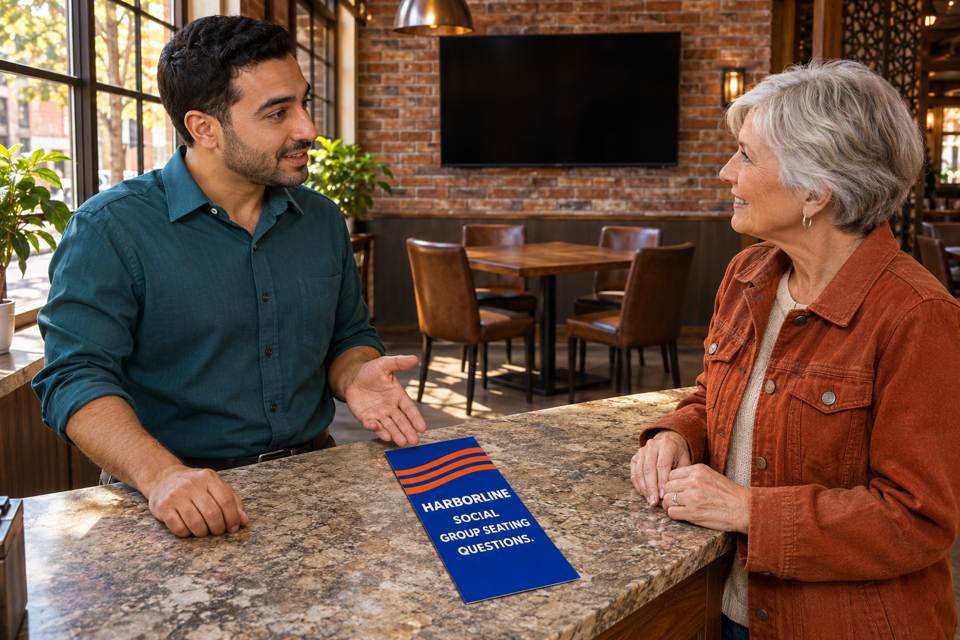
Start with the event-specific package
The NFL’s November 2026 announcement places Super Bowl LXI on February 14, 2027. A local watch party is a separate venue experience. The game date does not establish that venue’s admission, seating, opening time or food package.
Two current provider examples show why the distinction matters. Grails’ 2027 watch-party page separates a standing-room pass with no guaranteed seating from private-table packages with seating. Dave & Buster’s watch-party FAQ describes reserved seating for major games and says special-event pricing or minimum-spend requirements can differ from ordinary game-day viewing.
Those are the providers’ own descriptions, not a rule for every sports bar. Read the current listing for the right venue, location, date and package. Look for the actual unit being purchased: one admission, one reserved seat, or a table for a stated party size. Then check whether any food, drink, game credit or other inclusion is per person, per table or purchased separately. A generic “watch with us” page may not answer those event-specific questions.
If the confirmation does not say that all group members have seats together, ask before telling friends they do. Standing-room access, a place to rest a plate and a reserved chair are different things. Do not translate the most convenient detail from another package into yours.
A six-person RSVP can still mean only four confirmed seats
Fictional example S64 begins with a confirmed Harborline Social table for four seated guests. Two more friends say they want to attend. The organizer now has six people interested, but the venue has not confirmed a larger table.
S64 — Current group position
Confirmed reservation: four seated guests at one table. Change requested: six seated guests together. Additional seats confirmed: none yet. Current plan remains the four-person reservation while the host checks the request.
Four plus two equals six prospective attendees. It does not equal six reserved seats. Even if the two friends can obtain general-admission passes, that does not establish space at the four-person table. Ask the venue whether that combination is permitted and whether it actually meets the group’s wish to sit together.
If the group is comfortable with a different arrangement, describe it accurately. If everyone needs a chair together, look for an option that explicitly confirms that result. The organizer should not promise that staff will “find two more chairs” without the venue’s agreement.
A complete reply while the change is pending
In S64, the host can answer the organizer this way:
Your current Harborline Social reservation is for four seated guests. We have received your request to change it to six seated guests together, but that change is not confirmed. Two additional admission passes would not, by themselves, expand this table reservation. We will confirm an available seating option and its actual package conditions before changing the booking. For now, please do not tell the additional guests that seats at this table are reserved for them.
Suppose the fictional host later offers a six-seat table and the organizer accepts its terms. The updated confirmation should name the new arrangement, not merely say “request received.” For example:
S64 is now confirmed for six seated guests together at one Harborline Social table for the stated event. This replaces the earlier four-person table arrangement. In this fictional package, food and drink are ordered separately; no food credit or shared package has been added. Please use the arrival instructions supplied with the updated booking.
The separate food arrangement is an invented condition for S64, not a statement about Grails or Dave & Buster’s packages. In a real confirmation, reproduce the conditions actually agreed for that booking, including any unresolved item. If the six-seat option is unavailable or unaccepted, the request remains pending or declined; an unanswered proposal does not confirm it.
Keep the working booking record and guest-facing answer consistent. A changed RSVP list, a payment inquiry and a completed reservation are distinct records. Only the venue’s actual confirmation establishes which arrangement it has agreed to supply.
Use a host-desk guide for the question, not as a ticket
The current event listing and booking confirmation should do the detailed work. An optional counter card can prompt guests to ask about group seating before relying on an assumption. Keep prices, current availability and private booking details in the systems where the host can update them.
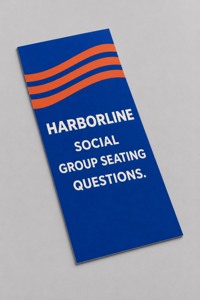
A flat host-desk information card
These 3.74 × 8.27 inch rack cards list 14pt standard stock and a glossy default finish, with other configurations named separately. The product is a flat paper card. A display holder should not be assumed to come with it.
Compare custom rack card formats and give DecentCustom the approved public copy and intended placement. The current minimum is 50 cards; that is not a count of guests or available seats. Retain an existing guide if it already explains the process clearly.
The cobalt Harborline artwork is an AI concept, not an admission credential, verified print finish or permission to use any team or league identity. Its useful job is to direct a question to the host who can answer it for the actual booking.
Sources checked November 11, 2026, UTC. Harborline Social and S64 are fictional. No actual reservation, ticket purchase, event permission, guest communication or booking change was made.