Before travelling to a business office, confirm where the particular meeting will happen. A registered address, a contact form and an agreed appointment establish different things.
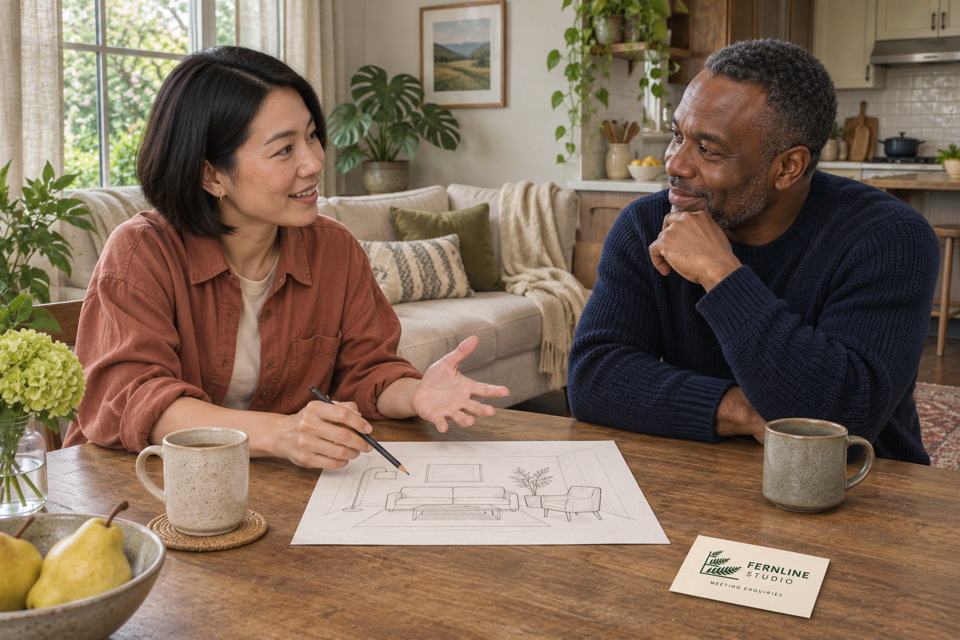
A business address is not an invitation to walk in
A client may find an address on a website and reasonably wonder whether they can visit. The answer depends on that business’s actual service arrangement. Do not send someone there simply because a map or footer lists the location.
RSVP Brokers ERA’s contact page describes a remote-first model and identifies its Bellevue and Seattle locations as registered business addresses. It distinguishes weekday phone support from online inquiries accepted anytime. An always-available form does not establish a staffed, round-the-clock reception desk.
Another model appears in Real Property Associates’ owner FAQ: its office is by appointment, arranged with the property manager. Published hours and an actual appointment therefore answer different questions.
Services delivered at a client’s property are different again. Studio Zerbey’s consultation description places the meeting at the client’s home and follows it with a written summary. That is not evidence of a public studio visit. Meanwhile, Studio Laloc’s FAQ distinguishes virtual design from full service and describes Zoom meetings alongside selected site visits. Moving a conversation online does not automatically preserve every deliverable of an on-site or full-service engagement.
These are individual operators’ descriptions, not standard terms for all brokerages or design businesses. For your own appointment, obtain the agreed mode, date, local time and time zone, meeting place or channel, contact person and purpose. Use the provider’s current confirmation for private arrival or joining details.
A request to meet at home does not move the appointment
Fictional case M17 starts with a remote consultation confirmed for November 19, 2026, at 2:00 p.m. Pacific Time. The client later asks the Fernline coordinator to meet at the client’s home instead, at the same time. No one has accepted that change.
M17 — Current position
Confirmed: remote consultation, November 19 at 2:00 p.m. Pacific Time. Requested: a visit to the client’s home instead. Client-site visit: not confirmed. The existing remote arrangement remains in place while the coordinator checks the request.
The coordinator needs to establish whether a visit is available and appropriate to the actual service, rather than treating a new address as a minor note. The meeting’s purpose, expected participants and materials may also change. Availability, travel arrangements and any changed service terms need the relevant people’s actual agreement; this example supplies no provider’s fee or policy.
A complete pending reply could say:
We have received your request to replace M17’s remote consultation with a visit to your home. The client-site visit is not yet confirmed. Your current appointment remains November 19 at 2:00 p.m. Pacific Time, remotely, using the joining instructions already provided. Please do not travel to our registered address. We will send a separate confirmation if we agree a replacement arrangement.
Keep the request attached to the appointment reference. A forwarded address, a calendar note made by one person or an unanswered message does not show that the designer and client have agreed where to meet.
State which arrangement the new confirmation replaces
Suppose both parties then agree to a client-site consultation. In this invented case, Fernline has verified the home address privately and agreed the visit’s purpose. Its replacement confirmation can be explicit:
M17 is now confirmed as a client-home consultation on November 19, 2026, at 2:00 p.m. Pacific Time. This replaces the remote appointment at that time; please do not use the earlier video link. We will meet at the home address confirmed in our private correspondence. Your Fernline contact will review your priorities and existing room layout with you. This appointment does not include a separate office visit or any additional design deliverable beyond the agreed consultation scope. Please contact the coordinator through the existing private thread if the location or attendance changes.
The date, arrangement and scope above belong only to M17. For a real appointment, provide the actual agreed location securely and give any genuinely necessary access instructions. Do not reproduce a client’s home address on a public sign, social post or generic business card.
Update the working calendar and the client’s confirmation together. If the visit is declined or remains unanswered, say that clearly and resolve whether the original appointment still stands. A general “see you then” message should not leave the two parties expecting different places.
A contact card can direct an enquiry without promising access
An existing appointment email or current service page may already do everything needed. If clients often ask how to arrange the right meeting, a small contact card can direct that enquiry to the coordinator. Keep individual appointment details in the confirmation, where they can be updated.
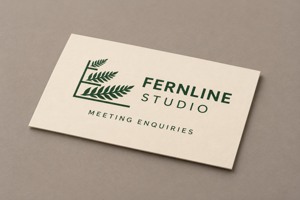
A stable contact prompt
These standard business cards for meeting enquiries list a 3.5 × 2 inch format, 14pt standard stock and square corners as defaults. The current minimum is 50 cards; that is a print quantity, not an appointment capacity.
Compare custom business card formats and give DecentCustom your approved public wording and configuration. Add a verified enquiry route before printing. The AI artwork intentionally supplies no real contact details, home address or walk-in promise.
Use wording that fits the actual service. An office address should not imply public reception if visits must be separately arranged. If a current digital confirmation already prevents the confusion, no additional printed item is necessary.
Sources checked November 11, 2026, UTC. Fernline Studio and M17 are fictional. No actual appointment, professional-service scope change, client communication or business outcome was verified.